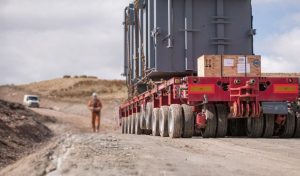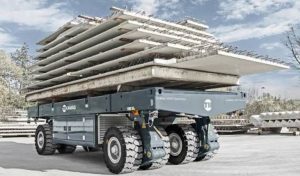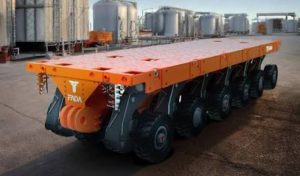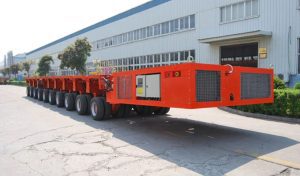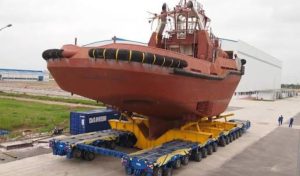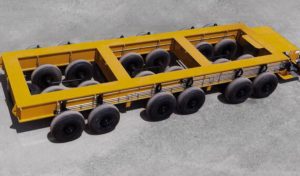
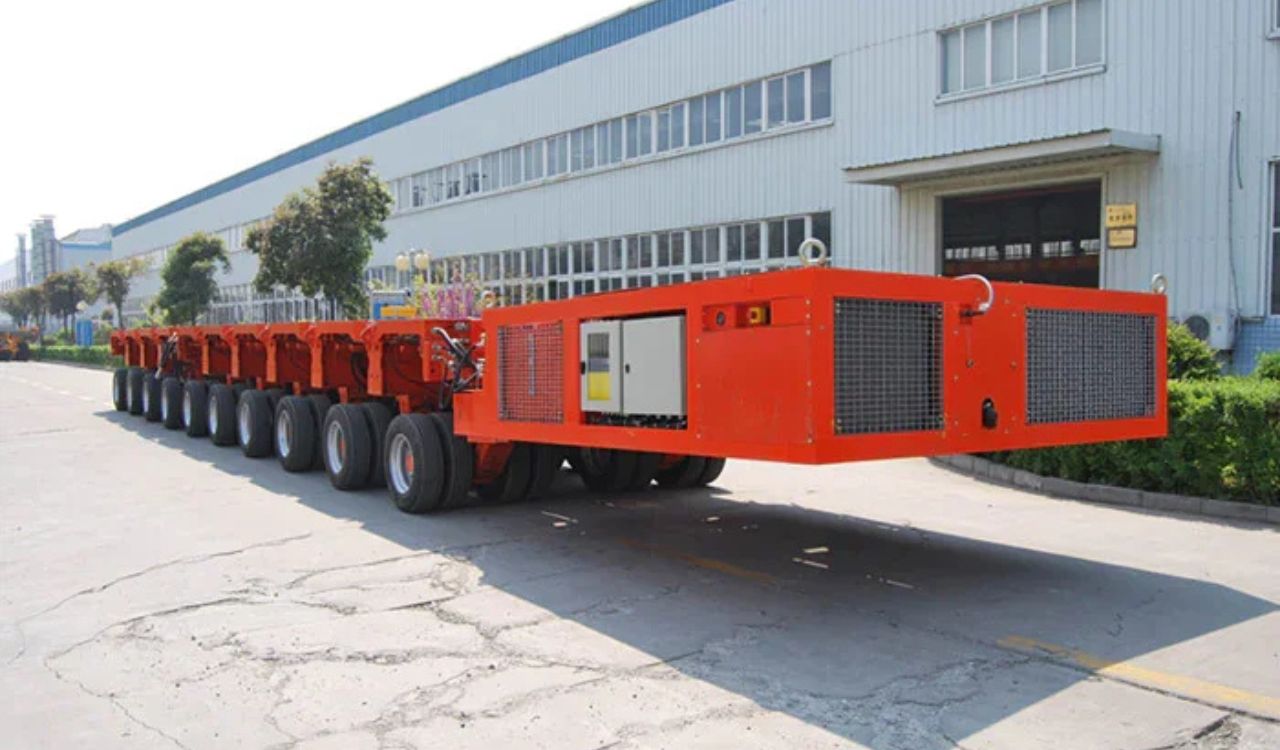
Self-Propelled Modular Transporters (SPMTs) are designed to move extremely heavy and oversized loads through industrial sites, construction projects, ports, shipyards, power plants, and other demanding environments. Because an SPMT can operate with numerous axle lines and wheel assemblies, tire and wheel condition has a direct relationship with load distribution, ground contact, steering behavior, and operating reliability.
SPMT tire and wheel maintenance therefore needs to be treated as a routine operational responsibility rather than a task performed only when a tire becomes visibly damaged. Operators should monitor tire pressure, tread condition, wheel fasteners, rims, wheel assemblies, and uneven wear throughout the equipment’s operating cycle.
The exact inspection intervals and replacement requirements should always follow the SPMT manufacturer’s maintenance manual, tire manufacturer’s specifications, and project-specific operating procedures. These guidelines are particularly important when SPMTs or specialized equipment such as a girder transporter are used for demanding heavy-load transportation and construction applications.
What Is SPMT Tire and Wheel Maintenance?
SPMT tire and wheel maintenance is the systematic inspection, servicing, and replacement of tires and wheel components used on a Self-Propelled Modular Transporter.
An SPMT uses multiple axle lines and wheel assemblies to distribute very high loads over a large number of ground contact points. Depending on the transporter design, tire configurations can include pneumatic, foam-filled, or solid/super-elastic solutions. Manufacturer documentation specifies that permissible axle and wheel loads depend on factors including the axle configuration, suspension system, tire type, and rim selection.
Routine maintenance typically includes:
- Checking tire inflation pressure
- Inspecting tread and sidewalls
- Looking for cuts, cracks, deformation, and embedded objects
- Inspecting rims for damage
- Checking wheel fasteners
- Monitoring uneven tire wear
- Inspecting wheel bearings and related components
- Checking steering and suspension components
- Recording tire and wheel condition
- Replacing components that no longer meet manufacturer requirements
The objective is not simply to extend tire life. Proper maintenance helps preserve predictable load distribution and transporter behavior during heavy-load operations.
Why SPMT Tire and Wheel Maintenance Matters
SPMTs frequently operate under loads far greater than conventional road trailers. Tire, wheel, and suspension condition can affect load distribution and operating safety. While questions such as how many bushels a semi-trailer holds focus on bulk cargo capacity, SPMTs are designed for much heavier industrial loads.
1. Maintains Consistent Load Distribution
An SPMT’s hydraulic suspension is designed to help maintain controlled load distribution across its axle lines. Tire condition and correct inflation are part of the overall mechanical system supporting that load.
A tire with abnormal pressure, excessive wear, or structural damage may behave differently from the other tires on the same transporter.
2. Helps Protect the Wheel Assembly
Tires and rims work together as a complete wheel assembly. Operating with incorrect tire pressure, damaged rims, loose fasteners, or unsuitable components can increase mechanical stress.
3. Reduces Unplanned Downtime
Heavy transport projects are often scheduled around lifting operations, site access windows, cranes, escorts, and other equipment. An avoidable tire or wheel failure can interrupt the entire operation.
Preventive inspections allow maintenance teams to identify service requirements before mobilization.
4. Supports Predictable Steering
SPMTs can use electronically controlled steering systems with multiple steering modes. The wheel bogies and steering components need to operate consistently for the transporter to follow the commanded path.
Uneven tire condition can be an additional factor when investigating abnormal steering behavior.
5. Helps Protect the Cargo
SPMTs are commonly used to transport transformers, bridge sections, industrial modules, vessels, heavy machinery, and other high-value loads. Maintaining the transporter reduces avoidable mechanical risks during movement.
Main Components to Inspect
A complete SPMT wheel inspection should look beyond the tire itself.
| Component | What to Check | Potential Warning Signs |
| Tire | Pressure, tread, sidewall, damage | Low pressure, cuts, cracks, bulges |
| Rim | Cracks, deformation, corrosion | Bent rim, visible damage |
| Wheel fasteners | Tightness and condition | Loose or damaged fasteners |
| Wheel bearing | Noise, play, temperature | Excessive play or abnormal heat |
| Axle assembly | Alignment and condition | Abnormal wear or movement |
| Suspension | Cylinder and mechanical components | Uneven ride height or leakage |
| Steering components | Movement and response | Delayed or inconsistent steering |
| Wheel bogie | General mechanical condition | Excessive movement or damage |
The specific inspection points and torque values must come from the applicable SPMT manufacturer’s documentation rather than a generic maintenance schedule.
How to Inspect SPMT Tires
Check Tire Pressure
Tire pressure is one of the most important routine checks for pneumatic SPMT tires.
The correct pressure is not a universal value. It depends on the tire specification, wheel/rim combination, axle load, operating configuration, and manufacturer’s requirements.
For example, technical documentation for one Scheuerle SPMT configuration lists different permissible pressures and wheel loads for different tire types. It also notes that temperature changes can affect tire pressure.
Operators should therefore:
- Check pressure using a suitable calibrated gauge or approved monitoring system.
- Compare the reading with the manufacturer’s specified value.
- Inspect for pressure loss.
- Investigate repeated pressure loss rather than simply adding air.
- Consider ambient temperature when interpreting pressure changes.
- Record abnormal readings for maintenance personnel.
Modern SPMT systems can also incorporate tire-pressure monitoring systems that provide real-time pressure information from sensors mounted at the wheels.
Inspect the Tread
Look for:
- Excessive tread wear
- Uneven wear
- Localized wear
- Chunking
- Embedded materials
- Separation
- Abnormal surface deformation
Uneven wear is particularly important because it may indicate a problem elsewhere in the system.
For example, if several tires on one axle line show substantially different wear patterns, the maintenance team should investigate suspension, steering, loading, wheel alignment, or operating conditions rather than assuming that tire replacement alone will solve the issue.
Examine the Sidewalls
Sidewall damage can be more difficult to notice than tread wear.
Inspect for:
- Cuts
- Cracks
- Bulges
- Abrasion
- Impact damage
- Foreign-object penetration
- Signs of overheating
Any structural tire damage should be assessed according to the tire manufacturer’s service criteria.
Inspecting SPMT Wheels and Rims
Tire inspections should always be accompanied by wheel and rim inspections.
Operators should look for:
- Cracks
- Bending or deformation
- Corrosion
- Damage around mounting areas
- Damaged fastener holes
- Loose wheel hardware
- Missing components
- Evidence of movement between the rim and hub
Wheel fasteners are particularly important because the correct tightening procedure and torque value depend on the specific SPMT, wheel, and fastening system.
For example, published Scheuerle technical documentation specifies a particular wheel-fixing configuration and tightening torque for one SPMT configuration, demonstrating why operators should use the equipment-specific specification rather than a generic torque figure.
Understanding Uneven Tire Wear
Uneven tire wear should be treated as a diagnostic signal.
Possible contributing factors include:
- Unequal load distribution
- Incorrect tire pressure
- Steering configuration
- Suspension problems
- Wheel or axle alignment
- Rough operating surfaces
- Excessive lateral movement
- Incorrect tire specification
- Different tire types within a combination
This is especially important for modular transport systems because multiple axle lines operate together.
If one section of a transporter consistently shows abnormal tire wear, maintenance personnel should inspect the complete axle-line assembly instead of replacing the tire without investigating the underlying cause.
Tire Selection for an SPMT
Not every heavy-duty tire is automatically suitable for an SPMT.
Selection should consider:
Tire Load Capacity
The tire must have an appropriate load rating for the intended wheel load and operating configuration.
Tire Dimensions
The tire size must match the approved wheel and transporter configuration.
Operating Environment
Consider whether the SPMT will operate on:
- Concrete
- Asphalt
- Industrial yards
- Construction sites
- Port surfaces
- Temporary roads
- Uneven terrain
Operating Speed
SPMTs generally operate at low speeds when carrying heavy loads, but permissible speed depends on the equipment configuration, tire type, load, and manufacturer’s instructions.
Tire Construction
Depending on the SPMT design and application, pneumatic, foam-filled, or solid/super-elastic tires may be available. These options have different characteristics and permissible loads.
Tire Pressure and Heavy Load Operations
Tire pressure should be evaluated together with wheel load rather than as an isolated number.
A simplified relationship is:
Wheel load = portion of total transporter/load weight supported by an individual wheel
However, real SPMT load distribution depends on the hydraulic suspension, axle configuration, terrain, transporter combination, and load geometry.
This is why operators should not attempt to calculate an acceptable tire pressure solely from the cargo weight.
The manufacturer’s load tables and engineering calculations should determine the permitted configuration.
SPMT Wheel Maintenance During Different Operating Conditions
Maintenance requirements can change according to the working environment.
Construction Sites
Construction sites can expose tires and wheels to:
- Loose aggregate
- Sharp debris
- Mud
- Uneven surfaces
- Construction materials
Operators should conduct additional visual inspections after moving through areas with debris or rough ground.
Ports and Industrial Yards
SPMTs used around ports may encounter heavy-duty paved surfaces, tight maneuvering areas, and frequent directional changes. Port trailers and other heavy transport equipment may operate in similar environments, but an SPMT’s multi-axle steering and hydraulic systems require equipment-specific inspection procedures.
Long-Distance Internal Transfers
Where an SPMT travels a longer distance within an industrial complex, operators should monitor tire temperature, pressure, wear, and wheel condition during planned inspection stops.
SPMT Tire Maintenance Checklist
A practical checklist can be divided into three stages.
Before Operation
Check:
- Tire pressure
- Tire condition
- Sidewalls
- Tread
- Rims
- Wheel fasteners
- Visible leaks
- Wheel bearings
- Suspension components
- Steering components
- Ground conditions
- Debris around the wheels
During Operation
Monitor:
- Abnormal vibration
- Steering response
- Tire pressure warnings
- Unusual noise
- Changes in platform behavior
- Uneven suspension response
- Tire temperature where monitoring is available
- Ground conditions
After Operation
Record:
- Tire condition
- Abnormal wear
- Pressure changes
- Damaged wheels
- Fastener issues
- Components requiring repair
- Tire replacements
- Operating hours or distance where applicable
Keeping maintenance records makes it easier to identify recurring problems across individual axle lines.
SPMT Maintenance vs. Conventional Trailer Maintenance
SPMT maintenance should not simply copy the maintenance routine used for a conventional semi-trailer.
A conventional trailer generally has a more limited number of axle and wheel assemblies, while an SPMT may use numerous independently suspended axle lines and electronically controlled steering functions.
A multiwheeler or conventional heavy-haul trailer can also have substantial tire and wheel requirements, but SPMT maintenance must account for hydraulic suspension, modular configurations, steering feedback, and synchronized axle-line operation.
Similarly, modultrailer systems and other modular heavy transport equipment may use different wheel, axle, and suspension configurations, so their maintenance specifications should be followed separately.
Common SPMT Tire and Wheel Maintenance Mistakes
Ignoring Uneven Wear
Replacing a worn tire without investigating why it wore unevenly can allow the underlying problem to continue.
Using the Wrong Tire Specification
Substituting an unsuitable tire can affect permissible wheel load and transporter performance. Published SPMT technical data specifically warns that changing tire types can alter technical characteristics and permissible loads.
Checking Pressure Only When a Problem Appears
Pressure should be part of routine inspection rather than an emergency-only check.
Mixing Unapproved Tire Configurations
Different tire types, sizes, or specifications should not be combined unless the equipment manufacturer permits the configuration and the resulting load limits have been properly assessed.
Using Generic Wheel Torque Values
Wheel fastener torque should come from the applicable manufacturer documentation.
Focusing Only on the Tires
A tire problem may originate from suspension, steering, loading, wheel, or operating conditions. The complete wheel assembly should be considered during troubleshooting.
Best Practices for SPMT Tire and Wheel Maintenance
A professional maintenance program should include:
- Follow the manufacturer’s maintenance manual.
- Inspect tires before each major operation.
- Maintain manufacturer-specified tire pressure.
- Record pressure and wear observations.
- Investigate uneven wear immediately.
- Inspect rims and wheel fasteners alongside tires.
- Use approved tire and wheel combinations.
- Check equipment after rough or contaminated operating conditions.
- Keep replacement tires properly stored and protected.
- Document all repairs and replacements.
- Use trained personnel for tire and wheel servicing.
- Verify the complete transporter configuration before a heavy-load operation.
The broader SPMT maintenance program should also cover the hydraulic system, axle lines, suspension, steering, electrical controls, and PPU. A recent SPMT maintenance checklist similarly identifies hydraulic systems, axle lines, tires, and the power pack unit as key areas requiring routine attention.
Role of Hydraulic Suspension in Tire Maintenance
Hydraulic suspension is an important part of the relationship between the SPMT’s wheels and its load.
The system can adjust suspension height and help distribute loads across the axle lines. SPMT designs commonly use hydraulic suspension to maintain platform level and compensate for changes in ground conditions.
Consequently, unusual tire wear should sometimes trigger a hydraulic-system inspection.
For example, maintenance personnel may investigate:
- Suspension cylinder condition
- Hydraulic leaks
- Uneven suspension height
- Pressure differences
- Steering-cylinder behavior
- Sensor feedback
- Mechanical movement in the wheel bogie
This approach helps distinguish a tire problem from a broader transporter-system problem.
SPMT Tire and Wheel Maintenance for Heavy Industrial Applications
SPMTs are used in many demanding applications, including:
- Power plant construction
- Shipyard operations
- Bridge construction
- Oil and gas projects
- Petrochemical facilities
- Wind-energy projects
- Industrial module transportation
- Heavy machinery relocation
- Infrastructure projects
- Port and logistics operations
The maintenance strategy should reflect the operating environment and load configuration.
For example, an SPMT transporting a large industrial module through a controlled plant environment may experience different tire stresses from one operating repeatedly across rough construction surfaces.
What About Semi Trailer Leasing Prices?
Semi trailer leasing prices are generally determined by trailer type, capacity, configuration, lease duration, market conditions, maintenance responsibilities, and location. However, conventional semi-trailer leasing should not be used as a direct benchmark for SPMT operating or maintenance costs.
SPMTs are specialized self-propelled heavy transport systems with hydraulic suspension, power-pack systems, electronically controlled steering, and modular axle configurations. Their maintenance requirements are therefore fundamentally different from those of standard leased road trailers.
Frequently Asked Questions
How often should SPMT tires be inspected?
Tires should be visually inspected before major operations and checked according to the SPMT manufacturer’s maintenance schedule. Pressure, tread condition, sidewalls, and visible damage should be monitored routinely.
What tire pressure should an SPMT use?
There is no single universal SPMT tire pressure. The correct value depends on the tire, rim, wheel load, axle configuration, and manufacturer specification. Operators should use the approved technical documentation for the specific SPMT and tire combination.
What causes uneven SPMT tire wear?
Uneven wear can result from incorrect tire pressure, uneven loading, steering conditions, suspension problems, wheel alignment, rough surfaces, or other mechanical issues. The cause should be investigated before simply replacing the tire.
Can different tire types be used on the same SPMT?
Only when the specific manufacturer-approved configuration permits them. Changing tire types can alter permissible axle and wheel loads, so the complete configuration should be evaluated before use.
Should SPMT wheel fasteners be checked regularly?
Yes. Wheel fasteners should be inspected according to the manufacturer’s maintenance procedure, including the specified tightening method and torque. Generic torque values should not be substituted for equipment-specific requirements.
What is the difference between SPMT and multiwheeler tire maintenance?
Both require careful tire, wheel, and load monitoring, but SPMTs typically integrate multiple axle lines with hydraulic suspension and electronically controlled steering. Maintenance therefore needs to consider the interaction between tires, wheel assemblies, suspension, steering, and load distribution.
Can tire pressure monitoring be used on an SPMT?
Yes. Some modern SPMT systems incorporate tire-pressure monitoring systems that provide real-time pressure information and can help operators identify abnormal pressure conditions.
Conclusion
SPMT tire and wheel maintenance is an essential part of reliable heavy-load transportation. Operators should look beyond simple tire replacement and maintain a complete inspection routine covering tire pressure, tread and sidewall condition, rims, wheel fasteners, bearings, suspension, steering, and load distribution.
Because SPMT configurations differ significantly, maintenance intervals, tire specifications, allowable loads, pressure values, and wheel-fastener requirements should always be taken from the manufacturer’s documentation for the equipment being operated. A disciplined inspection and record-keeping system can help maintenance teams identify abnormal wear early, prepare equipment before mobilization, and maintain the transporter in suitable operating condition for demanding industrial projects.