+86 151 5321 7198
info@shiyuntrailer.com

2430mm Extra-Wide Adaptability | Modular Intelligent Transportation Solutions
A self propelled modular transporter (SPMT) is a powered modular platform used to move heavy industrial cargo without a separate towing tractor. Hydraulic axle modules support the load, while a Power Pack Unit (PPU) supplies power for movement, steering and lifting.
Shiyun manufactures the SYZ2430 range in Qingdao, China, with a nominal platform width of 2430 mm and 4-axle or 6-axle module options. Modules can be combined to suit the cargo footprint. Explore our special transporter range or request a project-specific configuration.
A self propelled modular transporter coordinates propulsion, steering and hydraulic suspension across the selected modules. The PPU supplies hydraulic power, and the control system coordinates the axle groups.
Capacity depends on the approved configuration, load distribution, center of gravity, travel speed and ground conditions. Use the model-specific load chart and transport engineering assessment; adding axle lines alone does not establish a safe payload.

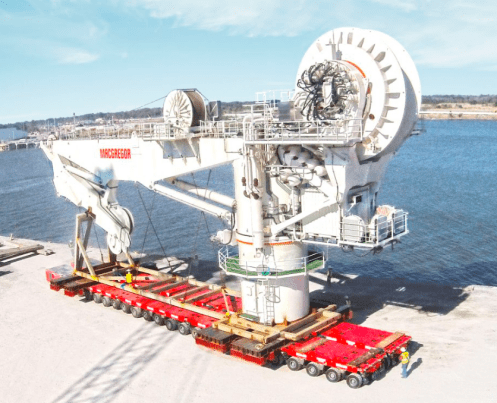
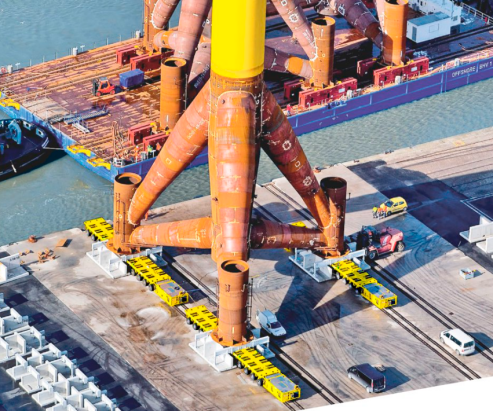
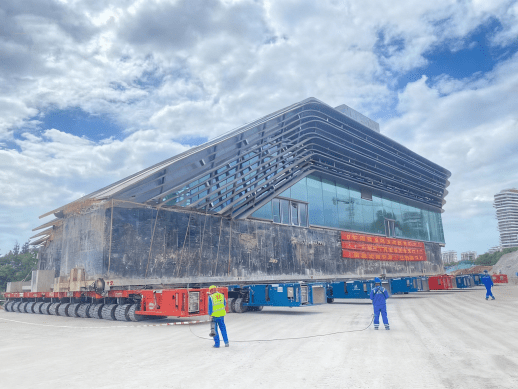
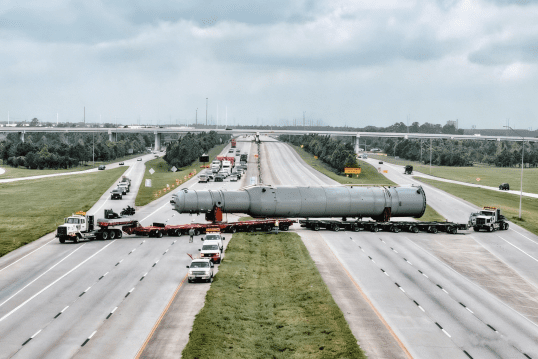
An SPMT is used where heavy cargo needs controlled movement and positioning over a planned route. Typical applications include:
For tractor-towed operations, compare our hydraulic modular trailers. For dedicated vessel-yard handling, review the shipyard transporter range. Select equipment around the load and route rather than a general capacity headline.
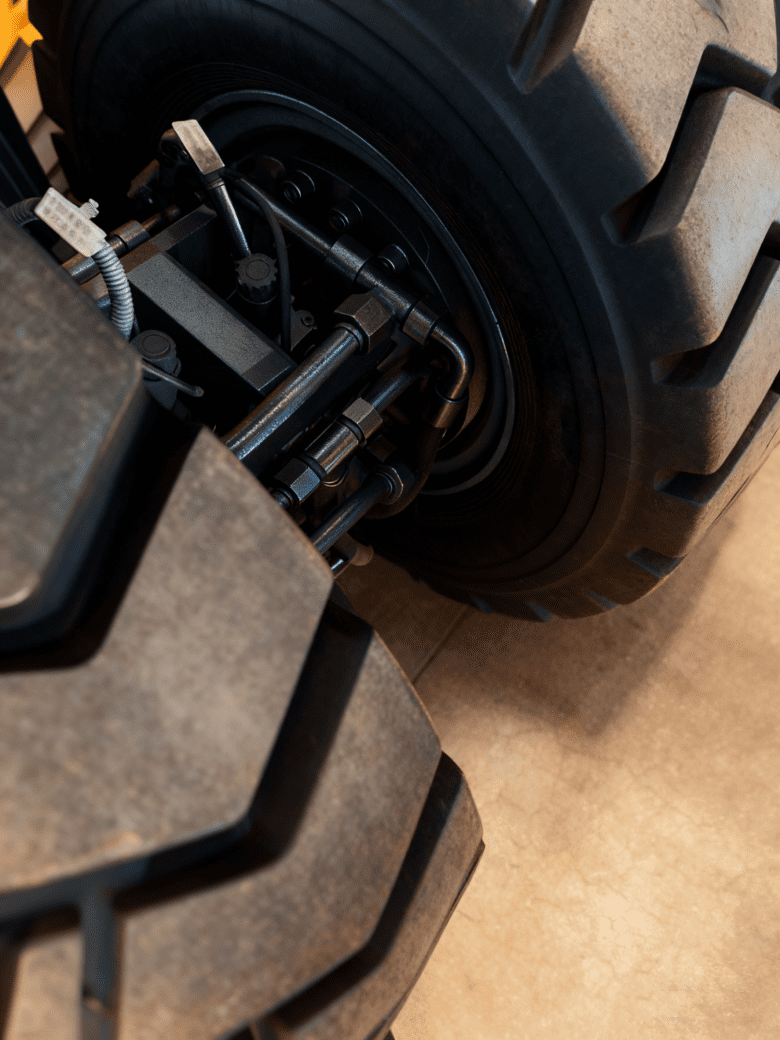
The SYZ2430 self propelled modular transporter is offered with 4 or 6 axle lines. Its main assemblies include the steel frame, steering system, hydraulic suspension, drive units, brakes, wheels and controls.
The listed module specifications include Q690E steel construction, a nominal width of 2430 mm and 700 mm suspension travel. The following table describes dimensions and equipment weight. Tare weight is the weight of the module itself, not its rated cargo capacity. Request the approved payload chart, speed limits and final configuration drawing for the proposed supply.
| Name | Module | |
|---|---|---|
| Axle lines | 4 | 6 |
| Length(mm) | 5600 | 8400 |
| Width(mm) | 2430 | 2430 |
| Height(mm) | 1500±350 | 1500±350 |
| Lowest height (mm) | 1150 | 1150 |
| Wheel base | 1400 | 1400 |
| Track width | 1450 | 1450 |
| Tare weight | 4.5Ton/axle line | 4.5Ton/axle line |
| Tire size | 355/65R15 | 355/65R15 |
| Rim size | 9.75-15 | 9.75-15 |
| Tare weight/axle line(Ton) | 4.5Ton/axle line | 4.5Ton/axle line |
| Tare weight(Ton) | 18 | 27 |
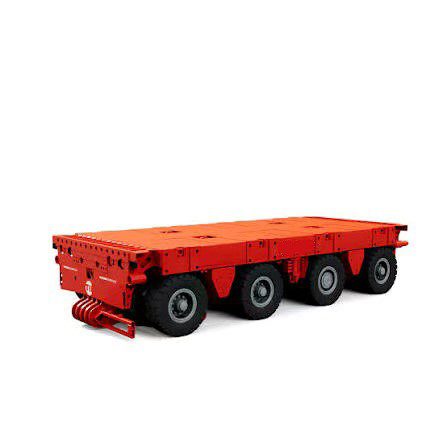
4 axle lines SPMT

6 axle lines SPMT
Steel frame: the listed SYZ2430 design uses Q690E high-strength steel plates and a triangular main-beam structure. Welding fixtures help control assembly alignment and deformation. Request material certificates and applicable weld inspection records for the supplied equipment.

Steering system: hydraulic rack-and-pinion cylinders adjust the axle steering angle. Drive units provide propulsion; steering components control direction.
Hydraulic suspension: lifting cylinders and support groups adjust deck height and help distribute the load. The listed suspension travel is 700 mm. The required support arrangement must be checked against the cargo center of gravity and transport plan.
Driving system: powered axle units move the platform under coordinated control. Confirm the driven axle arrangement for the proposed load and route.
Brake system: the modules use hydraulic brake components for controlled stopping and parking. Brake release pressures, inspections and operating procedures must follow the supplied model-specific manual. Request brake-system documentation and operator training requirements with the quotation.
The Power Pack Unit supplies hydraulic power and electrical control for the platform. Its main components include the engine, cooling system, variable-displacement pump, fuel and hydraulic oil tanks, and battery.
The listed PPU specification is 330–390 kW, with radio remote control and a maximum of 40 axle lines in the stated configuration. Confirm the selected engine, number of powered axles, allowable gradient and operating speed in the final technical offer. These limits depend on the load, configuration and site conditions.
| Name | PPU |
|---|---|
| Engine and capacity | 330-390KW |
| Size (mm) | 4200*2310*1100 |
| Tare weight (Tons) | 6.3 |
| PPU Lifting angle | 11 degree |
| Hydraulic oil tank capacity (L) | 500L |
| Remote controller | Radio |
| Drive capacity | Max 40 axle lines |
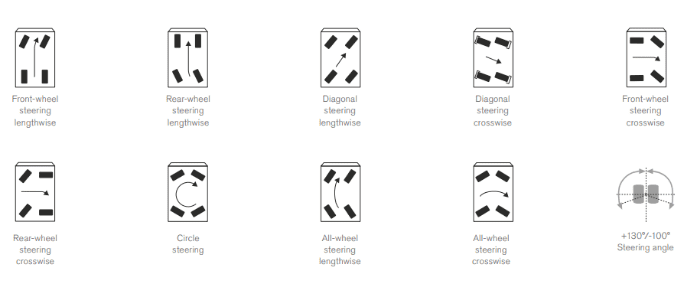
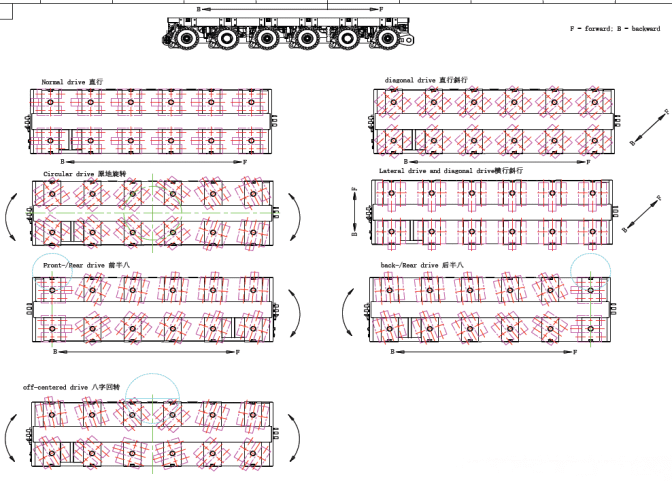
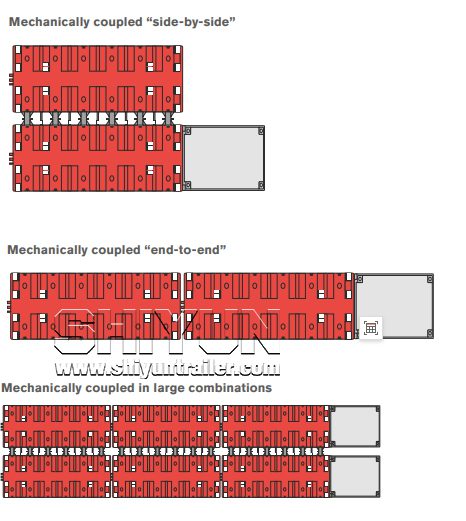
Electronic all-wheel steering helps position heavy cargo in confined industrial spaces. Modules can be arranged in approved mechanical or electronically coordinated combinations to suit the load footprint.
Achievable positioning tolerance depends on the controls, load, surface and operating method. Request the available steering modes and a documented acceptance test for your required tolerance; no universal millimeter accuracy is assumed.
Shiyun offers the SYZ2430 range from Qingdao, China. Read our company information and discuss the proposed module layout with the sales and engineering team.
To configure a self propelled modular transporter, provide: cargo weight and dimensions, center of gravity, support points, route drawings, ground-bearing information, gradients, clearance limits and required operating conditions.
Ask for the load chart, configuration drawing, applicable inspection and test records, operating manual, training scope, warranty terms and spare-parts support in the written offer. If expanding an existing fleet, provide the exact module model and control-system details so compatibility can be assessed before purchase.
For independent industry guidance on transport planning and responsibilities, see ESTA’s Best Practice Guide for Self-Propelled Modular Transporters. This general guidance complements the equipment manual and engineered transport plan; it does not certify a particular product.
Request a technical proposal and quotation based on your cargo and site requirements.
SPMT stands for self propelled modular transporter. It is a powered platform assembled from axle modules. A Power Pack Unit supplies power for movement, hydraulic suspension and steering, allowing heavy cargo to be moved without a towing tractor.
There is no single payload rating for every SPMT arrangement. Capacity depends on the module rating, number of axle lines, load distribution, center of gravity, speed and ground conditions. Ask Shiyun for the approved load chart and an engineered configuration for your specific cargo.
A modular trailer is towed by a separate prime mover. A self-propelled modular transporter carries its own drive system through the PPU, so it steers, drives and lifts without an external tractor.
Compatibility must be verified for the exact equipment combination. Provide the existing module model, coupling dimensions, hydraulic interfaces and control-system details. Obtain written confirmation of mechanical, hydraulic and electrical compatibility and the required commissioning checks before connecting different brands.