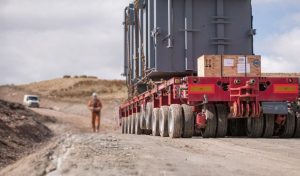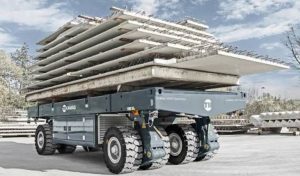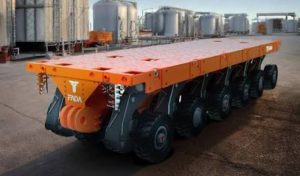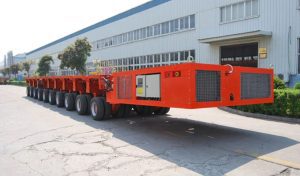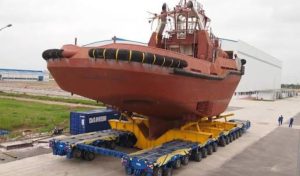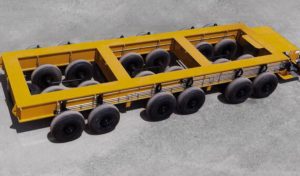
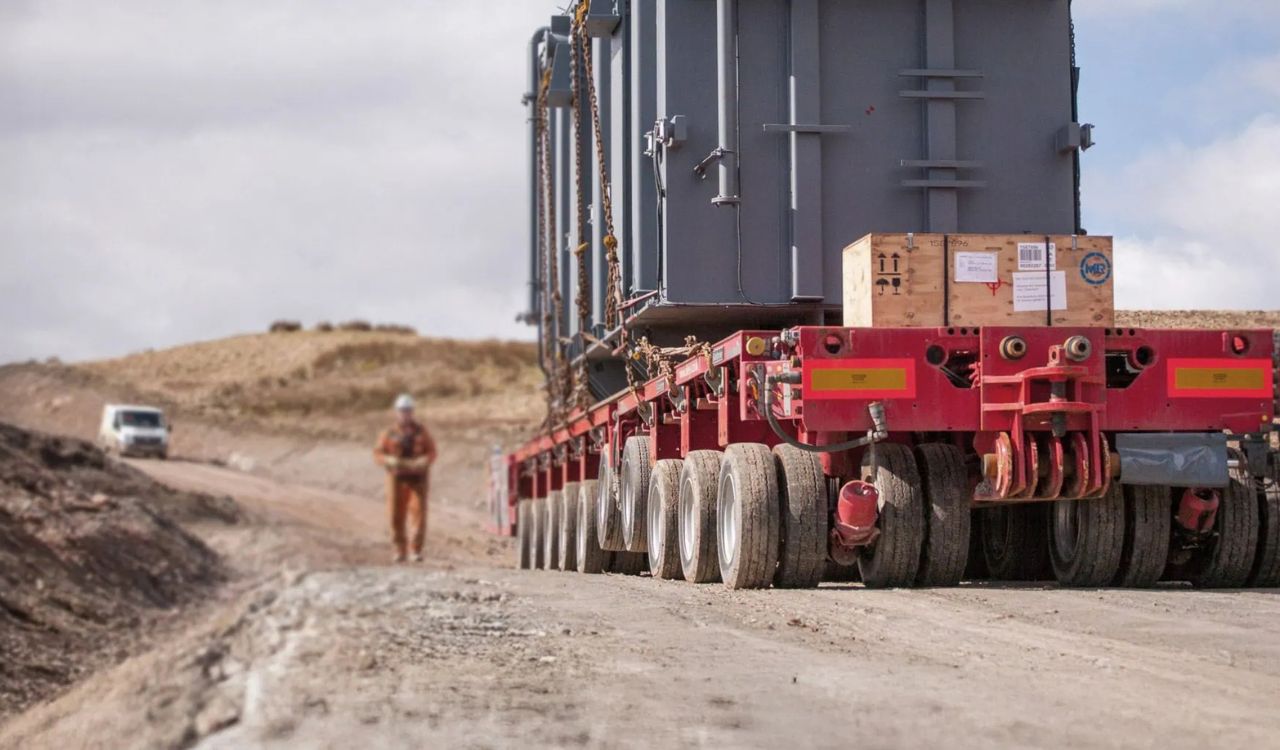
Self-Propelled Modular Transporters (SPMTs) are used to move extremely heavy and oversized loads in environments where conventional trailers may not provide the required maneuverability, load distribution, or positioning accuracy. These transporters are commonly used for bridge sections, industrial modules, vessels, transformers, refinery equipment, and other large structures.
Although SPMTs operate at relatively low speeds and provide precise steering and hydraulic suspension control, weather conditions can significantly influence how a heavy transport operation is planned and executed. Wind, rain, fog, extreme temperatures, wet surfaces, and changing ground conditions can affect visibility, traction, load stability, equipment performance, and route safety.
The relationship between weather and SPMT operations therefore needs to be considered during transport engineering, route assessment, pre-use inspections, and the actual movement of the load.
What Is an SPMT and Why Does Weather Matter?
A Self-Propelled Modular Transporter is a modular, multi-axle transport system equipped with its own power unit, hydraulic suspension, steering system, and control technology. Multiple modules can be combined to distribute heavy loads across numerous axle lines.
The Federal Highway Administration describes SPMTs as computer-operated multi-axle platforms capable of carrying and positioning large structures, with the ability to pivot and maneuver in different directions.
Weather matters because the transporter and its load interact with both the physical environment and the operating team. For example:
- Strong winds can affect large, high-profile loads.
- Rain can reduce surface traction.
- Fog can restrict operator and banksman visibility.
- Extreme temperatures can affect equipment operating conditions.
- Wet or saturated ground can alter the available bearing capacity.
- Storm conditions can make communication and site coordination more difficult.
These factors need to be considered together rather than assessed independently.
How Different Weather Conditions Affect SPMT Operations
Wind and Crosswind
Wind is one of the most important weather considerations when transporting large structures.
A large industrial module may have a substantial surface area, creating significant wind exposure. Crosswinds can generate lateral forces that affect load stability, particularly when the cargo has a high center of gravity or a large projected area.
Wind can become particularly important when transporting:
- Tall industrial modules
- Bridge structures
- Large vessels
- Storage tanks
- Wind-energy components
- Long fabricated structures
- High-profile machinery
The allowable wind speed should not be assumed to be the same for every SPMT operation. It should be established through the transport engineering process and applicable project requirements.
ESTA guidance recommends checking maximum allowable wind speeds before and during transport and taking appropriate action if specified limits are exceeded.
For high-profile loads, the engineering team may need to evaluate:
- Load height
- Projected wind area
- Center of gravity
- Wind direction
- Securing arrangements
- Route exposure
- Ground conditions
- Required operating limits
Rain and Wet Surfaces
Rain can affect both the work environment and the surface on which an SPMT operates.
Water on paved surfaces can reduce available tire traction, while heavy rainfall can create standing water or affect visibility. On temporary roads or unpaved areas, rainfall may also change soil conditions and reduce the available ground-bearing capacity.
This is particularly important for heavy loads because an SPMT transfers substantial forces into the supporting surface through its multiple axle lines.
Before moving after significant rainfall, the team may need to reassess:
- Ground bearing capacity
- Drainage
- Surface condition
- Tire traction
- Standing water
- Temporary access roads
- Slopes and gradients
- Underground utilities
SPMT hydraulic suspension can help accommodate controlled changes in surface elevation, but it cannot compensate for fundamentally inadequate ground conditions.
Fog and Reduced Visibility
Fog can make it difficult for operators, supervisors, banksmen, and other personnel to maintain visual awareness of the transporter and surrounding obstacles.
Visibility becomes particularly important during:
- Tight maneuvering
- Reversing
- Turning
- Crossing work areas
- Passing near structures
- Operating close to cranes
- Positioning loads precisely
If fog, rain, or snow significantly restricts visibility, ESTA guidance recommends that transport should not proceed when the conditions could jeopardize safe operation.
Clear communication procedures are also important. SPMT operations commonly involve operators, supervisors, banksmen, and other site personnel, so communication methods and terminology should be agreed before movement begins.
Extreme Heat
High temperatures can affect both equipment and personnel.
SPMT systems use hydraulic components, engines, electronic controls, tires, and other mechanical systems that operate within specified temperature ranges.
Extreme heat can increase the thermal load on equipment and may affect:
- Hydraulic system temperature
- Engine cooling
- Tire condition
- Electronic equipment
- Lubricants
- Operator working conditions
The equipment manufacturer’s specified operating temperature range should therefore be considered during transport planning. ESTA guidance specifically recommends taking the manufacturer’s minimum and maximum working temperatures into account.
In hot climates, including major industrial transport environments in the Middle East, transport teams may also need to consider the timing of operations, equipment monitoring, shaded rest areas, and personnel heat-management procedures.
Cold Weather and Freezing Conditions
Low temperatures can create different challenges.
Potential concerns include:
- Reduced hydraulic-fluid performance
- Frozen water on roads or work areas
- Reduced tire traction
- Snow accumulation
- Ice formation
- Reduced visibility
- Equipment starting difficulties
ESTA guidance states that transport should not be conducted on slippery or icy surfaces unless the transporter configuration and engineering have specifically accounted for those conditions.
Weather Effects on SPMT Hydraulic Suspension
Hydraulic suspension is an important feature of SPMTs because it allows controlled adjustment of the transporter height and load support across different axle lines.
However, weather can affect the operating environment in which the hydraulic suspension is used.
For example, rainfall can change ground conditions, while extreme temperatures can affect hydraulic-system operating conditions. The suspension system should therefore be inspected and operated within the manufacturer’s specified parameters.
The hydraulic suspension should not be viewed as a replacement for proper ground assessment.
The transport plan should still account for:
- Ground-bearing capacity
- Surface irregularities
- Load distribution
- Hydraulic stroke
- Suspension configuration
- Route gradients
- Obstacles and clearances
Weather and SPMT Load Stability
Weather can influence the stability assessment of a heavy load, particularly when wind acts on a large or elevated structure.
Load stability depends on factors such as:
- Total load weight
- Center of gravity
- Load dimensions
- Support arrangement
- Number of axle lines
- Suspension configuration
- Wind exposure
- Route geometry
- Ground conditions
- Securing and restraint arrangements
For example, a low and compact load may have a different wind response from a tall industrial module even if both are transported using similar SPMT configurations.
Transport engineering should therefore consider the characteristics of the actual cargo rather than relying on a generic weather threshold.
How Weather Affects SPMT Route Planning
Weather conditions should be considered during route planning rather than only immediately before departure.
A route survey can identify areas that may become problematic during or after adverse weather.
Important considerations include:
| Weather-related factor | Potential operational concern |
| Strong wind | Lateral load forces and stability |
| Heavy rain | Reduced traction and visibility |
| Saturated ground | Reduced ground-bearing capacity |
| Fog | Restricted visibility |
| Extreme heat | Equipment and personnel operating conditions |
| Ice or snow | Slippery surfaces and reduced traction |
| Standing water | Surface and traction problems |
| Storm activity | Visibility, wind and site-access concerns |
The route should also be reviewed for temporary roads, bridges, culverts, drainage systems, underground utilities, slopes, and other features that could be affected by changing environmental conditions.
Weather Considerations for Different SPMT Applications
Bridge Transportation and Installation
SPMTs are widely used for bridge moves because they can transport and position large bridge structures with controlled movement. FHWA documentation highlights their use for moving bridge spans into position while reducing the duration of roadway disruption.
Wind and visibility are particularly important when transporting large bridge components or working near active roadways.
Shipyard Operations
Shipyards often provide large open areas for SPMT operations, but these environments can also expose large loads to wind.
Weather planning should consider the dimensions of the cargo, open-area wind exposure, route surface, and positioning requirements.
Industrial and Refinery Projects
Refinery vessels, process modules, heat exchangers, transformers, and other equipment may have high centers of gravity or large dimensions.
Weather conditions should be evaluated alongside route clearances, ground bearing, load stability, and site restrictions.
Port and Heavy Cargo Operations
Port environments may involve large open spaces, exposed surfaces, cranes, heavy industrial equipment, and changing weather conditions.
SPMTs can complement conventional heavy transport systems in these environments, while specialized port trailers may be used for other cargo-handling requirements depending on the application.
Weather Planning for Multiwheeler and Other Heavy Transport Systems
Weather considerations are not limited to SPMTs.
A multiwheeler, modular trailer, or other heavy-haul configuration can also be affected by rain, wind, temperature, visibility, and ground conditions.
However, the engineering response depends on the equipment configuration and load.
A conventional trailer combination may have different maneuverability, suspension characteristics, and load-distribution requirements from an SPMT. Similarly, a modultrailer configuration may require different route and weather assessments depending on its suspension, steering, load height, and operating environment.
The key principle is to assess the complete transport system rather than applying one weather rule to every heavy-haul vehicle.
Pre-Transport Weather Checklist
Before beginning an SPMT operation, the team should review the current and forecast conditions.
A practical checklist can include:
- Weather forecast for the planned operating period
- Maximum expected wind speed
- Wind direction
- Rainfall probability
- Visibility
- Temperature
- Ground and road conditions
- Potential storm activity
- Drainage and standing water
- Ice or snow where applicable
- Manufacturer operating limits
- Project-specific weather limits
- Emergency stopping location
- Communication arrangements
Weather should also be monitored during the transport rather than checked only once before departure.
What Should Happen When Weather Conditions Deteriorate?
If conditions change during an SPMT operation, the transport team should reassess the situation against the approved transport plan and operating limits.
Depending on the conditions, possible actions may include:
- Slowing or stopping the movement
- Moving the transporter to a predetermined safe location
- Securing the load
- Reassessing wind conditions
- Inspecting the route
- Checking ground conditions
- Waiting for improved visibility
- Consulting the transport engineer or responsible supervisor
The appropriate response depends on the specific operation, load, equipment, engineering assessment, and project procedures.
The objective should be to avoid continuing simply because the transport has already started.
Best Practices for Weather-Related SPMT Operations
A reliable weather-management process should include the following:
Check Forecasts Before Transport
Review relevant weather forecasts before mobilization and again before the actual movement.
Establish Project-Specific Limits
Wind, temperature, visibility, and surface conditions should be assessed according to the transport engineering and equipment manufacturer’s requirements.
Monitor Weather During the Move
Conditions can change after the transporter has started moving. Continuous monitoring allows the team to respond before conditions become unsuitable.
Inspect the Ground After Heavy Rain
Rain can alter temporary roads and unpaved areas. Ground conditions should be reassessed when significant rainfall has occurred.
Maintain Clear Communication
Operators, supervisors, banksmen, and other personnel should use agreed communication methods and terminology.
Prepare a Stop-and-Secure Procedure
The transport plan should identify what the team will do if weather conditions exceed the approved operating limits.
Consider the Load, Not Just the Transporter
A tall, wide, lightweight structure may have substantially different wind characteristics from a compact, dense load. Weather assessment should consider the actual cargo.
Common Weather-Related Mistakes in Heavy Transport
Using a Generic Wind-Speed Limit
There is no single wind-speed value that automatically applies to every SPMT operation. Limits should come from the project engineering, client requirements, equipment limitations, and characteristics of the load.
Ignoring Ground Conditions After Rain
A route that was suitable in dry conditions may require reassessment after heavy rainfall.
Continuing in Poor Visibility
Precise steering does not eliminate the need for adequate visibility. Operators and ground personnel must be able to maintain safe awareness of the transport environment.
Focusing Only on the Weather Forecast
Forecasts are useful, but actual conditions at the worksite also matter. Wind, surface condition, visibility, and ground conditions should be monitored during the operation.
Treating All Heavy Transport Equipment the Same
SPMTs, multiwheelers, modular trailers, port trailers, and conventional semi-trailer combinations have different configurations and operating characteristics. Weather planning should reflect the equipment being used.
Role of Weather Planning in Efficient SPMT Operations
Weather planning is not only a safety consideration. It can also improve operational efficiency.
Identifying weather-sensitive activities in advance can help project teams:
- Select suitable transport windows
- Prepare alternative schedules
- Protect equipment
- Coordinate site personnel
- Reduce unexpected interruptions
- Prepare route-management measures
- Coordinate loading and unloading activities
For major heavy-haul projects, weather assessment should therefore be integrated into the overall transport engineering process rather than treated as a last-minute check.
Conclusion
Weather conditions can have a direct effect on SPMT heavy transport operations by influencing load stability, visibility, traction, ground conditions, hydraulic-system operation, equipment performance, and the ability of the transport team to control the movement safely.
Wind deserves particular attention when transporting large or high-profile loads, while rain can affect traction and ground-bearing conditions. Fog and heavy precipitation can reduce visibility, and extreme temperatures can affect equipment operating conditions.
The most effective approach is to combine weather forecasting with route surveys, project-specific operating limits, equipment inspections, load-stability assessments, and continuous monitoring during transport. When weather conditions move outside the approved operating parameters, the transport should be reassessed rather than continued automatically.
Proper weather planning allows engineers, contractors, and heavy-haul operators to integrate environmental conditions into the wider SPMT transport strategy and make informed decisions about when and how a heavy load should be moved.
Frequently Asked Questions
How do weather conditions affect SPMT heavy transport operations?
Weather can affect load stability, visibility, ground conditions, tire traction, hydraulic-system performance, and operator safety. Wind, heavy rain, fog, extreme heat, and icy conditions should be evaluated before and during an SPMT move.
How does strong wind affect an SPMT load?
Strong wind can create lateral forces on large or high-profile loads. The effect depends on the load’s height, dimensions, center of gravity, wind direction, and SPMT configuration. Project-specific wind limits should be established before transport.
Can SPMTs operate during heavy rain?
SPMTs may operate in suitable light-rain conditions, but heavy rainfall can reduce visibility and traction and may affect ground-bearing capacity. The route and site conditions should be reassessed before continuing the operation.
Does hot weather affect SPMT performance?
Extreme heat can increase operating temperatures in hydraulic systems, engines, tires, and electronic components. Equipment operating limits and appropriate heat-management procedures should be considered when planning transport in hot climates.
Why is ground condition important after rainfall?
Heavy rain can saturate soil and weaken temporary roads or unpaved surfaces. Because SPMTs carry very heavy loads, changes in ground-bearing capacity can affect the stability and suitability of the transport route.
What weather conditions can cause an SPMT operation to stop?
Operations may need to be paused when wind, visibility, rain, flooding, ice, ground conditions, or other environmental factors exceed the limits established by the transport engineering plan, equipment manufacturer, or project requirements.
How should weather be monitored during SPMT transport?
Teams should review forecasts before the move and monitor actual conditions throughout the operation. Wind speed and direction, visibility, rainfall, temperature, ground conditions, and site-specific changes should be checked as required by the transport plan.