Keeping an SPMT fleet reliable over its working life comes down to consistent maintenance across the hydraulic system, axle lines, tires, and power pack unit. Skipping routine checks tends to cause costly downtime right when the equipment is needed most, which is often during a tightly scheduled heavy transport project with little room for delay.
Hydraulic System Checks
Hydraulic fluid levels, filter condition, and hose integrity should be checked on a regular schedule, since the hydraulic system drives steering, suspension, and lift functions across every single axle line on the platform. Leaks or contaminated fluid can cause uneven performance across different lines, which is a safety issue as much as a mechanical one, given how much the platform’s stability depends on consistent hydraulic response at every point.
Axle Line and Suspension Inspection
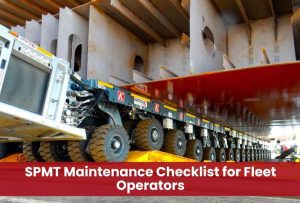
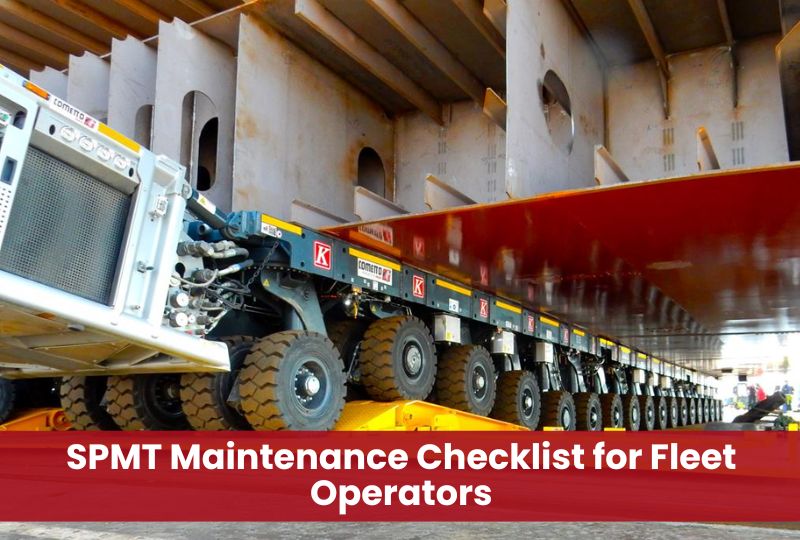
Each axle line’s suspension cylinders, wheel bearings, and steering components should be inspected regularly for wear, especially after projects involving rough or uneven ground conditions. Uneven wear across different axle lines can affect how evenly the platform distributes load during future projects, tying directly back into the calculations covered in our post on SPMT ground bearing pressure.
Tire Condition
Tires carry the full weight of the cargo at each contact point with the ground, so tread wear, inflation pressure, and any visible damage should be checked before every project rather than relying solely on a fixed calendar schedule. Uneven tire wear across a platform can also be an early warning sign of a suspension or alignment issue elsewhere on that axle line that needs further investigation.
PPU Servicing
The power pack unit needs its own dedicated maintenance schedule covering engine servicing, hydraulic pump condition, and fuel system checks. Since the PPU powers every function across the entire platform, any decline in its performance affects the whole transporter rather than a single localized component. Our post on PPU for SPMT explains what this unit does and why its condition matters so significantly to overall platform performance.
Coupling and Electrical Connections
For fleets that regularly couple multiple units together for wider or heavier projects, connection points and control cabling should be checked for wear or damage between projects, since these connections are what keep synchronized units working safely as a single coordinated platform. See our post on coupling multiple SPMT units for more detail on how this synchronized system works and why connection integrity matters so much.
Establishing a Maintenance Schedule
Most fleet operators combine a calendar-based schedule for routine servicing with pre project inspections carried out before every job, regardless of how recently the equipment was last serviced. This dual approach catches both gradual wear that accumulates over time and any issues that may have developed during transport or storage since the equipment was last used.
Record Keeping
Maintaining a detailed service log for each individual axle line and PPU helps track wear patterns over time, supports informed decisions about component replacement, and significantly supports resale value if the equipment is eventually sold. It also supports safety compliance more broadly, since inspection records are often specifically requested by project owners before major projects begin.
Training Maintenance Staff
Because SPMT equipment involves specialized hydraulic and control systems not found on standard vehicles, maintenance staff typically need dedicated training on the specific systems used by their fleet’s manufacturer, rather than relying solely on general heavy equipment maintenance experience.
Spare Parts Planning
Fleet operators working on tight project schedules often keep a stock of commonly needed spare parts on hand, such as hydraulic seals, filters, and wear components for suspension cylinders, rather than ordering parts only after a failure occurs. This is particularly important for fleets operating equipment sourced internationally, where shipping times for replacement parts can be significantly longer than for locally available components, making proactive stocking a meaningful factor in minimizing downtime.
Post Project Inspection
In addition to pre-project checks, a thorough inspection after a project is completed helps identify any wear or damage that occurred during that specific job before the equipment is stored or moved to the next site. Catching an issue immediately after a project, while the cause is still fresh and easy to diagnose, is generally more efficient than discovering the same issue during a pre-project check for the next job, when the original cause may be harder to trace.
FAQ
How often should SPMT equipment be serviced?
This depends on usage intensity, but most fleet operators follow a combination of scheduled calendar intervals and pre project inspections rather than relying on one fixed timetable alone.
Does regular maintenance affect resale value?
Yes, well documented maintenance history is one of the main factors buyers look at when purchasing used SPMT equipment, since it provides confidence in the equipment’s condition beyond a visual inspection alone.
What is the most common cause of unexpected SPMT downtime?
Hydraulic system issues, including leaks or fluid contamination, are among the most common causes, which is why hydraulic checks are typically prioritized in most maintenance schedules.
Should maintenance staff be trained separately from operators?
Generally yes. While there is some overlap in system knowledge, maintenance staff typically need deeper technical training on the specific hydraulic and mechanical systems used by their fleet’s equipment.
Shiyun Trailer builds SPMT platforms with maintenance access and component reliability in mind, supporting long term fleet operation for buyers.