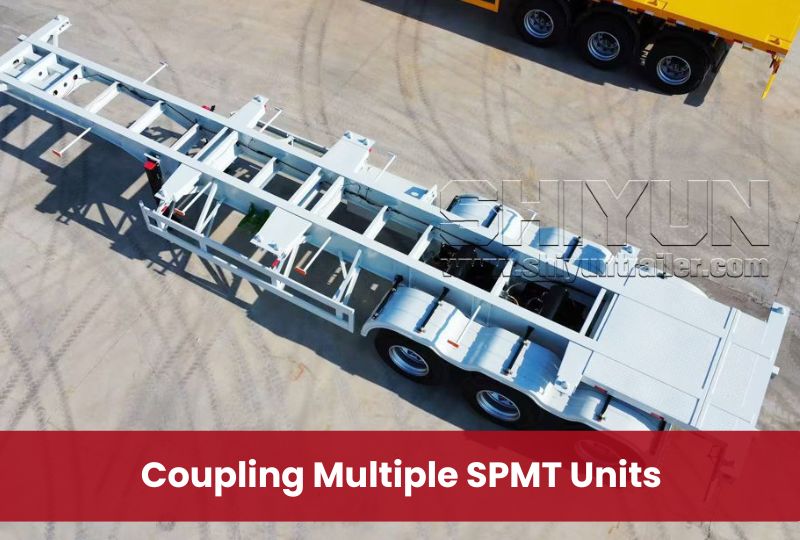
Some cargo is too wide or too heavy for a single SPMT platform to handle, even a large one built from many axle lines. In these cases, multiple units are coupled together mechanically, hydraulically, and electrically to act as one larger, coordinated transporter capable of handling loads far beyond what any single platform could manage alone.
Mechanical Coupling
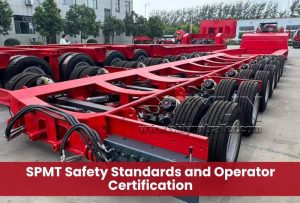
Individual axle lines and files are joined using pinned mechanical connections specifically designed to transfer structural loads between units while still allowing a degree of flexibility for uneven ground conditions. These connections need to be strong enough to keep the combined platform structurally rigid during turning, loading, and unloading, since any weakness at a coupling point could allow sections of the platform to move out of alignment under load.
Hydraulic and Electrical Synchronization
Beyond the physical mechanical connection, coupled units share hydraulic and electrical links so that steering, height adjustment, and drive functions remain synchronized across the entire combined platform. Without this synchronization, one section of the platform could move out of step with another during a maneuver, placing uneven and potentially damaging stress on both the cargo and the transporter structure itself.
Master and Slave Configuration
In many coupled setups, one power pack unit is designated as the master, sending coordinated commands to the rest of the connected platform, while additional PPUs act as slaves following those commands in real time. This master and slave arrangement keeps a large multi unit platform fully responsive to a single operator’s controls, even when the combined structure spans dozens of axle lines and multiple separate power sources working in unison.
Structural Considerations When Coupling
Coupling introduces additional structural considerations beyond what a single platform requires. Engineers need to account for how loads transfer across coupling points, particularly for cargo that spans the joint between two coupled units, since the connection itself becomes part of the load path rather than simply a mechanical link holding equipment together.
Applications for Coupled Platforms
Wide bridge deck sections, large offshore modules, and oversized industrial equipment are common cases where coupled SPMT units are used, since these loads frequently exceed the practical width or capacity of a single platform built from one manufacturer’s standard file configuration. We cover a specific example of this kind of application in our post on SPMT applications in bridge girder launching.
Planning a Coupled Configuration
Deciding how many units to couple and how to arrange them relies on the same load capacity and ground bearing calculations used for a single platform, just applied across a larger combined structure with additional coupling considerations layered on top. See our posts on SPMT load capacity calculation and SPMT axle line configuration for the underlying calculations that inform this larger scale planning.
Coordinating a Large Crew
Operating a coupled multi unit platform typically requires a larger crew than a single platform move, since additional personnel are often needed to monitor clearances at multiple points along the extended structure and to maintain communication between the lead operator and support staff spread across a wider footprint.
Testing a Coupled Configuration Before the Real Move
Because coupling introduces additional complexity beyond a single platform, experienced operators typically carry out a dry run or slow speed test of a newly coupled configuration before attempting the actual cargo move. This test checks that synchronization between units is working correctly across steering, height adjustment, and drive functions, catching any communication or calibration issues in a low risk setting rather than discovering them for the first time while carrying a heavy, valuable load.
Disassembly and Reconfiguration Between Projects
Just as coupling takes careful planning, disassembling a coupled configuration and reconfiguring the same axle lines into different arrangements for a future project also requires attention to detail, particularly around confirming that mechanical, hydraulic, and electrical connections are fully and correctly reestablished before the platform is used again. This is one more reason detailed maintenance and configuration records matter for fleets that regularly couple and decouple equipment across different projects.
When Coupling Is the Right Call
Not every wide or heavy load automatically requires coupling multiple units. In some cases, a manufacturer’s largest standard platform configuration is enough on its own, and coupling only becomes necessary once cargo dimensions or weight exceed what a single platform, even fully built out with maximum files and lines, can reasonably handle. Working through this threshold early with an experienced transport engineer helps avoid the added cost and complexity of coupling when a simpler single platform solution would do the job just as well.
FAQ
Can different brands of SPMT be coupled together?
Generally no. Coupling requires matching mechanical, hydraulic, and control system interfaces, so mixed brand configurations are uncommon and usually not supported by manufacturers.
Does coupling reduce the total load capacity compared to separate units?
Not significantly, provided the coupling connections and synchronization systems are properly rated for the combined load. The main constraint typically remains ground bearing pressure and individual axle line limits rather than the coupling itself.
How many SPMT platforms can realistically be coupled together?
This depends on the manufacturer’s system design and the project’s specific requirements, but it is common for large infrastructure projects to couple several platforms together when cargo width or weight demands it.
Is a larger crew always needed for coupled platform operation?
Typically yes, since monitoring clearances and coordinating movement across a wider, longer combined structure usually requires more personnel than operating a single standard platform.
Shiyun Trailer’s modular transporter systems are designed with standardized coupling interfaces, allowing multiple units to be combined for wider or heavier project requirements.