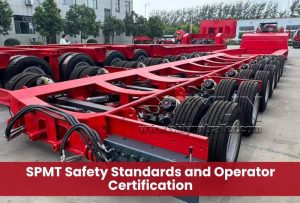
Operating an SPMT in China safely requires far more than knowing how to press the buttons on a remote control unit. Because a single mistake can put an extremely heavy load, valuable cargo, and nearby personnel at serious risk, safety standards and operator training are taken seriously across the heavy transport industry worldwide.
Regulatory Framework in China
In China, heavy transport equipment including SPMTs is generally expected to align with GB 1589-2016, the national standard covering vehicle dimensions and axle loads, along with site-specific safety procedures set by the project owner or the EPC contractor managing the overall construction site. Manufacturers building equipment intended for export should be able to demonstrate how their design supports compliance with relevant standards in the destination market as well, since regulatory requirements can differ meaningfully between countries.
Operator Training Requirements
SPMT operators typically go through structured training covering equipment controls, basic load calculation principles, communication procedures during a move, and emergency response steps for various failure scenarios. Because moves are usually planned and executed by a small coordinated team rather than a single individual, training also covers effective coordination between the lead operator controlling the remote and any support staff walking alongside the load to monitor clearances and communicate hazards.
Pre Move Risk Assessment
Before any SPMT move begins, a thorough risk assessment is normally carried out covering the planned route, current ground conditions, weather forecasts, and communication protocols to be used throughout the operation. This assessment ties directly into calculations covered in our posts on SPMT load capacity and ground bearing pressure, since an accurate risk assessment depends on those underlying engineering figures being correct.
Equipment Inspection Before Use
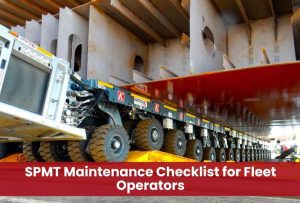
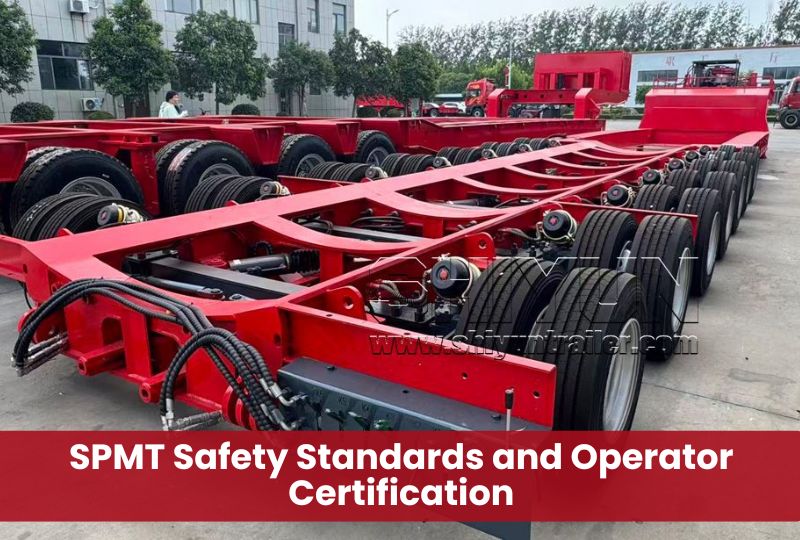
Safety standards also cover the physical condition of the equipment itself before it is put into service for a project. Axle lines, hydraulic systems, and the PPU should be inspected thoroughly before each project begins, with any identified issues addressed before the equipment is used rather than deferred to a later maintenance cycle. Our post on SPMT maintenance for fleet operators outlines what this kind of pre-project inspection typically involves.
Communication During a Move
Because SPMT moves often involve multiple operators and support staff walking alongside a slow moving, extremely heavy load, clear communication protocols, usually implemented through radio or a dedicated hand signal system, form a core part of safe operation. This is especially important when visibility is limited, when the route includes tight turns near fixed obstacles, or when multiple pieces of equipment are operating in close proximity on the same site.
Emergency Procedures and Contingency Planning
Well run SPMT operations include documented emergency procedures covering scenarios such as a hydraulic failure, an unexpected obstruction along the route, or ground conditions that turn out to be worse than surveyed. Having these procedures established and communicated to the full crew before a move begins reduces the chance of a minor issue escalating into a serious incident.
Ongoing Safety Culture and Refresher Training
Beyond initial certification, many operators and companies maintain an ongoing safety culture through periodic refresher training and post project reviews, particularly after any incident or near miss. This continuous improvement approach helps identify recurring risk factors across multiple projects rather than treating each safety review as an isolated event.
Exclusion Zones and Third Party Safety
SPMT moves typically require a defined exclusion zone around the platform and cargo, keeping non-essential personnel at a safe distance while the move is underway. On active construction or industrial sites, coordinating this exclusion zone with other trades and site traffic requires clear advance communication, often managed jointly by the SPMT operator’s safety lead and the broader site safety management team responsible for the project as a whole.
Documentation and Permit Requirements
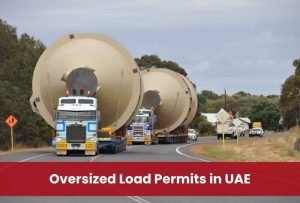
Depending on the jurisdiction and the nature of the route, SPMT moves may require permits covering road use, temporary closures, or oversized load notifications, particularly when any portion of the move crosses public infrastructure. Confirming these requirements early in project planning avoids last-minute delays, since permit approval timelines can sometimes take longer than the physical preparation for the move itself.
FAQ
Is SPMT operator certification standardized across countries?
Not fully. While general safety principles are broadly similar worldwide, specific certification requirements vary by country and sometimes by individual project owner, so operators should check local requirements carefully for each new job.
Who is responsible for safety on an SPMT project?
Responsibility is usually shared between the equipment owner or operator, the project’s dedicated safety management team, and the EPC contractor overseeing the overall installation, with clear roles typically defined before the project begins.
What happens if ground conditions are worse than expected during a move?
A well-planned project includes contingency procedures for this scenario, which may involve pausing the move, adding load-spreading mats, or adjusting the route based on real time assessment by the site engineer.
How often should operators receive refresher training?
This varies by company and by local regulatory requirements, but periodic refresher training combined with post-project reviews is considered good practice across the industry regardless of specific mandated intervals.