Wind turbine components present a unique transport challenge because they combine extreme length, unusual shape, and considerable weight, often in remote or otherwise difficult terrain that was never designed with heavy transport equipment in mind.
The Challenge of Turbine Components
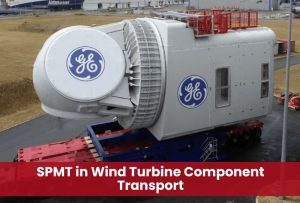
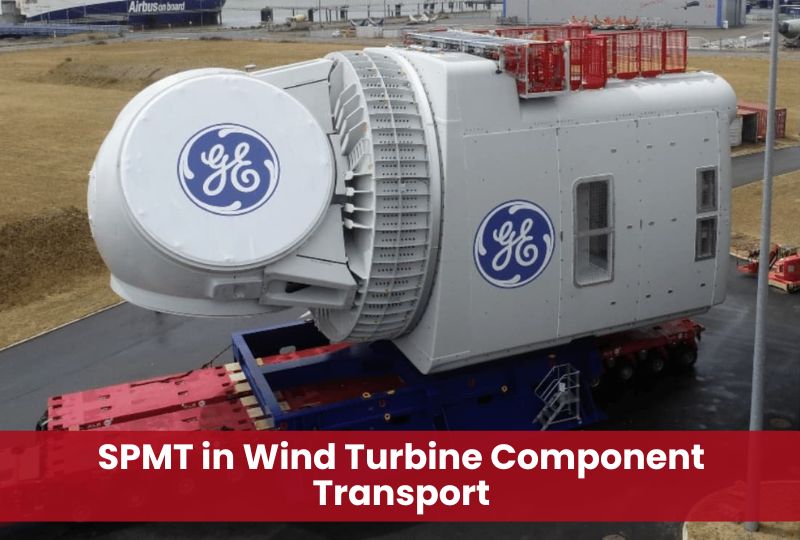
Tower sections can be several meters in diameter and tens of meters long, requiring careful handling to avoid damage during transport. Nacelles, which house the generator and gearbox at the top of the turbine, are extremely heavy and dense for their relatively compact size. Blades are long and awkward to maneuver, though generally lighter than towers or nacelles for their length. Each component type presents its own handling requirements once it reaches the wind farm site.
Where SPMTs Fit In
While long haul transport of turbine components between fabrication and the wind farm is usually handled by specialized road trailers designed for length or weight, SPMTs come into play for the final on site movement, positioning nacelles and tower sections precisely near the base of the turbine or moving components across unpaved, uneven ground close to the installation point where standard trailers may struggle.
Handling Uneven Terrain
Wind farm sites are often located on hills, agricultural land, or other terrain that is not paved or leveled in the way an industrial site typically is. SPMT hydraulic suspension allows each axle line to adjust independently, keeping the platform and cargo stable even when the ground surface varies significantly across a short distance, which is common on the access roads and turbine pads found at many wind energy sites.
Precision Positioning for Installation
Nacelle and tower sections need to be positioned accurately for crane pickup and final assembly at the turbine base. The same fine positioning capability used in bridge girder launching applies equally here, allowing operators to make small adjustments in height and angle to line up components exactly where the installation crane needs them. This is covered in more detail in our post on SPMT hydraulic steering system.
Working Alongside Cranes
Turbine installation almost always involves a large crane for the final vertical lift onto the tower, given the height involved in modern wind turbine designs. SPMTs typically handle the horizontal movement leading up to that lift, positioning components close enough and precisely enough for the crane to complete the installation efficiently. Our comparison post on SPMT vs crane for heavy lifts explains how the two pieces of equipment complement each other on projects like this.
Access Road and Site Preparation Planning
Because wind farm sites are often remote, the access roads leading to each turbine location need to be assessed for both width and ground bearing capacity before an SPMT move is planned. Unlike a fixed industrial site, wind farm access roads are frequently temporary or purpose-built for construction, which means their bearing capacity may not be well documented in advance and often requires a dedicated survey.
Sequencing Across Multiple Turbine Locations
Large wind farm projects typically involve installing dozens or even hundreds of turbines, which means SPMT equipment often needs to move efficiently between multiple sites across the project rather than working at a single fixed location. Planning this sequencing well can significantly reduce overall project timelines by minimizing equipment downtime between turbine installations.
Working in Remote and Weather-Exposed Locations
Many wind farm sites are located in exposed, elevated, or otherwise remote locations specifically chosen for strong and consistent wind resources, which can also mean more challenging conditions for transport equipment. Wind speed itself is a significant operational factor, since strong gusts can affect the stability of tall components during positioning, and many wind farm construction schedules build in weather contingency time for this reason, similar to practices used in bridge girder launching.
Coordinating With Turbine Installation Contractors
SPMT transport on a wind farm project typically needs close coordination with the specialized turbine installation contractor responsible for the final crane lift and assembly. Because installation crews often work to a tight sequence across many turbines, the transport team needs to deliver components on a schedule that keeps pace with installation capacity, rather than either falling behind or delivering components faster than they can be installed and stored safely on site.
FAQ
Can SPMTs transport wind turbine blades?
Yes, though blades are more commonly moved by specialized extendable trailers due to their considerable length. SPMTs are more often used for tower sections and nacelles, where weight and challenging ground conditions are the bigger factors.
Do wind farm sites need special ground preparation for SPMT use?
Often some grading or access road preparation is needed, but SPMTs generally require less intensive ground preparation than a crane pad, since the load is spread across many axle lines rather than concentrated at a small number of outrigger points.
How does SPMT use differ across multiple turbines on the same wind farm?
Equipment typically needs to be moved efficiently between turbine locations, which requires careful route and schedule planning across the project rather than treating each turbine installation as a fully isolated task.
What is the biggest challenge for SPMT use on wind farm sites?
Variable and often undocumented ground conditions along temporary access roads tend to be the biggest planning challenge, which is why a dedicated survey is usually necessary before finalizing the transport plan.
Shiyun Trailer’s SPMT platforms are engineered for the varied ground conditions found on infrastructure and energy projects, including wind farm installation sites.