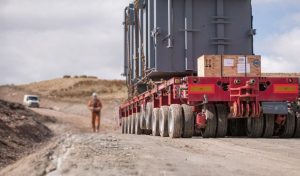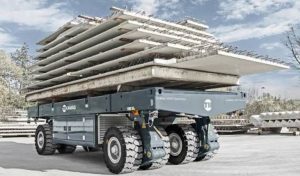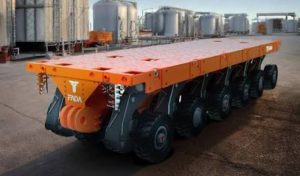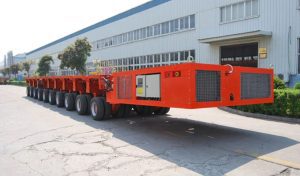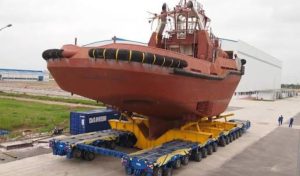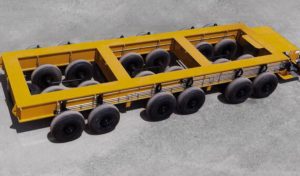
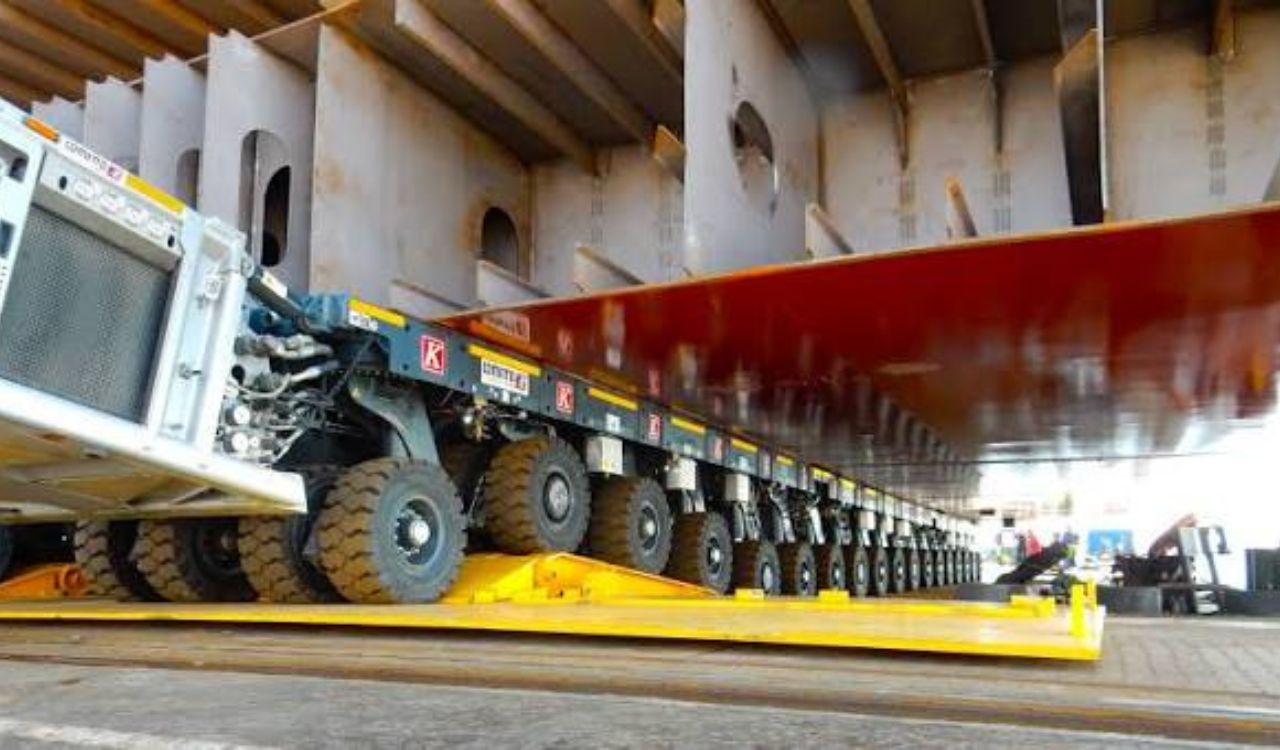
Self-Propelled Modular Transporters (SPMTs) are designed to move extremely heavy and oversized loads across industrial sites, construction areas, ports, shipyards, and other demanding environments. When transporting such loads, maintaining a stable platform is essential because even relatively small changes in ground level can affect load distribution and transporter performance. This is where the SPMT hydraulic suspension system plays an important role.
Unlike conventional trailer suspension systems, SPMTs use hydraulic suspension to allow individual axle lines to move vertically and respond to changes in the supporting surface. This flexibility helps keep the transporter platform controlled while moving over uneven ground, ramps, joints, and other changes in elevation. In comparison, a tank trailer is generally designed around the specific requirements of transporting liquid cargo, with its chassis and suspension system configured for a different type of load and operating environment. For extremely heavy and oversized cargo, the independent hydraulic movement of SPMT axle lines provides greater flexibility when maintaining platform stability across changing ground conditions.
What Is SPMT Hydraulic Suspension?
SPMT hydraulic suspension is a hydraulic system that connects the transporter frame with its axle lines. Each suspension unit can respond to changes in the ground surface by extending or retracting within its available stroke.
The system allows the transporter to maintain a more controlled platform position while the wheels encounter different elevations. Hydraulic cylinders, suspension components, control valves, and the hydraulic power system work together to manage this movement.
The exact design varies between SPMT manufacturers and configurations, but the basic objective remains the same: provide controlled vertical movement while supporting and distributing the heavy load across the available axle lines.
How Does SPMT Hydraulic Suspension Work?
When an SPMT moves across a level surface, the suspension system maintains the required hydraulic pressure and supports the load through the axle lines. When one section of the transporter encounters a change in elevation, the corresponding suspension components can move vertically.
The hydraulic system responds to these changes and helps maintain load support across the transporter. This is particularly useful when several SPMT modules are connected together because the hydraulic system can help coordinate the behavior of the interconnected axle lines.
The suspension does not eliminate every effect of uneven ground. Instead, it provides controlled movement that allows the transporter to adapt to surface variations while maintaining appropriate support.
Why Hydraulic Suspension Is Important for Heavy Loads
A very heavy load places significant forces on the transporter structure and supporting surface. If the load is distributed unevenly, individual axle lines can experience different reactions.
Hydraulic suspension helps manage these differences by allowing controlled vertical movement at the axle lines. This can help maintain more consistent load support and reduce excessive concentration of forces at individual points.
For oversized cargo such as transformers, industrial modules, pressure vessels, and large structural components, maintaining a stable transport platform is particularly important because the cargo may have a high center of gravity or an irregular weight distribution.
Hydraulic Suspension and Uneven Ground
Construction sites and industrial facilities rarely provide perfectly flat surfaces throughout the entire transportation route. SPMTs may need to cross:
- Uneven pavement
- Expansion joints
- Temporary access roads
- Sloped surfaces
- Changes in elevation
- Surface transitions
- Construction areas
As the transporter moves over these conditions, the hydraulic suspension allows the axle lines to respond to changes in elevation.
This capability is one reason SPMTs can be configured for demanding heavy-haul movements where conventional transportation equipment may have difficulty maintaining the required platform position.
Maintaining Platform Stability
One of the key functions of hydraulic suspension is helping maintain the relative position of the transporter deck as the axle lines move over different ground elevations.
This becomes especially important when transporting long or wide loads. A sudden difference in elevation between different sections of the transporter can influence the orientation of the load.
Hydraulic suspension provides controlled vertical movement that helps the transporter respond to these changes. However, the suspension system must operate within its designed stroke and pressure limits, and the route must be properly evaluated before transportation begins.
Load Distribution Across Axle Lines
SPMTs are commonly configured with multiple axle lines so that very heavy loads can be distributed across a large number of wheels and suspension points.
Hydraulic suspension supports this arrangement by allowing individual axle lines to accommodate changes in surface elevation while continuing to support the load.
Proper load distribution depends on more than suspension alone. Engineers also need to consider:
- Cargo weight
- Center of gravity
- Number of axle lines
- Module arrangement
- Deck configuration
- Hydraulic system settings
- Ground-bearing capacity
Correct configuration is essential for maintaining stable and controlled transportation.
Hydraulic Suspension During Turning
Hydraulic suspension also interacts with transporter behavior during steering and turning. When the SPMT changes direction, the forces acting on different parts of the transporter can change.
The suspension system must accommodate these changes while maintaining appropriate support. This is particularly important when transporting a high or unusually shaped load.
For complex movements, engineers may evaluate the complete transporter and cargo configuration to determine whether the available suspension movement, steering capability, and ground conditions are suitable.
SPMT Suspension Stroke
Suspension stroke refers to the available vertical movement of the hydraulic suspension system.
A sufficient suspension stroke allows the axle lines to respond to changes in ground elevation without reaching the limits of their movement. If a route contains significant changes in elevation, the available suspension stroke becomes an important engineering consideration.
The required stroke depends on the specific SPMT design, load, module configuration, and route conditions. Operators should always work within the manufacturer’s specified operating range.
Hydraulic Suspension and Ground Conditions
The hydraulic suspension system does not replace proper ground preparation.
Before an SPMT operation begins, engineers should assess whether the route can support the combined load of the transporter and cargo. Ground-bearing capacity, surface condition, drainage, gradients, and potential settlement can all influence the safety and performance of the operation.
If the supporting surface is too weak, hydraulic suspension cannot compensate for inadequate ground capacity. In such situations, ground improvement, steel plates, mats, temporary roads, or other engineering measures may be required.
SPMT Hydraulic Suspension vs Conventional Trailer Suspension
Conventional trailers typically use suspension systems designed for highway transportation and specific road conditions. SPMTs are different because they are engineered for modular configurations and extremely heavy loads, often within controlled industrial or project environments.
The hydraulic suspension of an SPMT provides a greater degree of control over individual axle-line movement. This allows multiple modules to work together as a coordinated transportation platform.
The difference is particularly noticeable in applications where the transporter needs to carry very heavy loads over relatively short distances while making precise movements and managing changes in ground elevation.
Applications of SPMT Hydraulic Suspension
Hydraulic suspension is useful across many heavy-haul applications.
Industrial Equipment
Large transformers, generators, reactors, and other industrial equipment can require controlled transportation from unloading areas to installation locations.
Construction Modules
Large prefabricated structures and construction modules may need to be moved across project sites where road conditions are temporary or uneven.
Shipyard Operations
SPMTs are commonly suited to controlled movement within shipyards, where large sections and heavy components may need to be repositioned accurately.
Infrastructure Projects
Large bridge components and other structural elements may require modular transportation across prepared or temporary access routes.
Factors That Affect Hydraulic Suspension Performance
Several factors can influence how effectively an SPMT suspension system performs.
Load distribution: Uneven cargo loading can cause different axle lines to experience different forces.
Ground condition: Weak, uneven, or unstable ground can affect transporter movement and suspension response.
Hydraulic pressure: The hydraulic system must operate within the manufacturer’s specified pressure and control parameters.
Suspension stroke: The available vertical movement must be sufficient for the route conditions.
Module configuration: Connecting multiple modules changes the overall load distribution and suspension behavior.
Cargo geometry: Long, tall, or flexible loads may require additional consideration during changes in elevation.
Best Practices for SPMT Hydraulic Suspension
Before beginning a heavy-haul operation, the project team should inspect the transporter, verify the hydraulic system, and review the planned route.
Important practices include:
- Inspecting hydraulic cylinders and connections
- Checking for hydraulic leaks
- Confirming appropriate hydraulic pressure
- Reviewing suspension stroke requirements
- Assessing ground-bearing conditions
- Confirming correct load distribution
- Testing the transporter before the main movement
- Monitoring the load and transporter during operation
Operators should also follow the equipment manufacturer’s operating procedures and project-specific engineering requirements.
Limitations of Hydraulic Suspension
Although hydraulic suspension provides significant flexibility, it has operational limits. It cannot compensate for severely inadequate ground conditions, excessive gradients, improper load distribution, or an unsuitable transporter configuration.
Hydraulic components can also require regular inspection and maintenance. Leaks, damaged hoses, malfunctioning valves, or control-system problems can affect suspension performance and should be addressed before transportation.
For this reason, hydraulic suspension should be considered as one part of a complete SPMT engineering and operating system rather than as a standalone solution.
Conclusion
SPMT hydraulic suspension is an important component of modern modular heavy-load transportation. By allowing individual axle lines to respond to changes in ground elevation, the system helps maintain controlled load support and transporter stability when operating on uneven or changing surfaces.
Its effectiveness depends on proper transporter configuration, load distribution, hydraulic system condition, suspension stroke, and ground preparation. When these factors are evaluated together, hydraulic suspension can help SPMTs move extremely heavy cargo in demanding industrial and construction environments with greater control and flexibility.
Frequently Asked Questions
What is the purpose of hydraulic suspension on an SPMT?
The main purpose is to provide controlled vertical movement between the transporter frame and axle lines, helping the SPMT respond to changes in ground elevation while supporting the load.
Can SPMT hydraulic suspension handle uneven ground?
Yes, within the designed operating limits. The suspension allows axle lines to move vertically as the transporter travels across changes in surface elevation.
Does hydraulic suspension improve load distribution?
It can help maintain support across multiple axle lines as ground elevations change. However, proper load distribution also depends on the cargo weight, center of gravity, module configuration, and engineering setup.
Can hydraulic suspension compensate for weak ground?
No. Hydraulic suspension cannot replace adequate ground-bearing capacity. Weak or unstable ground may require reinforcement or other ground-preparation measures.
What is suspension stroke?
Suspension stroke is the available vertical movement of the hydraulic suspension. Adequate stroke allows the axle lines to respond to changes in elevation without reaching their movement limits.
Why is hydraulic suspension important for oversized cargo?
Oversized cargo can be heavy, long, wide, or have a high center of gravity. Controlled suspension movement helps maintain a stable transport platform as the SPMT travels over changing ground conditions.
How is SPMT hydraulic suspension maintained?
Maintenance generally includes inspection of hydraulic cylinders, hoses, valves, connections, and control components, along with checking for leaks and ensuring the system operates within the manufacturer’s specified parameters.