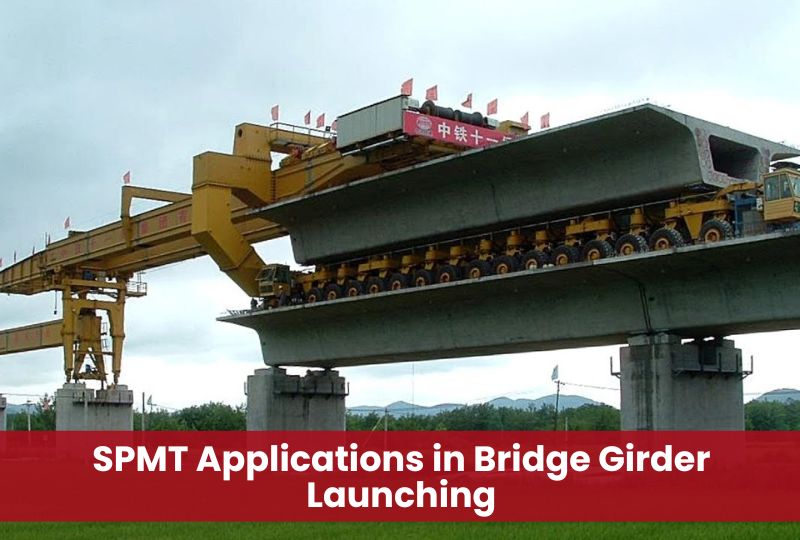
Bridge girder launching is one of the most demanding SPMT applications for heavy transport equipment, combining long, heavy cargo with tight positioning tolerances and often challenging site conditions. SPMTs have become a standard tool for moving large precast or steel girders into position on modern bridge construction projects around the world.
Why Girder Launching Is Difficult
Bridge girders are long, heavy, and often need to travel from a casting yard or fabrication area to a position spanning a gap, river, valley, or existing roadway. Traditional cranes can struggle with this task if there is no stable ground nearby for outriggers, or if the girder needs to travel a considerable distance before reaching its final placement point, since repositioning a large crane repeatedly along a route is often impractical.
How SPMTs Handle Girder Transport
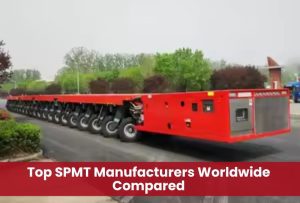
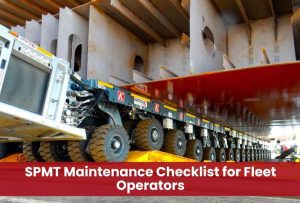
An SPMT platform picks up the girder at the casting yard or storage area, using its hydraulic suspension to lift the load evenly across all connected axle lines. The transporter then carries the girder along a carefully prepared route to the bridge site, using coordinated turning for the bulk of the journey and switching to crab steering when precise lateral alignment with the final support position is needed as the girder approaches its resting point.
Combining SPMTs With Launching Gantries
On many projects, SPMTs work alongside a launching gantry or temporary support structure specifically built for the bridge construction. The transporter moves the girder into rough position near the span, and the gantry or an accompanying crane then completes the final placement onto the piers or bearings. This combined approach, discussed further in our post on SPMT vs crane for heavy lifts, allows each piece of equipment to handle the part of the job it is best suited for.
Ground Conditions on Bridge Projects
Bridge construction sites often include a mix of temporary access roads, existing pavement, and areas near open water or soft riverbank soil, all of which can vary considerably in bearing capacity along a single planned route. Careful ground bearing pressure review, covered in our post on SPMT ground bearing pressure calculation, is essential before finalizing the transport route for a girder launching project.
Precision Positioning
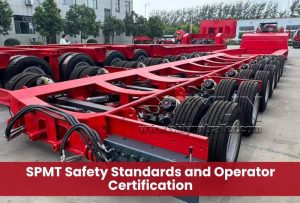
Bridge girders often need to be placed within very tight tolerances onto their final bearings, sometimes within just a few centimeters of the design position. SPMT hydraulic suspension allows fine height and angle adjustment at each individual axle line, which is what makes this level of precision achievable in practice. Our post on SPMT hydraulic steering system explains how this level of control is achieved across the platform.
Sequencing Multiple Girder Launches
Large bridge projects often involve launching many girders in sequence rather than a single move, which requires careful scheduling to keep the SPMT platform, crew, and casting yard production in sync. Efficient sequencing can significantly affect overall project timelines, since delays in one girder launch can cascade into the schedule for subsequent launches if the platform cannot be turned around quickly between moves.
Weather and Timing Considerations
Girder launching operations are often sensitive to weather conditions, particularly wind, which can affect the stability of long, tall girders during transport and final placement. Many projects build weather contingency windows into their schedule specifically to account for days when conditions are not suitable for a safe launch.
Coordinating With Traffic and Public Infrastructure
Many bridge projects take place near active roadways, railways, or waterways that cannot simply be shut down for the duration of construction. Girder launching schedules often need to be coordinated with traffic management plans, temporary closures, or shipping channel restrictions, particularly when the SPMT route crosses or runs parallel to infrastructure still in public use. This coordination typically involves the project owner, local authorities, and sometimes utility operators in addition to the transport and construction teams.
Quality Control During the Launch
Beyond the transport itself, most girder launching projects include a quality control process that verifies the girder’s final position against design drawings before it is permanently secured. Survey checks are typically carried out at multiple stages, both during the approach and immediately after final placement, to confirm alignment falls within the tolerances required by the bridge design before the SPMT platform withdraws.
Frequently Asked Questions
How heavy are typical bridge girders moved by SPMT?
This varies considerably by project, but precast concrete girders and large steel box girders can each weigh anywhere from tens to several hundred tonnes, which is why axle line count is calculated individually for each project rather than using a standard configuration.
Do SPMTs replace launching gantries?
Not usually. They are often used together, with the SPMT handling horizontal transport from the casting yard and the gantry or crane handling the final vertical placement onto piers or bearings.
How precise is SPMT positioning during girder launching?
Very precise, since hydraulic suspension at each axle line allows fine adjustments in height and angle, which is necessary given the tight tolerances required when placing a girder onto its final supports.
What weather conditions typically delay a girder launch?
High wind is the most common factor, since it can affect the stability of long, tall girders both during transport and during the final placement phase.
Shiyun Trailer supplies SPMT platforms suited to infrastructure projects including bridge girder transport, with axle configurations sized to project-specific weight and route requirements.