
If you are planning a shipment or buying new equipment, trailer width is one of the first numbers you need to get right. A heavy duty flatbed trailer that is too narrow limits your cargo options. One that is too wide, or improperly loaded, can trigger permit requirements and fines. This guide breaks down flatbed trailer dimensions in plain terms, so you know exactly what to expect before you book a load or order a trailer.
How Wide Is a Flatbed Trailer?
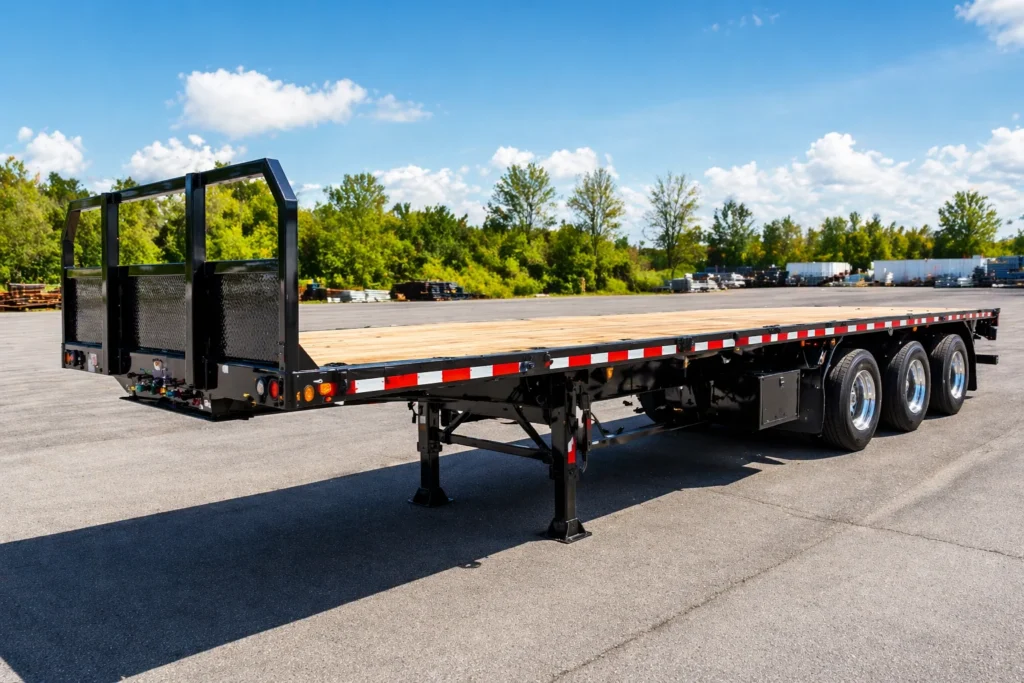
A standard flatbed trailer is 8.5 feet wide, or 102 inches. This is the maximum legal width allowed on the U.S. National Network without an oversize permit, as set by federal regulation 23 CFR 658.15. Almost every standard flatbed on the road today is built to this exact deck width, since it lets carriers haul the widest possible load without extra paperwork.
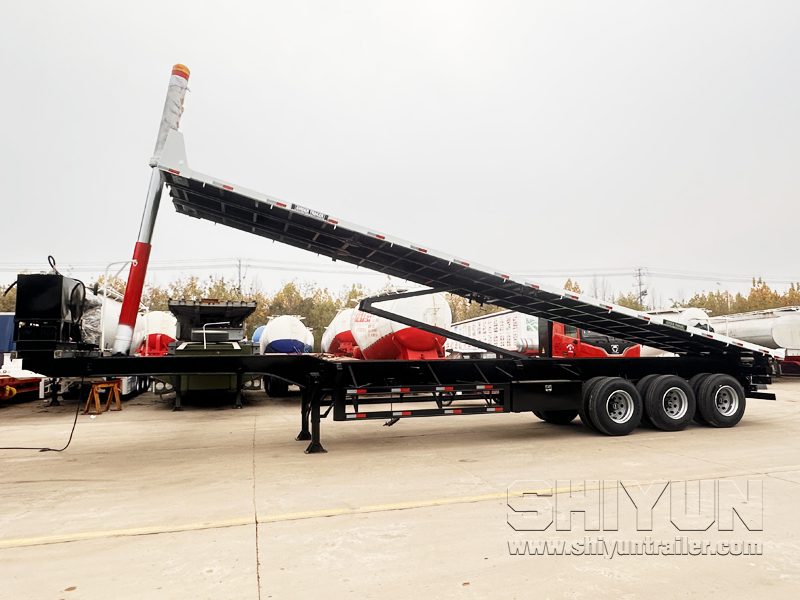
This 102-inch figure refers to the trailer deck itself. The legal cargo width is also capped at 8.5 feet, so in most cases the deck width and the maximum load width line up. Any cargo that overhangs the deck, even by a few inches per side, turns the shipment into an oversize load that needs a permit and possibly a pilot car escort.
It is worth noting that the 102-inch rule leaves out a few things from the official measurement. Mirrors, turn signal lights, and some flexible fender extensions do not count toward the legal width, which is why a tractor can look wider than 102 inches at first glance and still be fully compliant.
Flatbed Trailer Dimensions by Type
Width stays fairly consistent across flatbed types. What changes more is length and deck height. Here is a quick breakdown of the most common configurations.
Standard flatbed: Length runs 48 to 53 feet, width is 8.5 feet, and deck height sits around 5 feet off the ground. Legal cargo height on a standard flatbed tops out near 8.5 feet.
Step deck (drop deck): Same 48 to 53-foot length and 8.5-foot width, but the upper deck steps down to a lower deck around 3.5 feet off the ground. That drop gives you roughly 10 feet of cargo height clearance, useful for taller equipment.
Double drop (lowboy): Width holds at 8.5 feet, but the well height drops to as low as 18 to 24 inches. This lets you legally haul cargo up to 11 or 12 feet tall without a height permit.
Extendable flatbed: Width and height match a standard flatbed, but the deck can stretch anywhere from 48 feet up to 80 feet, depending on the model. This is the go-to option for long structural steel, pipe, or wind energy components.
RGN (removable gooseneck): Width remains near 8.5 feet, but the detachable front end allows equipment to drive directly onto the deck instead of being craned on, which is a major advantage for heavy machinery.
Across nearly every category, width is the constant. Length, deck height, and loading method are where trailers actually differentiate themselves.
Relevant Reading: How Much Weight Can a Flatbed Trailer Hold?
Why Flatbed Width Matters for Shippers
Deck width affects more than just what fits on the trailer. It determines securement strategy, since tie-down points and stake pockets are spaced based on the standard 102-inch deck. It also affects route planning, because bridges, tunnels, and some rural roads have narrower clearances than the interstate system. And it directly determines whether your shipment needs a permit.
If your cargo is 8 feet wide or less, you are generally in the clear on a standard flatbed. Once you approach or exceed 8.5 feet, plan for permit costs, possible escort vehicles, and route restrictions depending on the state.
Custom Flatbed and Special Transport Solutions
At Shiyun Trailer, we manufacture flatbed, lowbed, and special transport trailers built to standard 102-inch deck width, and we also offer fully customized configurations for oversized or unusually shaped cargo. Whether you need a standard flatbed or a heavy-duty modular transporter, our team can help you match the deck to your exact load.
Frequently Asked Questions
What is the standard width of a flatbed trailer?
Most flatbed trailers are 8.5 feet, or 102 inches, wide. This matches the federal width limit for commercial vehicles on the U.S. National Network.
Can a flatbed trailer be wider than 8.5 feet?
Yes, but only specialized overwidth trailers are built beyond 102 inches, and any load over that width requires an oversize permit.
Does deck width change between flatbed types?
Not usually. Standard flatbeds, step decks, lowboys, and extendable trailers are all typically 8.5 feet wide. Length and deck height are what vary between them.
How wide can cargo be before I need a permit?
Once cargo exceeds 8.5 feet in width, it is classified as an oversize load and will need a permit, and in some cases an escort vehicle, depending on your state.
Summary
Flatbed trailer width is one of the simplest specs to remember since almost every type sticks to the same 8.5-foot standard. The real planning work comes in matching length, deck height, and loading style to your specific cargo. Getting these numbers right before you book a load or order equipment saves you from permit headaches and wasted trips down the road.
Relevant Reading: Flatbed vs Dry Van Trailer