A self-propelled modular transporter is not one solid machine. It is built from individual axle lines that are joined together in rows and columns, then coordinated as a single platform through a shared control system. Understanding how these lines are configured is the starting point for planning almost any heavy transport project, because axle count and arrangement determine what the platform can safely carry, how wide it can be, and how it will handle on-site.
What an Axle Line Actually Is
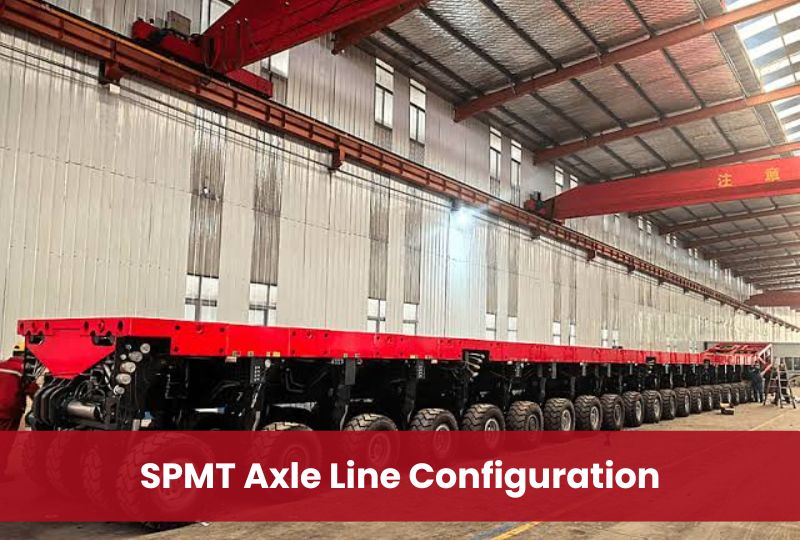
An axle line is one row of wheels running across the width of the transporter. A single line typically carries four or six wheels, and each wheel is fitted with its own hydraulic suspension cylinder. These cylinders allow every wheel to move up and down independently, so the deck stays level even when the ground underneath varies from one wheel to the next. This independent suspension is one of the core design features that separates an SPMT from a conventional multi-axle trailer, which usually relies on shared axle groups rather than individually controlled wheels.
Each axle line also includes its own steering mechanism, drive components, and connection points that link it mechanically, hydraulically, and electrically to the lines beside it. On its own, a single axle line has limited use. Its value comes from how it works together with the rest of the platform.
Building a Platform From Files and Rows
Axle lines are connected end to end to form what is often called a file. A file might be six or eight lines long, forming a narrow platform suited to a compact load. When more width is needed, files are placed side by side, and the number of files used depends entirely on the cargo’s footprint. A narrow module might sit on two files. A wide bridge deck section or an oversized industrial vessel might require six or eight files placed side by side, effectively turning dozens of individual axle lines into one wide, coordinated deck.
This modular approach is where the name self-propelled modular transporter comes from. Unlike a fixed trailer with a set number of axles, an SPMT platform can be reconfigured project by project, adding or removing lines and files to match the cargo rather than forcing the cargo to match a fixed piece of equipment.
Why Axle Count Changes Per Project
Adding axle lines does two things at once. It raises the total weight the platform can carry, and it lowers the load applied to the ground under each individual wheel. Before any project begins, engineers calculate how much weight each line will realistically carry once the cargo’s shape and center of gravity are factored in, and they compare this against how much pressure the ground along the planned route can safely tolerate. Soft soil, a finished concrete floor, or an existing bridge deck each has its own bearing limit, and axle count is often driven as much by ground conditions as by the raw weight of the cargo. For a full walkthrough of this part of the process, see our guide on SPMT ground bearing pressure.
Coupling Lines Together
Modern SPMT lines use pinned mechanical couplings between units, along with hydraulic and electrical connections that let the whole platform steer, lift, and drive as one coordinated machine. This is what allows an operator standing at a remote control station to move a platform made up of twenty or more individually powered axle lines with the same precision as steering a single vehicle. When a project needs more capacity than one file of lines can provide, operators link multiple platforms together entirely, which introduces its own set of engineering considerations covered in our post on coupling multiple SPMT units
Axle Lines and Load Capacity Planning
It is a common mistake to assume the load capacity of a full transporter is simply the rated capacity of one axle line multiplied by the number of lines used. Real world capacity planning also depends on how weight is distributed across the deck, where the cargo’s center of gravity sits relative to the platform, and the additional dynamic loads that occur during turning, braking, and travel over uneven ground. A module that appears evenly balanced on paper can still overload certain axle lines if its actual weight distribution is not accounted for. We walk through this calculation step by step in our guide on how to calculate SPMT load capacity/.
Typical Axle Line Arrangements by Project Size
While every project is engineered individually, some general patterns are common across the industry. Lighter modules in the range of a few hundred tonnes might use a single file of four to six lines. Mid-sized industrial equipment or shorter bridge segments often use two to four files working together. Very large cargo, such as offshore platform modules or long bridge girders, can require configurations using twenty, thirty, or more axle lines spread across many files, sometimes combined with coupled platforms to achieve both the width and capacity required.
FAQ
How many axle lines does a typical SPMT project use?
It varies widely by cargo weight and shape. Light modules may need only four to six lines, while large bridge segments or offshore modules can require twenty or more lines working together across multiple files.
Can axle lines be added mid-project?
Yes. Most modular transporter systems are designed so extra lines can be added or removed between lifts as project requirements change, which is one of the main advantages SPMTs offer over fixed capacity trailers with a set axle count.
Does adding more axle lines always reduce ground bearing pressure?
In general, yes, since the same total weight is spread across more contact points. However, the benefit depends on how evenly the additional lines are loaded, which is why a proper load distribution calculation is still needed even after axle count increases.
Are axle lines interchangeable between different SPMT platforms?
Only within the same manufacturer’s system, and often only within compatible model ranges. Mechanical, hydraulic, and electrical interfaces need to match for lines to couple and communicate correctly.
If you are planning a heavy transport project and need help sizing an SPMT axle configuration, Shiyun Trailer’s engineering team can review your cargo weight and site conditions before you commit to a rental or purchase plan.