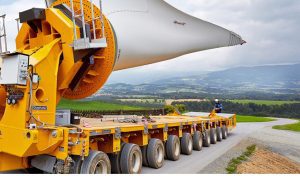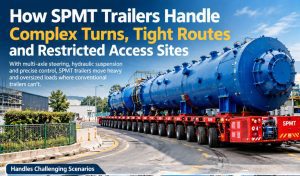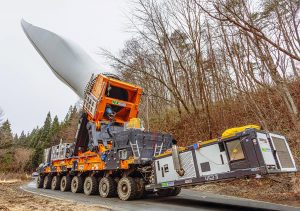
Transporting modern wind turbine blades is a complex logistics operation because blades can be extremely long, lightweight relative to their size, and difficult to maneuver through conventional road networks. Sharp bends, roundabouts, narrow roads, bridges, steep sections, and restricted access areas can all create challenges for transportation teams.
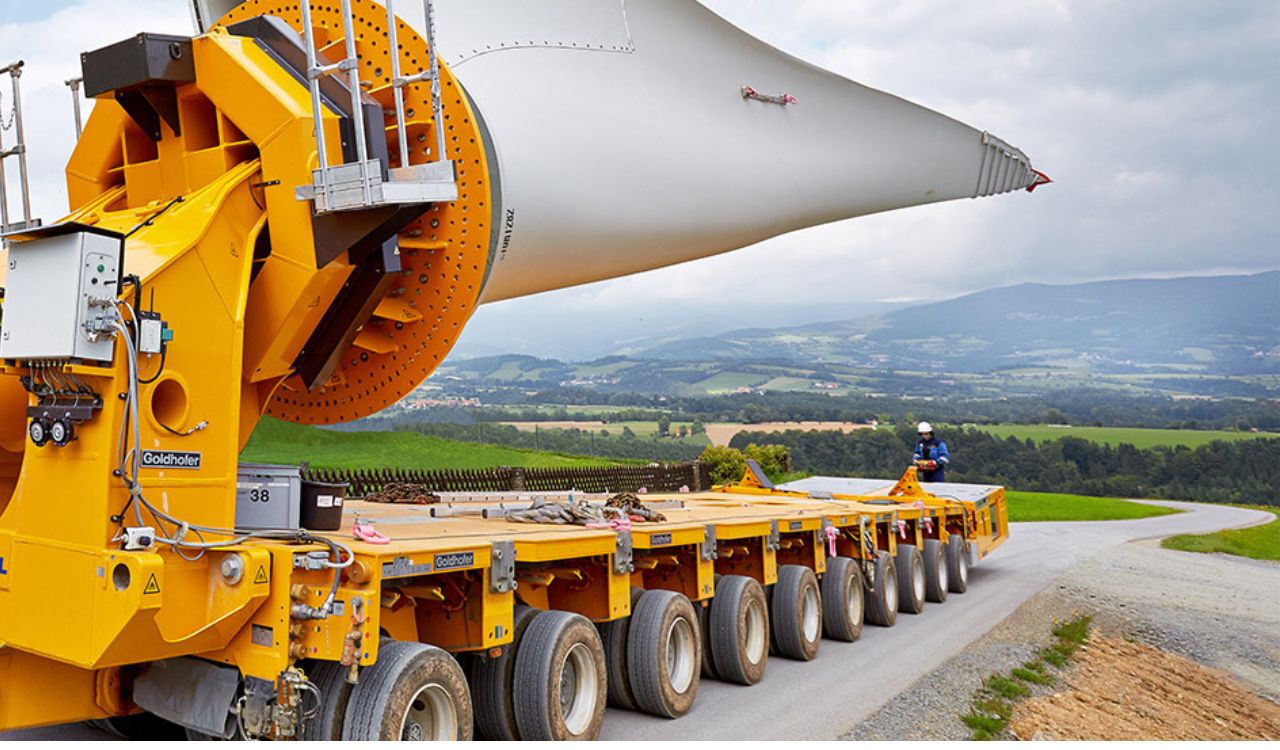
A wind blade adapter is an important component of specialized blade transportation equipment. It provides the connection between the turbine blade and the transport system while allowing the blade to be positioned according to the requirements of the route.
When combined with a suitable wind blade trailer, specialized adapters can give transport teams greater flexibility when navigating difficult routes and positioning large blades at their destination.
What Is a Wind Blade Adapter?
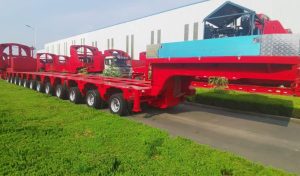
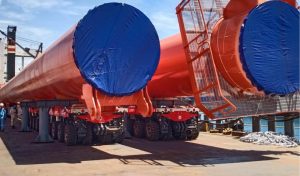
A wind blade adapter is a specialized piece of equipment used to connect a wind turbine blade to its transportation system. Similar specialized transport solutions, such as a girder transporter, are designed to safely handle large and unusually shaped loads that require precise positioning and controlled movement during transportation.
Its design depends on several factors, including:
- Blade length
- Blade weight
- Blade geometry
- Connection requirements
- Transport vehicle
- Route conditions
- Required blade orientation
- Project-specific transportation requirements
The adapter serves as an interface between the blade and the transport equipment. Depending on the system, it may also allow controlled adjustment of the blade’s orientation during transportation. In comparison, a girder transporter is specifically configured to support and move large bridge girders and other heavy structural components, often where conventional transport equipment may have difficulty navigating restricted routes or construction sites.
The purpose is to help the complete transport system handle the unusual dimensions and movement requirements of modern wind turbine blades. Both wind blade adapters and specialized equipment such as girder transporters demonstrate how heavy-haul transportation systems are designed around the specific dimensions, weight, geometry, and route conditions of each project.
Why Wind Turbine Blades Are Difficult to Transport
Wind turbine blades have a unique shape that creates transportation challenges.
Unlike many industrial components, a blade is extremely long while remaining relatively narrow. Its aerodynamic shape also means that the way it is supported and handled must be carefully considered.
A blade may need to travel through roads containing:
- Sharp curves
- Roundabouts
- Narrow intersections
- Mountain roads
- Switchbacks
- Steep sections
- Bridges
- Restricted entrances
The length of the blade can create a large swept path during turns.
This means that a route that appears wide enough for the transport vehicle may not provide enough space for the entire blade.
How Wind Blade Adapter Design Supports Transportation
The adapter connects the blade to the transportation equipment while providing the required support and positioning capability.
Advanced systems can allow controlled movement of the blade relative to the transport vehicle.
This can help transportation teams manage difficult sections of the route by adjusting the blade’s orientation.
Depending on the equipment design, controlled positioning may involve:
- Raising the blade
- Lowering the blade
- Rotating the blade
- Adjusting its orientation
- Maintaining a defined transport position
The specific movement range depends on the adapter and transportation system being used.
Managing Tight Turns
Tight turns are one of the biggest challenges in wind turbine blade transportation.
A very long blade can extend significantly beyond the turning path of the trailer.
For example, when the transport vehicle enters a sharp curve, the rear section of the blade may follow a different path from the trailer. At the same time, the front section may extend toward the outside of the curve.
A specialized blade adapter can provide additional control over the blade’s position.
This can help transport teams manage the blade’s swept path and negotiate certain difficult turns more effectively.
However, specialized equipment does not remove the need for detailed route planning.
Blade Clearance and Obstacle Management
Clearance is another major consideration during wind turbine transport.
A blade may encounter obstacles such as:
- Trees
- Road signs
- Utility infrastructure
- Buildings
- Bridges
- Street furniture
- Industrial structures
- Overhead cables
Depending on the route and adapter design, controlled blade positioning can help create additional clearance around some obstacles.
For example, an adjustable blade system may allow the blade to be raised in a particular section where additional ground clearance or vertical positioning is required.
Every movement must remain within the equipment’s engineered operating limits.
The Role of Blade Rotation
Some specialized wind turbine blade transportation systems allow controlled rotation of the blade.
Rotation can be useful because the blade’s orientation affects the amount of space it occupies during transportation.
When approaching a difficult curve, the blade may need to be positioned differently from how it travels on a straight road.
Controlled rotation can therefore help transport teams manage the blade’s position relative to the road.
The exact rotation capability depends on the adapter and the complete transport system.
Supporting the Blade Safely
A wind turbine blade is a carefully engineered structural component.
Its aerodynamic shape and internal construction mean that it cannot simply be supported at arbitrary locations.
The transport system must use appropriate support and connection points according to the blade manufacturer’s requirements.
The adapter therefore needs to provide suitable load transfer between the blade and the transport equipment.
Important considerations can include:
- Blade support locations
- Connection strength
- Load transfer
- Local stresses
- Blade deflection
- Transport position
- Dynamic forces
Proper engineering is essential to prevent unnecessary stress on the blade during transportation.
Hydraulic Systems in Blade Transportation
Many specialized blade transport systems use hydraulic equipment to control the position of the blade.
Hydraulic systems can provide controlled movement while the vehicle is stationary or moving, depending on the system’s design and operating procedures.
Potential functions may include changing blade elevation or adjusting its orientation.
This can be useful when a transport route includes significant changes in elevation or difficult obstacles.
Hydraulic control also allows operators to make gradual adjustments rather than relying on simple fixed positioning.
Wind Conditions and Blade Transportation
Wind conditions must also be considered when transporting turbine blades.
The large surface area of a blade means that wind can have a significant effect on handling, especially when the blade is elevated.
Transport teams may monitor:
- Wind speed
- Wind direction
- Weather forecasts
- Route exposure
- Local terrain
- Operating limits
Transportation may need to be delayed or modified if weather conditions exceed the limits established for the equipment and project.
Weather planning is therefore an important part of wind turbine logistics.
Wind Blade Adapter and Wind Blade Trailer
The adapter is only one part of the complete transportation system.
A typical specialized blade transportation setup can include a tractor unit, trailer, hydraulic blade adapter, control system, and other supporting equipment.
The wind blade trailer provides the primary transportation platform, while the adapter provides the connection and positioning interface for the blade.
The selection of equipment depends on:
- Blade dimensions
- Blade weight
- Route characteristics
- Required clearances
- Road restrictions
- Turning requirements
- Final delivery location
The entire system should be evaluated as one integrated transportation solution.
Route Planning for Wind Turbine Blades
Specialized transportation equipment cannot compensate for inadequate route planning.
Before transporting a blade, engineers and logistics teams may conduct a detailed route assessment.
The assessment can include:
Road Width
The available road width must accommodate both the transport vehicle and the blade’s swept path.
Turning Geometry
Curves, intersections, and roundabouts should be analyzed to determine whether the blade can safely pass.
Overhead Clearance
Bridges, cables, signs, trees, and other overhead obstacles need to be considered.
Ground Conditions
Road surfaces and bridges must be capable of supporting the transportation equipment and load.
Vertical Profile
Steep grades and changes in elevation can affect blade clearance and equipment positioning.
Final Access
The final section of the route to the wind farm or installation area may be one of the most challenging parts of the journey.
Computer-Based Route Simulation
Modern wind turbine logistics can use route simulation and swept-path analysis to identify difficult sections before transportation begins.
A digital route assessment can help engineers understand how the blade and transport vehicle will move through:
- Intersections
- Curves
- Roundabouts
- Narrow roads
- Restricted access points
This information can then be used to determine whether specialized equipment or route modifications are required.
Route simulations can reduce uncertainty and help transportation teams prepare for challenging sections.
Benefits of Specialized Wind Blade Adapters
A properly engineered blade adapter can provide several benefits during wind turbine transportation.
Improved Maneuverability
Controlled blade positioning can make certain difficult routes more manageable.
Better Clearance Management
Adjusting blade orientation can help address some overhead and roadside clearance challenges.
Greater Route Flexibility
Specialized equipment may make certain routes practical that would otherwise require significant modifications.
Precise Positioning
The adapter can help position the blade accurately during transportation and delivery.
Support for Larger Blades
As turbine blades continue to increase in size, specialized transport technology becomes increasingly important.
Challenges in Wind Blade Adapter Design
Designing an adapter for wind turbine transportation requires careful consideration of both the blade and the transport vehicle.
Engineers need to account for the interaction between the blade, adapter, trailer, and road.
Some important design considerations include:
- Blade geometry
- Load capacity
- Connection points
- Hydraulic requirements
- Structural strength
- Movement range
- Clearance requirements
- Dynamic forces
- Operating environment
The adapter must provide sufficient strength while also allowing the movement needed for the intended transportation route.
Why Specialized Equipment Is Becoming More Important
Wind turbines are continuing to increase in size as the industry seeks greater energy production from individual installations.
Larger turbines generally mean longer and heavier blades.
As blade dimensions increase, conventional transportation methods can become more challenging because of road geometry and clearance restrictions.
Specialized blade adapters and advanced transport systems can therefore play an increasingly important role in wind energy logistics.
The future of wind turbine transportation will likely depend on combining advanced equipment with detailed digital route planning and engineering analysis.
Conclusion
Wind blade adapter design is an important part of modern wind turbine blade transportation. A specialized adapter provides the connection between the blade and transport equipment while potentially allowing controlled positioning during difficult sections of the route.
By helping manage blade orientation, clearance, and maneuverability, specialized adapter systems can make the transportation of large turbine blades more practical on challenging routes.
However, the adapter is only one part of the overall solution. The blade, trailer, adapter, route, ground conditions, weather, and operating procedures must all be considered together.
As wind turbine blades continue to grow in size, advanced transportation equipment and careful route engineering will remain essential for moving them safely and efficiently from manufacturing facilities to wind farm installation sites.
Frequently Asked Questions
1. What is a wind blade adapter?
A wind blade adapter is specialized equipment that connects a wind turbine blade to a transportation system and, depending on its design, allows controlled positioning of the blade during transportation.
2. Why are wind blade adapters important?
They can provide additional flexibility when transporting long turbine blades through difficult routes, particularly where tight turns, limited clearance, or restricted access create challenges.
3. What is a wind blade trailer?
A wind blade trailer is specialized transportation equipment designed to carry large wind turbine blades. It may be used together with a blade adapter and hydraulic positioning system.
4. Can a wind blade adapter help with tight turns?
Yes. Depending on the system, controlled blade positioning can help manage the blade’s swept path when navigating certain curves and tight turns.
5. Can a wind blade adapter rotate a turbine blade?
Some specialized adapter systems provide controlled blade rotation. The available movement depends on the specific equipment design and operating requirements.
6. How does an adapter help with clearance?
An adjustable adapter may allow the blade to change its orientation or elevation, which can help transportation teams manage certain overhead or roadside clearance restrictions.
7. How are wind turbine blades supported during transportation?
Blades are supported using engineered connection and support points appropriate for their structural design. The exact support arrangement depends on the blade and transportation system.
8. What factors affect wind blade transportation?
Important factors include blade length and weight, road geometry, turning radius, ground conditions, overhead clearance, weather, traffic restrictions, and access to the final installation site.
9. Is route planning necessary when using a wind blade adapter?
Yes. Specialized equipment does not replace route planning. Detailed route surveys and swept-path assessments are important for identifying obstacles, clearances, turning requirements, and other restrictions.
10. Why are specialized blade transport systems becoming more important?
As wind turbines become larger, their blades are also becoming longer and more challenging to transport. Specialized adapters and transport systems provide additional flexibility for handling these increasingly large components.