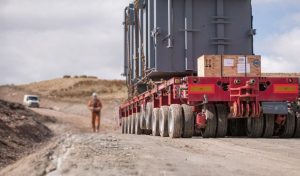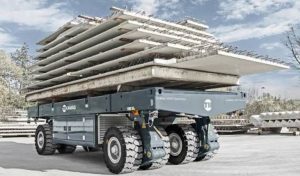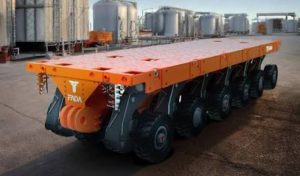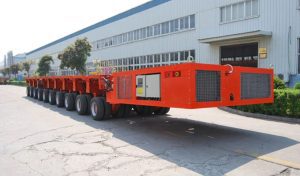
Planning an SPMT movement begins long before the transporter starts moving. When a project involves extremely heavy or oversized cargo, the route itself becomes part of the engineering challenge.
A road that is suitable for ordinary trucks may not be suitable for self propelled modular transporters SPMT carrying a large industrial module, transformer, vessel, bridge component, or other project cargo. Engineers must consider not only whether the transporter can physically pass through the route, but also whether the pavement, structures, clearances, slopes, and surrounding infrastructure can safely accommodate the complete transport system.
An effective SPMT route survey provides the information needed to identify these constraints before the heavy move begins.
What Is an SPMT Route Survey?
An SPMT route survey is a detailed inspection and assessment of the proposed transport path before moving an oversized or exceptionally heavy load.
The survey examines the physical and engineering characteristics of the route, including:
- Road width
- Road surface
- Turning areas
- Slopes
- Cross slopes
- Bridges
- Culverts
- Overhead structures
- Utility lines
- Underground services
- Drainage systems
- Ground conditions
- Traffic restrictions
- Construction obstacles
- Access points
The objective is to determine whether the planned SPMT configuration and cargo can travel through the route safely and efficiently.
It can also identify locations where temporary modifications, strengthening, clearance adjustments, or traffic controls may be necessary.
Why Is Route Surveying Important for SPMT Transport?
SPMT operations differ significantly from conventional road transportation.
An SPMT can carry loads weighing hundreds or thousands of tonnes depending on the equipment configuration, while its platform may also be exceptionally wide and long.
This creates several route-planning challenges.
A route may have sufficient width but inadequate ground capacity. Another route may have adequate pavement strength but insufficient overhead clearance.
Similarly, a road may appear wide enough for straight-line movement but become unsuitable at a sharp intersection because of the transporter’s swept path.
A route survey helps identify these problems before the equipment and cargo arrive.
SPMT Route Survey Checklist
A professional route survey should examine the following areas.
| Survey Item | What Engineers Should Check |
| Road width | Available travel width and restrictions |
| Road surface | Pavement condition and structural suitability |
| Ground bearing | Ability to support expected loads |
| Bridges | Structural capacity and load restrictions |
| Overhead clearance | Bridges, cables, pipe racks and structures |
| Underground services | Pipes, cables, tunnels and drainage |
| Turning areas | Available radius and swept path |
| Slopes | Longitudinal gradients and cross slopes |
| Roadside obstacles | Poles, barriers, signs and buildings |
| Traffic | Vehicle movements and temporary closures |
| Route elevation | Changes that affect clearance |
| Weather exposure | Conditions that could affect the surface |
| Final approach | Space required for positioning and installation |
1. Confirm the Cargo Dimensions First
The route cannot be evaluated properly without accurate cargo information.
Before the survey begins, engineers should establish the cargo’s:
- Length
- Width
- Height
- Total weight
- Center of gravity
- Support points
- Transport orientation
- Required support structure
The transport configuration also needs to be considered.
For example, the overall width of the SPMT platform may be greater than the cargo itself.
Likewise, support beams or transport frames can increase the overall height.
The survey should therefore evaluate the complete transport envelope, not just the cargo dimensions.
2. Measure Available Road Width
Road width is one of the first things to examine.
An SPMT may require considerably more space than a conventional heavy haulage trailer because of its platform dimensions and maneuvering requirements.
Engineers should measure:
- Normal road width
- Narrow sections
- Lane widths
- Road shoulders
- Gate openings
- Bridge approaches
- Factory entrances
- Temporary access roads
The survey should also account for obstacles that reduce the usable width.
These may include:
- Guardrails
- Concrete barriers
- Utility poles
- Street signs
- Trees
- Buildings
- Drainage channels
- Construction equipment
A road may technically be wide enough on paper while still being unsuitable because of roadside restrictions.
3. Evaluate Turning Areas
Turning is often more challenging than straight-line travel.
The survey should identify:
- Sharp intersections
- Roundabouts
- Hairpin turns
- Factory entrances
- Restricted corners
- Loading yards
- Final positioning areas
The engineering team should determine whether the selected SPMT can follow the required path without contacting structures or leaving the prepared travel surface.
Because SPMTs can use advanced steering modes, they can perform highly controlled movements. However, the steering capability of the specific equipment does not eliminate the need for a detailed swept-path assessment.
What Is a Swept Path?
A swept path represents the area occupied by the transporter as it moves through a turn.
The swept area can be significantly larger than the transporter’s stationary footprint.
This is particularly important for long or wide SPMT configurations.
Engineers should evaluate both:
- Inner clearance
- Outer clearance
This helps determine whether temporary removal of obstacles or additional maneuvering space is necessary.
4. Check Overhead Clearance
Vertical clearance is one of the most important parts of an SPMT route survey.
Potential obstacles include:
- Bridges
- Overpasses
- Power lines
- Telecommunications cables
- Pipe racks
- Gantries
- Factory structures
- Building entrances
- Lighting systems
- Sign structures
The survey should determine the minimum available clearance at each critical location.
The calculation should consider the entire transport height:
Total transport height = SPMT deck height + support structure + cargo height
Hydraulic deck-height adjustment may provide additional flexibility, but engineers should not assume that the transporter can simply be lowered whenever clearance becomes inadequate.
The complete route should be checked against the actual operating range of the SPMT.
5. Inspect Bridges and Elevated Structures
Bridges require particular attention because the issue is not limited to physical clearance.
Engineers may need to evaluate:
- Bridge load capacity
- Existing load restrictions
- Structural condition
- Deck condition
- SPMT axle arrangement
- Load distribution
- Approach geometry
- Clearance beneath the structure
The weight transferred through the SPMT can be substantially different from conventional road traffic.
A bridge that can support normal highway vehicles should not automatically be assumed to support a highly concentrated heavy transport load.
A structural assessment may therefore be required before the route is approved.
6. Assess Ground Bearing Capacity
Ground bearing is critical when moving exceptionally heavy loads.
The SPMT transfers its load through multiple wheels and axle lines into the supporting surface.
The survey should identify areas where the ground or pavement may have reduced capacity.
Potential problem areas include:
- Soft soil
- Uncompacted fill
- Damaged asphalt
- Weak shoulders
- Construction areas
- Drainage channels
- Recently excavated sections
- Temporary roads
- Underground structures
Where necessary, engineers may specify temporary reinforcement or load-spreading measures.
The important point is that route suitability depends on the actual load imposed by the transporter configuration, not simply the gross weight of the cargo.
7. Inspect Road Surface Condition
The physical condition of the route should be documented.
Engineers should look for:
- Cracks
- Potholes
- Rutting
- Settlement
- Uneven transitions
- Damaged pavement
- Loose material
- Drainage problems
- Recently repaired sections
Surface irregularities can affect the movement of the SPMT and the behavior of the transported load.
This becomes especially important for long loads where small changes in elevation can influence the overall platform and cargo position.
8. Measure Road Gradients and Cross Slopes
The route survey should record both longitudinal and transverse slopes.
Longitudinal Slope
This is the incline or decline in the direction of travel.
Steep sections can affect:
- Traction
- Braking
- Hydraulic behavior
- Load stability
- SPMT propulsion
- Movement speed
Cross Slope
Cross slope refers to the difference in elevation from one side of the route to the other.
A significant cross slope can influence the lateral position of the load and the distribution of reactions across the transporter.
The acceptable limits depend on the SPMT manufacturer, configuration, cargo characteristics, ground conditions, and engineered transport procedure.
9. Locate Underground Infrastructure
What is underneath the route can be just as important as what is above it.
The survey should identify:
- Water pipes
- Gas pipelines
- Electrical cables
- Telecommunications ducts
- Sewers
- Tunnels
- Underground tanks
- Culverts
- Drainage systems
Heavy transport loads can impose substantial surface reactions.
An underground structure may therefore require engineering verification before the SPMT passes over it.
If records are incomplete, additional investigation may be required.
10. Check Utility Lines and Overhead Services
Utility lines deserve special attention during oversized transport.
The route survey should identify the location and height of:
- Electrical conductors
- Communication cables
- Lighting cables
- Temporary services
- Industrial utility lines
The required clearance should be verified for the complete transport envelope.
Where necessary, utility owners may need to be contacted to arrange temporary isolation, lifting, relocation, or other approved measures.
These activities should be planned before the transport date rather than handled as an unexpected obstruction.
11. Examine Drainage Structures and Culverts
Drainage infrastructure is often overlooked during heavy transport planning.
Examples include:
- Culverts
- Open drains
- Stormwater channels
- Small bridges
- Covered drainage systems
These structures may have different load capacities from the surrounding pavement.
An SPMT route survey should therefore identify locations where the transporter crosses drainage infrastructure and determine whether additional structural protection is necessary.
12. Evaluate Roadside Obstacles
The SPMT’s actual maneuvering envelope may extend beyond the normal roadway.
Survey teams should document:
- Trees
- Poles
- Signs
- Traffic lights
- Barriers
- Fences
- Buildings
- Walls
- Street furniture
Some obstacles may need temporary removal.
Others may simply require a modified steering path.
Documenting these obstacles in advance helps prevent delays during the actual heavy move.
13. Consider Traffic and Public Access
If the route uses public roads, traffic management becomes another major consideration.
The project team may need to determine:
- Road closure requirements
- Traffic diversion routes
- Escort requirements
- Restricted travel periods
- Intersection control
- Emergency access
- Police or authority coordination
- Pedestrian management
For industrial sites, similar planning may be necessary even when public traffic is not involved.
Forklifts, cranes, employees, delivery vehicles, and construction equipment can all interfere with an SPMT movement.
14. Inspect the Final Approach and Positioning Area
The route survey should not stop when the SPMT reaches the destination.
The final positioning area may be one of the most technically demanding sections of the entire operation.
Engineers should verify:
- Available working space
- Final positioning coordinates
- Ground capacity
- Required deck height
- Turning requirements
- Nearby structures
- Installation interfaces
- Crane access
- Temporary support locations
If the SPMT is being used to position equipment onto a foundation or installation point, the final approach must be designed as part of the complete transport sequence.
15. Consider Weather and Environmental Conditions
A route that is suitable in dry conditions may behave differently after heavy rain.
Weather can influence:
- Ground strength
- Pavement condition
- Traction
- Visibility
- Wind exposure
- Drainage
- Surface stability
Wind can be particularly relevant when transporting tall or large-area structures.
The project procedure should establish the conditions under which the movement can proceed and when it must be stopped or reassessed.
Route Survey Data Engineers Should Record
A useful survey should create a clear record that can be reviewed by the transport engineering team.
| Data | Recommended information |
| Road width | Minimum usable width |
| Clearance | Minimum vertical and horizontal clearance |
| Gradient | Maximum uphill/downhill sections |
| Cross slope | Critical lateral inclinations |
| Surface | Pavement and ground condition |
| Bridges | Structural information and restrictions |
| Utilities | Above-ground and underground services |
| Obstacles | Fixed and temporary obstructions |
| Turns | Critical intersections and maneuvering areas |
| Ground | Bearing conditions and weak zones |
| Final area | Positioning and installation space |
Photographs, measurements, drawings, GPS information, site plans, and other survey records can be useful for developing the final transport plan.
Common Problems Found During SPMT Route Surveys
Several issues frequently require additional engineering or route modification.
Insufficient Overhead Clearance
The cargo may be too tall for an existing bridge, pipe rack, or utility line.
Possible solution: Adjust the transport configuration, lower the platform where permitted, modify the obstacle, or select an alternative route.
Insufficient Road Width
A narrow section may prevent the transporter from maintaining a suitable path.
Possible solution: Remove temporary obstacles, widen the route, use a different steering configuration, or select another route.
Weak Ground
Soft soil or inadequate pavement may not support the required loads.
Possible solution: Ground improvement, steel plates, timber mats, reinforced slabs, or other engineered load-distribution measures may be considered depending on the site.
Tight Turning Radius
An intersection may not provide sufficient maneuvering space.
Possible solution: Use an appropriate SPMT steering mode, temporarily modify the intersection, or redesign the approach.
Underground Structures
An undocumented culvert or utility structure may create a potential loading concern.
Possible solution: Obtain structural information and perform an engineering assessment before allowing the SPMT to cross.
SPMT Route Survey vs Conventional Heavy-Haul Route Survey
Many principles used for conventional heavy haulage also apply to SPMT transport, but an SPMT route may require additional attention to maneuverability and positioning.
| Factor | SPMT Route Survey | Conventional Heavy-Haul Route Survey |
| Road width | Critical | Critical |
| Overhead clearance | Critical | Critical |
| Ground capacity | Critical | Critical |
| Turning path | Highly important | Highly important |
| Lateral movement | May be required | Generally limited |
| Precise positioning | Often important | Depends on project |
| Hydraulic deck adjustment | Available on suitable equipment | Equipment-dependent |
| Industrial-site movement | Common | Application-dependent |
| Final positioning | Often integrated into transport | May require separate equipment |
The correct route is therefore determined by the specific transporter, cargo, and project rather than by the cargo weight alone.
Best Practices for SPMT Route Planning
A reliable route-planning process should include the following:
- Define the complete cargo dimensions and weight.
- Determine the center of gravity and support points.
- Select a preliminary SPMT configuration.
- Survey the entire proposed route.
- Record minimum vertical and horizontal clearances.
- Evaluate road width and swept paths.
- Assess bridges and other structures.
- Check pavement and ground-bearing conditions.
- Identify underground and overhead utilities.
- Measure gradients and cross slopes.
- Assess critical turning and positioning areas.
- Develop required temporary modifications.
- Establish traffic and site-control procedures.
- Conduct a final route verification before movement.
Why a Detailed Route Survey Improves Heavy Transport Planning
A detailed route survey allows engineering teams to identify problems before the SPMT and cargo are committed to the route.
This can reduce the likelihood of:
- Unexpected obstacles
- Transport delays
- Emergency route changes
- Equipment repositioning
- Infrastructure damage
- Clearance conflicts
- Ground failures
- Unplanned site modifications
It also provides a common technical reference for engineers, contractors, operators, site managers, utility owners, and other stakeholders involved in the project.
Final Thoughts
An SPMT route survey is an essential part of planning a complex heavy transport operation. The survey should go beyond simply checking whether a transporter can fit through a road.
Engineers need to evaluate the complete transport envelope, including cargo dimensions, SPMT configuration, deck height, ground conditions, turning paths, overhead clearance, bridges, utilities, slopes, drainage structures, and the final positioning area.
The most effective approach is to treat the route as an engineered system. Every section—from the initial loading area to the final installation point—should be assessed against the actual SPMT configuration and cargo characteristics.
For contractors, manufacturers, engineers, and project planners, this approach helps identify constraints early and creates a more predictable foundation for the heavy transport operation.
Frequently Asked Questions
What is an SPMT route survey?
An SPMT route survey is an engineering inspection of the proposed path for an SPMT and its cargo. It evaluates road geometry, ground conditions, clearances, structures, utilities, slopes, obstacles, and maneuvering requirements.
What should be checked during an SPMT route survey?
Important checks include road width, ground bearing, bridge capacity, overhead clearance, turning areas, gradients, cross slopes, underground services, utility lines, drainage structures, and the final positioning area.
Why is ground bearing important for SPMT transport?
SPMTs transfer extremely high loads through multiple axle lines and wheels. The supporting pavement or ground must be capable of safely carrying the resulting loads without excessive deformation or failure.
How is overhead clearance calculated for an SPMT?
Engineers need to consider the complete transport height, including the SPMT deck, support structure, cargo, and any relevant suspension or route-elevation changes.
Does an SPMT need a wider route than a normal truck?
It can. SPMTs may use wide or long modular configurations, and their maneuvering envelope can be considerably different from conventional trucks. The actual requirement depends on the selected configuration and cargo.
Can an SPMT travel over a bridge?
Potentially, but the bridge must be assessed for the specific SPMT configuration and load. Normal vehicle weight limits should not automatically be treated as approval for an exceptionally heavy SPMT movement.
Who performs an SPMT route survey?
The survey is typically carried out by a qualified heavy-transport engineering team working with the contractor, SPMT operator, site team, structural specialists, and relevant infrastructure or utility authorities where required.