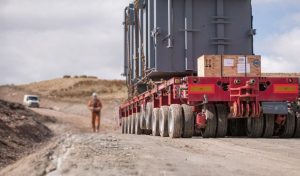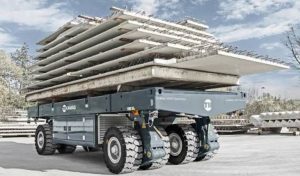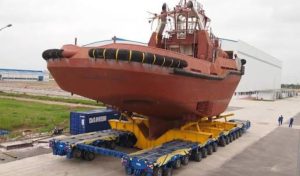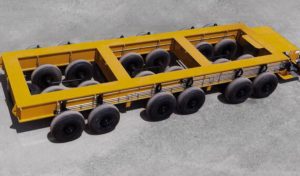
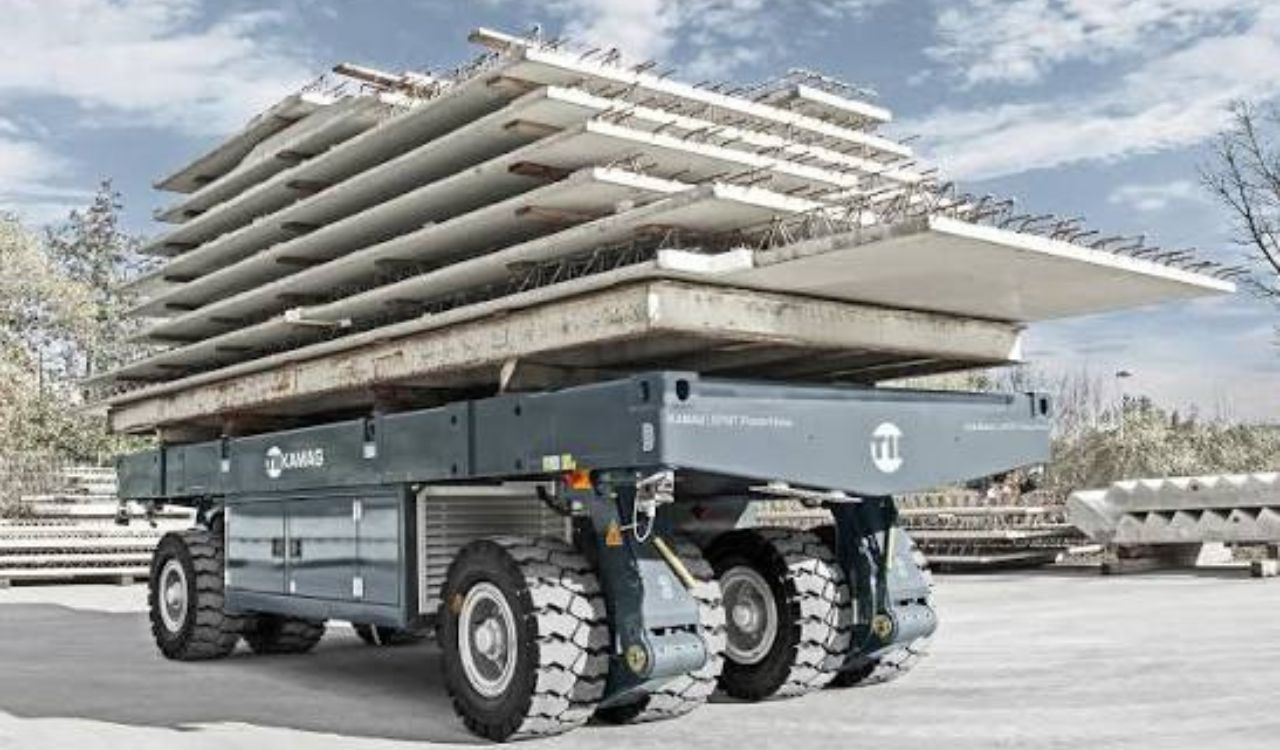
Transporting oversized and heavy cargo requires more than choosing equipment with a high load capacity. The deck configuration of a Self-Propelled Modular Transporter (SPMT) is important for proper load support, balance, stability, and maneuverability. Girder transporters are also designed to handle long and heavy bridge girders efficiently.
Because cargo varies in size, weight, and center of gravity, SPMTs can be arranged in different configurations to suit specific projects. Choosing the right SPMT setup or girder transporter helps ensure safe load distribution and efficient transportation.
What Is an SPMT Deck Configuration?
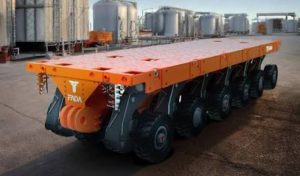
An SPMT deck configuration refers to the way individual SPMT modules, axle lines, and deck sections are arranged and connected to create a transportation platform.
SPMT units are modular, meaning multiple units can be combined longitudinally, side by side, or in other engineered arrangements. This flexibility allows the overall transporter dimensions and load-supporting area to be adapted to the cargo.
The deck configuration normally considers factors such as:
- Cargo weight
- Cargo dimensions
- Load-bearing points
- Center of gravity
- Required deck width
- Required deck length
- Number of axle lines
- Ground conditions
- Route restrictions
- Required steering and maneuverability
The objective is not simply to create the largest possible platform. The configuration should provide the right balance between load support, stability, ground pressure, clearance, and maneuverability.
Why SPMT Deck Configuration Matters
Oversized cargo often cannot be transported using a standard trailer because its dimensions or weight exceed conventional transportation limits. A Self-Propelled Modular Transporter (SPMT) provides a flexible solution by allowing the transporter to be configured according to the specific requirements of the cargo.
A suitable deck configuration helps distribute the load across multiple axle lines, provide a stable supporting surface, and improve clearance and positioning at the destination. Choosing a reliable SPMT manufacturer is equally important, as equipment quality, engineering support, and configuration options can directly affect transportation safety and efficiency.
An unsuitable configuration can create excessive loading on specific support points, reduce stability, or make the transporter difficult to maneuver. For this reason, deck configuration should be treated as an engineering decision, while selecting an experienced SPMT manufacturer can help ensure the right equipment and technical solution for each heavy-haul project.
Common SPMT Deck Arrangements
SPMT configurations can vary according to the size and characteristics of the transported load. Several basic arrangements are commonly used.
Longitudinal Configuration
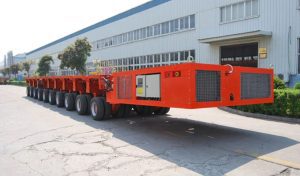
In a longitudinal configuration, SPMT modules are connected in the direction of travel to create a longer transportation platform.
This arrangement is useful when the cargo has a long footprint, such as large structural components, bridge sections, or industrial modules.
Increasing the number of modules along the length can provide additional support points and help accommodate long loads without relying on unsupported overhangs.
Side-by-Side Configuration
Modules can also be positioned side by side to increase the overall deck width.
A wider platform may be appropriate for wide industrial equipment, large tanks, plant modules, and other cargo with a broad footprint.
The additional width can help provide a larger supporting area and improve the relationship between the cargo’s center of gravity and the transporter.
Combined Length and Width Configuration
For particularly large loads, SPMT modules may be arranged both longitudinally and transversely.
This creates a larger platform capable of supporting heavy and wide cargo across multiple axle lines.
Such configurations are particularly useful when the cargo has a large footprint and requires substantial support across both its length and width.
The exact arrangement depends on engineering calculations and the location of the cargo’s structural support points.
How Cargo Dimensions Influence Deck Configuration
Cargo dimensions are one of the first factors considered when developing an SPMT configuration.
A long but relatively narrow component may require additional modules along its length. A shorter but extremely wide load may require greater deck width instead.
Cargo height is also important because the overall transportation height includes both the cargo and the transporter deck. A suitable configuration may help keep the cargo at an appropriate transportation height while maintaining sufficient clearance.
Engineers typically consider:
- Overall cargo length
- Overall cargo width
- Cargo height
- Weight distribution
- Support-point locations
- Required ground clearance
- Route clearance
The configuration should provide sufficient support without unnecessarily increasing the dimensions of the transporter.
Load Distribution Across the SPMT Deck
Load distribution is one of the most important considerations in SPMT deck configuration.
An SPMT uses multiple axle lines to carry the transported load. The weight should be distributed appropriately across these axle lines rather than concentrated on a limited number of support points.
The cargo’s center of gravity is particularly important. If the center of gravity is significantly offset from the geometric center of the platform, the configuration may need to be adjusted to maintain an acceptable load distribution.
Engineers may therefore determine the number and arrangement of axle lines based on:
- Total cargo weight
- Center of gravity
- Support-point positions
- Permitted axle loading
- Ground bearing conditions
- Transporter capacity
Proper load distribution helps improve stability and reduces the possibility of excessive loading on individual components.
Support Points and Deck Design
Not every oversized load can simply be placed directly on the SPMT deck.
Some cargo requires specially designed support structures, stools, frames, beams, or other load-spreading arrangements. These components transfer the cargo load to appropriate locations on the transporter.
The position of these support points can influence the entire SPMT configuration.
For example, a large industrial vessel may have specific structural areas designed to carry transportation loads. The SPMT arrangement should align with these areas so that the cargo is supported without placing excessive stress on weaker sections.
This makes cargo engineering an important part of deck configuration planning.
SPMT Deck Height Considerations
Deck height can affect both transportation stability and route clearance.
A lower transportation platform can help reduce the overall height of the loaded transporter. This can be particularly important when passing beneath bridges, overhead structures, pipelines, or other height restrictions.
SPMT hydraulic suspension and height adjustment capabilities can also help engineers maintain the required deck position during transportation and loading operations.
However, the lowest possible deck height is not automatically the best solution. Ground clearance, cargo geometry, route conditions, and suspension requirements must also be considered.
The final deck height should therefore be selected according to the complete transportation plan.
Deck Configuration and Maneuverability
The size of an SPMT configuration can influence maneuverability.
A larger arrangement may provide greater support for a heavy or wide load, but it can also increase the overall dimensions of the transporter.
SPMT steering systems allow the modules to perform different movement patterns, including forward, reverse, lateral, and turning movements. However, the available space and configuration still affect how easily the transporter can operate in a particular area.
This becomes especially important at:
- Industrial plants
- Construction sites
- Shipyards
- Ports
- Refineries
- Power facilities
- Confined project areas
The deck configuration should therefore be designed with both load support and route maneuverability in mind.
Choosing the Right Configuration for Different Loads
Different types of oversized cargo can require different SPMT arrangements.
Heavy Industrial Equipment
Transformers, generators, compressors, and other heavy machinery often require carefully distributed support across multiple axle lines.
The configuration is generally selected according to the equipment’s weight, center of gravity, and designated support areas.
Large Structural Modules
Construction and industrial modules can have large dimensions and irregular shapes. A combination of longitudinal and side-by-side SPMT arrangements may be required to create an adequately sized platform.
Bridge Components
Long bridge sections and structural elements may require extended configurations that provide support along significant portions of their length.
The transporter arrangement must also account for bending, support locations, and route geometry.
Pressure Vessels and Tanks
Large vessels may have concentrated support areas rather than a completely flat bottom. In these cases, specialized support structures may be installed between the cargo and the SPMT deck.
The SPMT configuration must accommodate these support structures while maintaining proper load distribution.
SPMT Deck Configuration and Ground Conditions
The ground beneath the transporter is another important consideration.
A heavy cargo can create substantial forces on the supporting surface. Although an SPMT distributes the load across many axle lines, the project still needs to confirm that roads, yards, bridges, floors, and other surfaces can safely support the planned transportation operation.
If ground conditions are weak or variable, engineers may need to consider additional load-spreading measures or changes to the transporter arrangement.
Ground conditions can include:
- Soil strength
- Concrete floor capacity
- Road surface condition
- Bridge load limitations
- Underground utilities
- Temporary access roads
- Slopes and uneven areas
A suitable deck configuration should therefore be evaluated together with the transportation route.
Factors to Consider Before Finalizing an SPMT Configuration
Selecting an SPMT arrangement requires coordination between cargo information, transporter specifications, and route requirements.
Important factors include:
Cargo weight: Determines the required number of axle lines and overall transporter capacity.
Cargo dimensions: Influence platform length, width, and clearance requirements.
Center of gravity: Affects stability and load distribution.
Support points: Determine where the cargo can safely transfer its weight to the transporter.
Ground conditions: Influence allowable loading and the need for additional ground preparation.
Route geometry: Determines whether the selected configuration can maneuver through the planned route.
Overall height: Must be evaluated against bridges, overhead structures, and other obstacles.
Required positioning accuracy: Some installation projects require highly controlled movement and precise final positioning.
Considering these factors together helps avoid selecting a configuration based on cargo weight alone.
Engineering Checks Before Transportation
Before an SPMT operation begins, the selected configuration should be evaluated through appropriate engineering procedures.
Depending on the project, this can include checking:
- Total transporter capacity
- Axle-line loading
- Load distribution
- Center of gravity
- Structural support points
- Deck height
- Ground bearing conditions
- Route clearances
- Turning requirements
- Hydraulic suspension behavior
- Cargo restraint requirements
For complex heavy-haul operations, transport engineers may also use engineering drawings, load calculations, route surveys, and simulations to verify that the proposed arrangement is appropriate.
Benefits of a Modular SPMT Deck Configuration
The modular nature of SPMTs provides several important advantages for oversized load transportation.
First, the platform can be adapted to different cargo dimensions. Instead of relying on one fixed trailer size, operators can combine modules to create an arrangement suitable for a specific project.
Second, the modular platform can provide distributed support across many axle lines. This can be valuable when transporting extremely heavy cargo.
Third, the configuration can be adjusted for different project environments. A transporter arrangement suitable for an open industrial yard may not be suitable for a confined plant area.
Finally, modular configurations can support complex positioning operations where conventional trailers may have limited flexibility.
Common Mistakes in SPMT Deck Configuration
Several mistakes can reduce the effectiveness of an SPMT arrangement.
One common mistake is selecting the configuration based only on total cargo weight. Weight is important, but the center of gravity and support-point locations are equally important.
Another mistake is ignoring route conditions. A configuration that works well in an open yard may have difficulty navigating narrow areas or restricted routes.
Insufficient consideration of cargo support points can also create structural risks. The transporter should not place loads on areas that are not designed to carry them.
Other common issues include:
- Insufficient ground clearance
- Incorrect load distribution
- Excessive transporter width
- Inadequate route clearance
- Poor consideration of cargo overhang
- Insufficient ground preparation
- Failure to account for final positioning requirements
Careful engineering and route planning can reduce these risks.
SPMT Deck Configuration vs Fixed Trailer Platforms
A conventional trailer normally has a fixed or relatively limited platform arrangement. Its dimensions and axle configuration are determined by the trailer design.
An SPMT offers considerably greater flexibility because modules can be combined to create different platform sizes and configurations.
This does not mean an SPMT is always the best choice. Standard trailers can be more practical for conventional cargo and routine transportation. However, when cargo dimensions, weight, or maneuvering requirements become highly specialized, modular SPMT configurations can provide greater adaptability.
The right choice depends on the cargo, route, project requirements, and engineering conditions.
Best Practices for SPMT Deck Configuration
A reliable configuration starts with accurate cargo information. The weight, dimensions, center of gravity, support points, and structural characteristics should be confirmed before transportation planning begins.
The proposed configuration should then be evaluated against the route and ground conditions.
Good practices include:
- Verify cargo weight and dimensions.
- Identify the actual center of gravity.
- Confirm approved cargo support points.
- Select an appropriate number of axle lines.
- Check load distribution.
- Evaluate deck height and ground clearance.
- Survey the transportation route.
- Check bridges and other structures.
- Consider turning and maneuvering requirements.
- Confirm ground-bearing capacity.
- Use qualified engineers for complex transportation projects.
This approach helps ensure that the transporter arrangement is based on the complete project rather than a single specification.
Conclusion
SPMT deck configuration is a critical part of planning oversized and heavy cargo transportation. By combining modular axle lines and deck arrangements, an SPMT can be adapted to support cargo with different weights, dimensions, support points, and centers of gravity.
The right configuration should provide adequate load distribution while maintaining stability, clearance, maneuverability, and compatibility with the transportation route. Cargo characteristics, ground conditions, deck height, support structures, and final positioning requirements should all be evaluated before transportation begins.
For complex heavy-haul projects, proper engineering and configuration planning can make the difference between a transporter that simply carries the load and a complete transportation solution designed around the requirements of the cargo.
Frequently Asked Questions
What is an SPMT deck configuration?
An SPMT deck configuration is the arrangement of SPMT modules and axle lines used to create a platform for transporting a specific heavy or oversized load.
Can SPMT modules be connected side by side?
Yes. SPMT modules can generally be arranged side by side to create a wider transportation platform, subject to the requirements and engineering limitations of the specific equipment and project.
How is an SPMT configuration selected?
The configuration is selected based on cargo weight, dimensions, center of gravity, support points, required deck dimensions, ground conditions, route restrictions, and maneuverability requirements.
Why is load distribution important on an SPMT?
Proper load distribution helps prevent excessive loading on individual axle lines and supports stable transportation of heavy cargo.
Does cargo size affect SPMT configuration?
Yes. Cargo length and width can directly influence the required number and arrangement of SPMT modules.
Can an SPMT deck height be adjusted?
SPMTs commonly use hydraulic suspension systems that allow controlled adjustment of platform height, although the available adjustment depends on the specific equipment and operating conditions.
Is a larger SPMT configuration always better?
No. A larger platform may provide additional support, but it can also increase overall dimensions and affect maneuverability. The configuration should be sized according to the actual cargo and project requirements.
What types of cargo commonly use customized SPMT configurations?
Large transformers, bridge components, industrial modules, pressure vessels, generators, heavy machinery, and other oversized cargo can require customized SPMT configurations.