Anyone who moves freight across China, whether from Guangdong’s ports to Henan’s inland factories or along the northern corridor toward Beijing, eventually runs into the same question. How much weight can a semi-trailer in China legally carry, and does that answer change once you cross a provincial border?
The short answer is that China regulates truck weight through one national standard, but the way that standard gets enforced can look quite different depending on the province you are driving through. This guide walks through the national rules, breaks down the axle and gross weight limits, and explains why fleet managers still need to pay attention to regional practices even though the underlying law is the same everywhere.
China Does Not Have “States,” But It Does Have Regional Rules
China is organized into provincial-level divisions rather than states. There are 23 provinces, 5 autonomous regions, 4 municipalities directly under central control such as Beijing and Shanghai, and 2 special administrative regions. For a trucking or logistics audience searching for weight limits “by state,” this provincial structure is really what they mean. Each provincial transport department applies the national weight standard, but local checkpoints, permit processes, and enforcement intensity can vary noticeably from one province to the next.
The National Standard Behind Every Provincial Rule: GB 1589-2016
Every province in China bases its truck and trailer weight limits on a single national technical standard called GB 1589. This standard, issued by the Ministry of Industry and Information Technology, sets the maximum dimensions, axle loads, and total mass for motor vehicles, trailers, and combination vehicles. It was first published in 1979 and has been revised several times since, with GB 1589-2016 being the version currently in force.
Because this is a national manufacturing and road-use standard, a semi-trailer built and certified to meet GB 1589 can legally operate in any province, as long as the driver also respects local road signage, bridge weight postings, and permit requirements for oversized or overweight loads.
A new draft revision of GB 1589 was released for public comment in March 2026, and it confirmed that gross vehicle weight limits for new energy trucks would not be relaxed, closing off an earlier proposal to give electric heavy trucks two to four extra tons of allowance. This matters for fleet operators weighing the switch to electric tractors, since the payload advantage some expected did not materialize in the current draft.
Gross Vehicle Weight Limits by Axle Configuration
Chinese regulators define overload thresholds by counting axles on the vehicle combination rather than by province. These thresholds come from the national rules on vehicles exceeding limits on public roads, and they apply the same way whether the truck is in Henan, Guangdong, or Heilongjiang.
| Configuration | Maximum legal total mass (truck plus cargo) |
|---|---|
| Two-axle truck | 18 tons |
| Three-axle truck | 25 tons |
| Three-axle road train (truck with trailer) | 27 tons |
| Four-axle truck | 31 tons |
| Six-axle articulated semi-trailer combination | 49 tons |
These figures come from the official rule that a two-axle truck exceeding 18 tons of combined vehicle and cargo weight, a three-axle truck exceeding 25 tons, a three-axle road train exceeding 27 tons, or a four-axle truck exceeding 31 tons is classified as an overweight vehicle. For the full tractor-trailer combination, the ceiling sits at 49 tons, with overall length capped at 18.1 meters and cargo kept within a 16.5 meter frame.
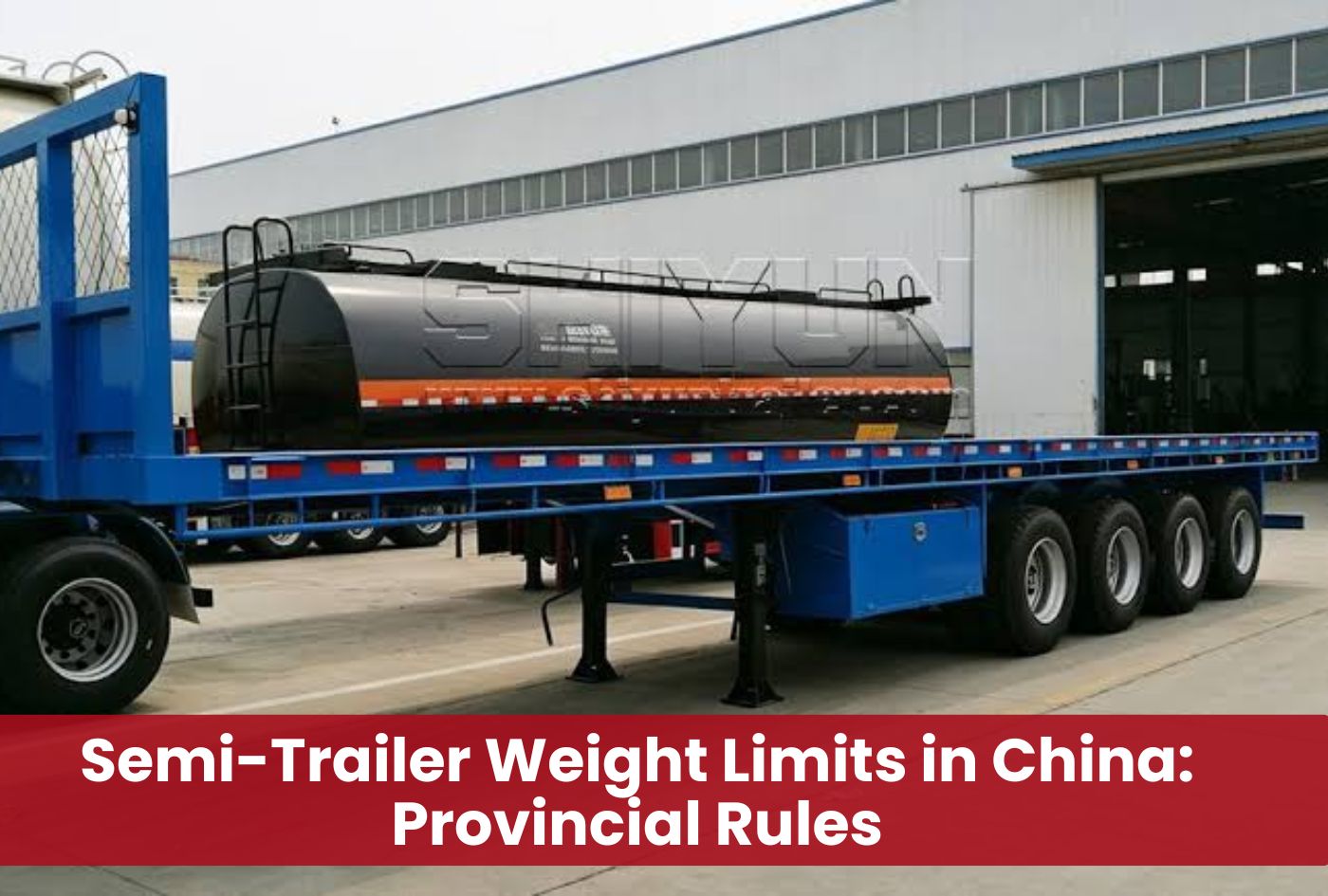
It is worth noting that the 49-ton figure applies to a standard air-suspended tractor paired with a three-axle trailer. Some operators have historically tried to reach that same weight using cheaper vehicle configurations that were not designed for it, which pushes individual axle loads well past their legal limit even when the total vehicle weight looks compliant on paper. This is exactly why axle-level limits matter just as much as the total weight figure.
Axle Load Limits Matter More Than the Total Weight Figure
Weigh station inspectors and highway toll booths do not just check the total weight on the sticker. They also check how that weight is distributed across each axle group, because uneven loading damages roads and bridges even when the gross weight is technically legal.
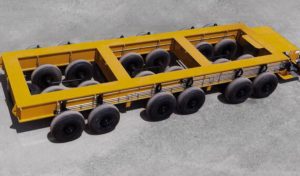
Under GB 1589, axle load limits generally fall into three groups. A single non-drive axle typically carries up to around 6 tons. A single drive axle with dual tires and air suspension can carry more, often cited around 10 to 11.5 tons depending on road class. Grouped axles are also capped separately, and China’s limit on a tridem axle group sits at 24 tonnes, which is notably lower than the 26 tonnes allowed in some neighboring countries.
Several factors affect how these axle limits get applied in practice, including whether the truck is running on an expressway or a rural provincial road, since limits on provincial and rural roads are often different from highway limits. This is one of the clearest ways provincial road conditions influence the practical weight a driver can carry, even when the national axle standard stays fixed.
How Enforcement Actually Differs From Province to Province
The written standard is national, but the experience of a driver crossing provincial lines is not always identical. A few patterns show up repeatedly in how different regions manage compliance.
Weigh-in-motion checkpoints. Many provinces have installed automatic weighing sensors at expressway toll booths so trucks are screened before they even reach the entrance. Beijing rolled this out across its closed expressway system, checking plate numbers, total weight, and axle count in real time and turning back any vehicle that fails the check.
Local enforcement intensity. Some cities enforce every part of the weight and dimension rule rigidly, while other provinces focus their attention mainly on the most common violations, namely weight and length overruns, rather than every technical detail of the standard. That means the same slightly-over-length trailer might get flagged in one city and waved through in another, even though the underlying rule is identical.
Provincial legislation on top of the national rule. Several provinces have passed their own local regulations that add detail to how overload cases get investigated, how monitoring equipment gets deployed at bridges and border checkpoints, and how repeat offenders get penalized. These local rules do not change the weight limit itself, but they do change how quickly and how strictly a violation gets caught.
Tolerance margins at highway entrances. National guidance allows a small measurement tolerance at expressway weighing stations, so a truck measured at up to 105 percent of the legal limit is generally not treated as a violation, since sensor readings can vary slightly. Provinces apply this same buffer, but the number of checkpoints and how strictly this margin is interpreted can still vary by region.
What Happens If a Semi-Trailer Is Overloaded
Overload violations are treated seriously because of the safety risk they create. Industry data cited in trucking media attributes around 70 percent of road traffic accidents to vehicle overloading and overrun issues, with roughly half of the most severe group-casualty accidents directly linked to overloaded or over-limit vehicles.
When a truck is flagged as overloaded, the typical process looks like this. The vehicle is directed to a designated unloading area, where excess cargo is removed or redistributed onto another truck. The truck is then reweighed, and it can only continue on the road once it passes inspection. If the cargo cannot reasonably be split, such as with large indivisible equipment, the operator must apply for a special overweight transport permit before continuing the journey. Repeat or severe violations can also lead to administrative fines and points against the driver’s or company’s compliance record.
Applying for an Oversized or Overweight Load Permit
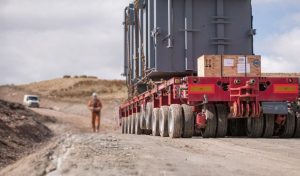
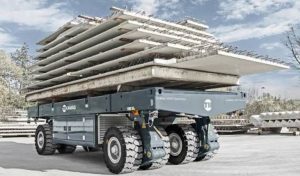
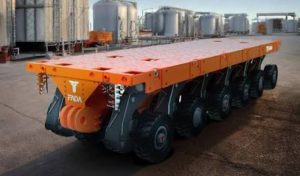
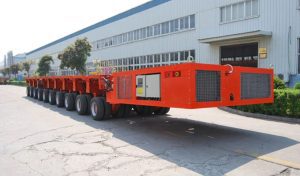
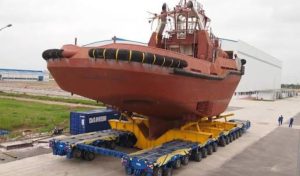
Some cargo genuinely cannot be broken down into smaller loads, such as precast concrete beams, industrial machinery, or wind turbine components. In these cases, operators apply through the provincial transport department for a special transport permit before the trip. The permit typically specifies an approved route, travel time window, and any required escort vehicles. Because bridge capacity and road conditions vary by region, the approved route in one province may differ from what looks like the shortest path on a map, so early planning matters more than it does for standard loads.
Related Reading: How to Choose the Right Trailer for Oversized Cargo
Frequently Asked Questions
Does the weight limit change depending on which province I am driving through?
The legal limit itself is set nationally under GB 1589 and stays consistent across provinces. What changes is how strictly and how frequently that limit gets checked, since each province manages its own checkpoints, monitoring technology, and local enforcement priorities.
What is the maximum weight for a standard six-axle semi-trailer in China?
A standard air-suspended tractor paired with a three-axle semi-trailer, giving six axles total, has a maximum legal combined weight of 49 tons under the current national standard.
Are electric or new energy semi-trailers allowed extra weight allowance?
Under the March 2026 draft revision of GB 1589, that additional allowance for new energy heavy trucks was not approved, so electric semi-trailers currently follow the same total weight limits as diesel vehicles of the same axle configuration.
Can I get a permit to carry cargo above the standard weight limit?
Yes, for indivisible cargo that cannot reasonably be split across multiple trucks, operators can apply for an overweight transport permit through the relevant provincial transport department before the trip.
Why does axle weight matter if my total vehicle weight is within the limit?
Road and bridge damage is closely tied to how weight is distributed across individual axles, not just the total figure. A truck can be within its overall gross weight limit while still exceeding the legal load on one specific axle group, which is why weigh stations check both numbers separately.
Final Thoughts
China’s semi-trailer weight limits are built on one national framework, GB 1589, but the day-to-day reality on the road depends heavily on where you are operating. Understanding both the fixed national numbers and the regional enforcement habits helps fleet operators plan routes, avoid unnecessary delays at weigh stations, and keep drivers compliant no matter which province they are passing through.