Heavy industry keeps building bigger, and the equipment used to move it has to keep pace. The self propelled modular transport services market has grown from a niche corner of heavy haulage into a core piece of infrastructure delivery, energy expansion, and industrial construction worldwide. In 2026, that growth shows no sign of slowing down.
This guide breaks down where the SPMT services market stands today, what is pushing demand higher, which regions and industries are leading adoption, and what buyers should look for when sourcing a transport provider or fleet.
What Is the SPMT Services Market
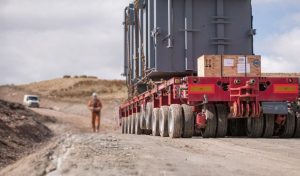
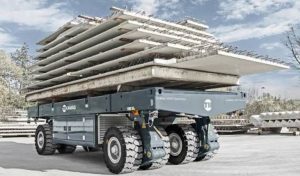
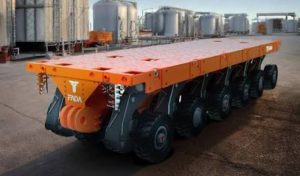
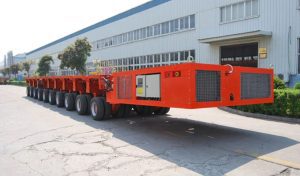
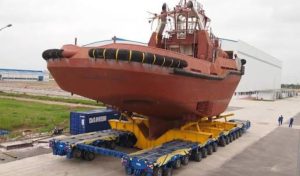
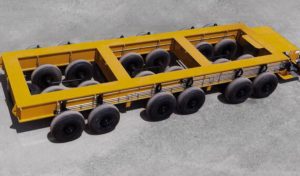
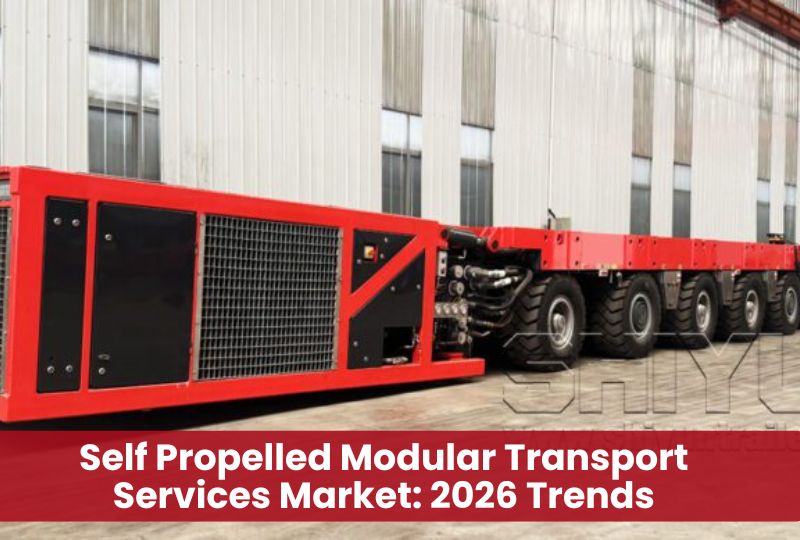
Self-propelled modular transporters, commonly called SPMTs, are platform vehicles built from linked axle lines, each with independent steering, hydraulic suspension, and load control. Unlike towed trailers, an SPMT carries its own power pack unit, letting it move in any direction, including sideways, without a separate tractor.
The “services market” refers to the commercial side of this equipment: rental fleets, heavy haulage contractors, and specialized transport operators who plan and execute the actual move, rather than the manufacturers who build the hardware. Buyers in this space are typically EPC contractors, shipyards, refineries, wind farm developers, and infrastructure agencies that need to relocate loads too large for conventional trucks or cranes.
Market Size and Growth in 2026
Estimates vary by research firm depending on scope, but the direction is consistent. Several industry reports place the global SPMT market in the low billions of dollars as of the mid-2020s, with compound annual growth rates ranging from roughly 5% to 8% through the early 2030s, depending on whether the figure covers equipment sales alone or the broader services and rental segment.
North America remains one of the largest regional markets, supported by bridge modernization programs, offshore wind buildout, and LNG and refinery turnaround work. Growth in this region has been described as steady rather than explosive, tracking closely with infrastructure spending cycles and construction sector output.
Asia Pacific is where the sharpest growth is showing up. China, India, South Korea, and Southeast Asian markets are expanding heavy construction equipment demand at a faster clip than mature markets, driven by urbanization, port and rail expansion, and a fast-growing renewable energy build program. China alone accounts for a large share of regional road haulage activity, reflecting the scale of its industrial and infrastructure base.
What’s Driving Demand
A few forces are consistently cited across market research as the main growth engines behind SPMT services heading into 2026 and beyond.
Offshore and onshore wind expansion. Wind turbine components, especially nacelles, tower sections, and blades, are heavy, long, and awkward to move by conventional trailer. SPMT fleets are increasingly used to shuttle these components between marshaling yards, quaysides, and installation sites, and this demand has become one of the fastest-growing use cases in the industry.
Energy sector modularization. LNG plants, refineries, and petrochemical facilities are shifting toward building major process modules off-site and rolling them into position, rather than constructing in place. This modular construction approach depends heavily on SPMT capability to move multi-thousand-tonne assemblies with millimeter-level positioning accuracy.
Bridge and infrastructure renewal. Accelerated bridge construction methods, where entire spans are built alongside a road and then rolled into place, are becoming more common in mature and developing markets alike. This reduces road closure time significantly compared to traditional construction, which is pushing more transport agencies toward SPMT-based methods.
Nuclear and shipbuilding activity. New nuclear builds and modular reactor projects, along with shipyard construction of hull sections and offshore platform modules, both require the same precision heavy-lift capability, adding another steady source of demand.
Rental over ownership. Many contractors are choosing to rent SPMT capacity for specific projects rather than carry the capital cost of owning a fleet. This shift toward flexible, project-based access is reshaping how service providers structure their offerings and is a recurring theme across recent market analysis.
Key Applications by Industry
- Energy: Transformers, reactors, generators, and wind turbine components
- Infrastructure: Bridge girders, stadium roof sections, precast concrete elements
- Oil and gas: Refinery modules, process columns, offshore platform sections
- Shipbuilding: Hull blocks, ship modules, submarine sections
- Aerospace and heavy industry: Aircraft components, industrial machinery relocation
Regional Snapshot
North America continues to lead on advanced fleet capability and service network maturity, supported by established heavy haulage contractors and a dense project pipeline in energy and infrastructure. Europe remains a hub for SPMT manufacturing and engineering expertise, with several of the world’s original equipment designs originating there.
Asia Pacific, and China in particular, is where fleet expansion is happening fastest. Domestic manufacturers have scaled up production of both semi-trailers and self-propelled modular transporters to meet growing regional demand, while local heavy transport services are increasingly competing with established international operators on price and delivery speed. This regional shift is one of the more notable trends shaping the SPMT services market in 2026.
Technology and Operational Trends
Remote and semi-autonomous control systems are becoming standard rather than optional. Operators can now manage steering, load distribution, and speed across hundreds of axle lines from a single control point, improving both safety and precision on tight job sites.
Fleet operators are also investing in telematics and GPS-based tracking to give project managers real-time visibility into transport progress, which matters on projects where a single move can take days and requires significant coordination among rigging, escort, and route-planning teams.
Electrification is starting to appear in newer power pack units, though diesel-hydraulic systems still dominate the installed base. This is expected to shift gradually as emissions regulations tighten in key markets.
Challenges Facing the Market
Skilled labor remains one of the tightest constraints in the industry. Qualified SPMT operators, rigging engineers, and heavy lift supervisors are in short supply relative to project demand, limiting how many large moves service providers can staff simultaneously.
Route planning and permitting add further complexity, particularly for oversized loads that require multi-agency approval and road or infrastructure assessment before a move can happen. In China specifically, weight and dimension limits are governed by the national standard GB 1589-2016, and provincial variation in permitting adds another layer buyers need to plan around.
Currency swings, steel input costs, and shipping disruptions have also introduced pricing volatility into both equipment purchases and long-distance mobilization schedules over the past two years.
What Buyers Should Look for in an SPMT Service Provider
When sourcing a transport partner for a heavy-lift or modular move, buyers typically evaluate a few core factors: axle line capacity and configuration flexibility, track record with similar load types, safety and compliance certifications, and how quickly equipment can be mobilized to site. Manufacturers who also offer configurable modular trailer and transporter fleets, such as Shiyun Trailer, give buyers an added option when project specifications call for equipment built to exact axle count and payload requirements rather than off-the-shelf configurations.
Outlook for the Rest of 2026
The self propelled modular transport services market is set to keep growing through the remainder of 2026, with energy infrastructure and Asia Pacific industrial expansion doing most of the heavy lifting, literally. Buyers should expect continued investment in fleet automation, tighter competition between regional and global service providers, and steady demand growth from wind, LNG, and bridge renewal projects in particular.
Frequently Asked Questions
What is the difference between an SPMT and a standard modular trailer?
A standard modular trailer is towed by a separate tractor unit and steered manually or hydraulically from the front. An SPMT carries its own power pack and hydraulic system, letting each axle line steer independently, including sideways movement, without a towing vehicle.
How much weight can an SPMT carry?
Capacity depends on the number of axle lines used. A single axle line typically supports tens of tonnes, and multiple lines can be linked together to carry loads ranging from a few hundred tonnes up to several thousand tonnes for the largest industrial moves.
Which industries use SPMT services the most?
Energy, particularly wind and LNG, along with shipbuilding, bridge construction, and oil and gas refinery work, account for the bulk of SPMT service demand globally.
Is it better to rent or own SPMT equipment?
For contractors with occasional large-load projects, renting avoids the capital cost of a fleet that may sit idle between jobs. Companies with consistent heavy-lift workloads often find ownership more cost-effective over time.