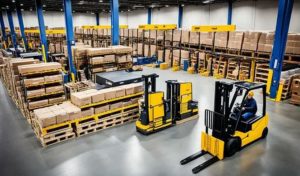
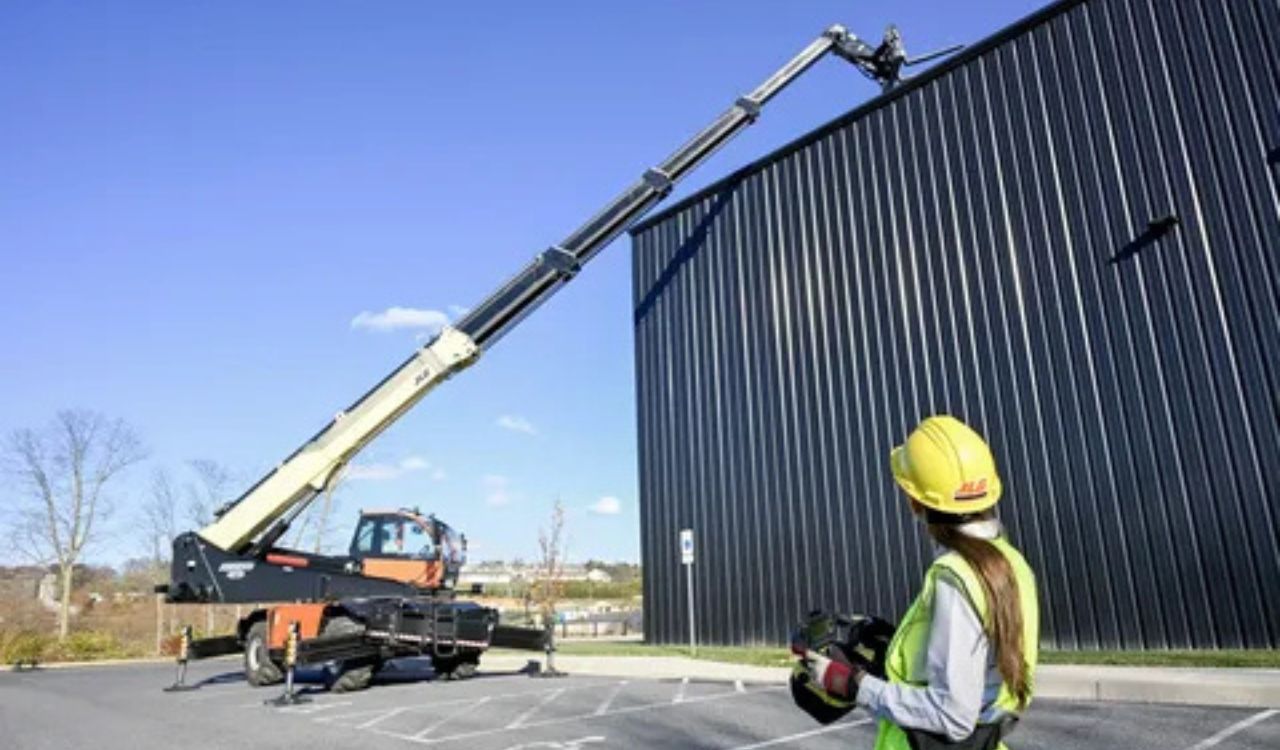
Material handling solutions are systems, equipment, and processes used to move, position, load, unload, and transport materials efficiently within construction sites, manufacturing facilities, ports, industrial plants, warehouses, and infrastructure projects. While everyday material handling may involve forklifts, cranes, conveyors, and standard trucks, demanding industrial projects often require specialized equipment for heavy or oversized cargo.
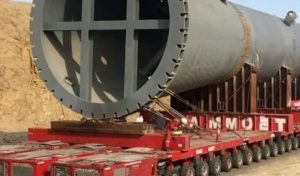
Heavy machinery, transformers, bridge sections, wind turbine components, pressure vessels, containers, and large fabricated structures can exceed the capacity or maneuverability of conventional transport equipment. In these situations, specialized solutions such as SPMT trailers, modular trailers, multiwheelers, and heavy haulage trailers can provide the required load capacity, maneuverability, and configuration flexibility. By comparison, conventional tractor units may be used for lighter transport tasks, and questions such as how fast can a semi truck go without trailer can also arise when evaluating vehicle movement between loading locations. Actual speed depends on the truck’s specifications, road conditions, and applicable speed limits.
For engineers, contractors, logistics companies, and industrial buyers, selecting the right material handling solution requires more than comparing equipment specifications. Cargo weight and dimensions, ground bearing capacity, route conditions, steering requirements, loading methods, permits, and site limitations all need to be considered.
What Are Material Handling Solutions?
Material handling solutions refer to the equipment and methods used to safely move materials and cargo from one location to another. They can be designed for relatively small loads in warehouses or for extremely heavy and oversized cargo in industrial and infrastructure projects.
Common material handling equipment includes:
- Forklifts
- Cranes
- Conveyors
- Trucks
- Heavy haulage trailers
- Modular trailers
- SPMT trailers
- Multiwheelers
- Port trailers
- Specialized transporters
The equipment selected depends on the material being handled, its weight and dimensions, the distance it must travel, and the environment in which the operation takes place.
Why Are Material Handling Solutions Important?
Efficient material movement directly affects how industrial and construction projects are planned and executed. Heavy cargo cannot always be transported using standard vehicles because its dimensions, weight, or center of gravity may create additional engineering and logistical requirements.
A properly selected handling solution can help with:
- Transporting heavy and oversized cargo
- Distributing loads across multiple axle lines
- Maneuvering through restricted areas
- Maintaining suitable platform height
- Handling complex loading and unloading operations
- Moving cargo across industrial sites
- Reducing excessive ground pressure where possible
- Positioning large components accurately
The goal is to match the transport system to the physical and operational requirements of the project.
Types of Material Handling Solutions for Heavy Loads
Heavy transport projects use different equipment configurations depending on the cargo and operating environment.
SPMT Trailers
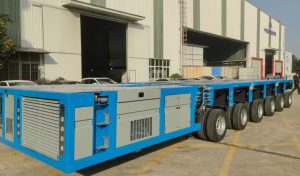
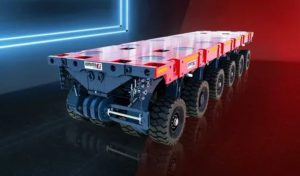
A self-propelled modular transporter, or SPMT, is a specialized heavy transport system that combines multiple axle lines with its own propulsion, steering, and hydraulic suspension systems.
An SPMT trailer can be configured into different combinations to accommodate various cargo weights and dimensions. Its steering capabilities also allow controlled movement in environments where conventional trailers may have difficulty maneuvering.
SPMT systems are commonly considered for:
- Bridge sections
- Transformers
- Power plant equipment
- Large industrial machinery
- Shipyard components
- Heavy fabricated structures
- Infrastructure projects
The number and arrangement of axle lines should be determined according to the load and engineering requirements of the operation.
Modular Trailers
Modular trailers consist of transport modules that can be combined to create different platform lengths and widths. This flexibility makes them suitable for project cargo with varying dimensions and weights.
A modultrailer or modular trailer may be configured with multiple axle lines to distribute the load and accommodate large industrial components.
Applications can include:
- Industrial machinery
- Generators
- Transformers
- Bridge components
- Pressure vessels
- Construction equipment
The final configuration depends on payload, cargo dimensions, axle loading, route conditions, and applicable regulations.
Multiwheelers
A multiwheeler uses multiple wheels and axle lines to distribute the weight of heavy cargo across a larger support area.
This type of equipment can be useful when transporting heavy industrial components where load distribution is an important consideration.
When choosing a multiwheeler, project teams should examine:
- Payload capacity
- Number of axle lines
- Suspension system
- Steering configuration
- Platform dimensions
- Ground conditions
- Road restrictions
Heavy Haulage Trailers
Heavy haulage trailers are designed for transporting cargo that exceeds the capabilities of standard commercial trailers.
Depending on the project, this category can include low loaders, extendable trailers, modular platforms, and other specialized configurations.
Typical loads include:
- Construction machinery
- Industrial equipment
- Transformers
- Generators
- Steel structures
- Large machinery
Heavy haulage planning should account for the complete vehicle combination, including cargo, trailer, tractor, axle loads, dimensions, and route restrictions.
Material Handling Solutions for Port Operations
Ports handle containers, project cargo, heavy machinery, and other materials that must be moved between ships, terminals, storage yards, and transport areas.
Port trailers are designed for specific logistics environments and can support the movement of cargo within port facilities.
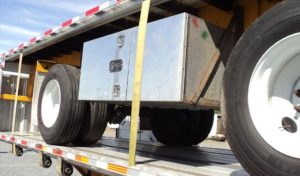
For container transportation, a skeleton trailer or skeletal container trailer provides an open chassis designed to support standard shipping containers.
These trailers can be used in:
- Container terminals
- Freight yards
- Intermodal operations
- Warehousing facilities
- Port logistics
The trailer should be selected according to container type, payload, handling method, and operating conditions.
Specialized Material Handling for Wind Energy
Wind turbine projects present unique transportation challenges because turbine components can be extremely long, heavy, or difficult to maneuver.
Specialized equipment may be used to transport:
- Wind turbine blades
- Tower sections
- Nacelles
- Hubs
- Other turbine components
A wind blade adapter can be used as part of a specialized blade transportation system where the project configuration requires controlled positioning or articulation.
Route planning is particularly important for wind energy transportation. Engineers may need to evaluate road width, turning radius, gradients, bridge capacity, overhead clearances, and other physical restrictions.
Material Handling for Bulk Cement
Bulk cement requires dedicated equipment because it is transported as a dry powder rather than conventional packaged cargo.
A cement tank trailer or bulk cement tank semi trailer is designed to transport powdered cement and similar dry bulk materials.
Important considerations include:
- Tank capacity
- Pressure and discharge system
- Material compatibility
- Axle configuration
- Stability
- Maintenance requirements
- Loading and unloading arrangements
- Local transportation regulations
These systems are commonly used to move bulk cement between production facilities, storage locations, and construction sites.
Ground Bearing and Load Distribution
Ground bearing is an important consideration when transporting heavy loads across roads, industrial yards, construction sites, and temporary access routes.
A heavy load places forces on the surface through the wheels or support points. If the underlying surface cannot support those loads, excessive deformation or damage can occur.
Before a heavy transport operation, project teams may evaluate:
- Axle loads
- Wheel loads
- Ground conditions
- Pavement strength
- Soil bearing capacity
- Contact area
- Temporary ground reinforcement
Using additional axle lines can help distribute the total load, but the actual ground pressure and allowable loading should be assessed based on the site and equipment configuration.
How to Choose the Right Material Handling Solution
The right equipment depends on the cargo and the environment rather than simply its rated capacity.
Cargo Weight
Determine the actual cargo weight and account for any additional equipment or accessories involved in the transport operation.
Cargo Dimensions
Length, width, height, and center of gravity can affect the required trailer configuration.
Oversized loads may require specialized steering, additional axle lines, extendable platforms, or lower deck heights.
Ground Conditions
Evaluate the road, pavement, soil, and temporary access surfaces along the transportation route.
Maneuverability
Tight turns, narrow access roads, industrial facilities, and construction sites may require equipment with advanced steering capabilities.
Route Restrictions
A detailed route survey should identify:
- Bridges
- Low clearances
- Sharp turns
- Steep gradients
- Narrow roads
- Weak road sections
- Utility infrastructure
- Weight restrictions
Permits and Regulations
Oversized and heavy transportation can be subject to specific legal requirements. Depending on the jurisdiction, permits may address vehicle dimensions, axle loads, gross weight, operating times, or route restrictions.
Project teams should confirm applicable truck permits and transportation regulations before beginning the operation.
SPMT Operators and Training
Specialized equipment requires appropriately trained personnel. An SPMT operator needs to understand the equipment’s steering, hydraulic suspension, propulsion, braking, and control systems.
SPMT operator training may cover:
- Equipment controls
- Steering modes
- Hydraulic suspension
- Load distribution
- Pre-operation inspections
- Safe maneuvering
- Communication procedures
- Emergency procedures
- Site-specific operating requirements
For complex projects, operators may work closely with transport engineers, supervisors, riggers, crane teams, and site management.
Benefits of Specialized Heavy Transport Equipment
Specialized equipment can provide several advantages when conventional trailers are not suitable.
Higher Load Handling Capability
Modular transport systems can be configured with multiple axle lines to accommodate demanding payload requirements.
Greater Maneuverability
Systems such as SPMTs can provide advanced steering capabilities for movement in restricted industrial environments.
Configuration Flexibility
Modular equipment can be arranged according to the dimensions and weight distribution of different loads.
Controlled Movement
Hydraulic suspension and steering systems can provide controlled movement and platform management during complex transportation operations.
Better Load Distribution
Multiple axle lines can distribute heavy loads across a larger number of wheels and support points.
Challenges and Limitations
Specialized material handling solutions also require careful planning and engineering.
Potential challenges include:
- Complex route restrictions
- Weak ground conditions
- Bridge capacity limitations
- Limited overhead clearance
- Tight turning areas
- Permit requirements
- Operator training requirements
- Specialized equipment costs
- Loading and unloading constraints
An SPMT or modular trailer is not automatically the right choice for every heavy load. Equipment should be selected according to the project’s actual requirements.
Best Practices for Material Handling
A successful heavy transport operation begins with detailed preparation.
Conduct a Route Survey
Inspect the planned route for bridges, clearances, turning areas, road conditions, gradients, and other restrictions.
Verify Cargo Information
Confirm the cargo’s weight, dimensions, center of gravity, lifting points, and securing requirements.
Match the Equipment
Select the trailer or transporter according to payload, dimensions, steering requirements, ground conditions, and route characteristics.
Evaluate Ground Conditions
Determine whether the road or site can support the expected axle and wheel loads.
Plan Loading and Unloading
Make sure there is adequate space and suitable ground capacity for cranes, trailers, transporters, and support equipment.
Confirm Regulatory Requirements
Check permits, escort requirements, operating restrictions, and other applicable regulations before transportation.
Inspect Equipment
Inspect critical components such as hydraulic systems, steering systems, tires or wheels, connections, brakes where applicable, and other safety-related equipment before operation.
Coordinate the Project Team
Heavy transport often involves several teams. Clear communication between operators, engineers, logistics planners, riggers, and site personnel helps coordinate the operation.
Material Handling Solutions in Different Industries
Heavy transport equipment is used across many industries because large components often cannot be moved using standard vehicles.
Construction
Construction projects may require transportation of cranes, precast structures, bridge components, and heavy machinery.
Energy
Power generation and renewable energy projects can involve transformers, generators, turbines, and other large components.
Manufacturing
Manufacturing facilities may need to move production machinery, presses, fabricated structures, and other industrial equipment.
Shipbuilding
Shipyards handle large steel structures, ship modules, machinery, and other heavy components.
Infrastructure
Road, rail, and bridge projects frequently require transportation of large structural elements and construction equipment.
Ports and Logistics
Ports use specialized equipment for container handling, project cargo, and movement between terminals and storage areas.
Why Equipment Selection Matters
The cost and complexity of heavy material transportation depend on more than the purchase or rental price of a trailer.
Project costs can be influenced by:
- Equipment configuration
- Payload requirements
- Transport distance
- Route complexity
- Permits
- Escort requirements
- Loading and unloading
- Ground preparation
- Operator requirements
- Engineering and planning
- Project duration
For this reason, semi trailers prices or semi trailer leasing prices should be evaluated alongside the complete transportation requirements rather than considered in isolation.
The Role of Shiyun Trailers in Heavy Transport
Manufacturers and industrial buyers evaluating material handling equipment should consider the complete operating environment, including cargo characteristics, axle configuration, steering, suspension, ground conditions, and route requirements.
Shiyun Trailers provides heavy transport equipment designed for applications where different cargo weights, dimensions, and operating conditions require appropriately configured transportation systems.
The specific trailer or transporter should always be selected according to the project’s engineering requirements and local transportation regulations.
Frequently Asked Questions
What are material handling solutions?
Material handling solutions are equipment and processes used to move, load, unload, position, and transport materials or cargo. They range from conventional warehouse equipment to specialized systems for heavy and oversized loads.
What equipment is used for heavy material handling?
Heavy material handling can involve SPMTs, modular trailers, multiwheelers, heavy haulage trailers, specialized low loaders, port trailers, and other transport systems. The appropriate equipment depends on cargo weight, dimensions, route, and site conditions.
What is an SPMT trailer?
An SPMT is a self-propelled modular transporter that uses multiple axle lines, hydraulic suspension, steering systems, and onboard propulsion to move heavy and oversized loads.
What is the difference between an SPMT and a modular trailer?
An SPMT has its own propulsion system and can operate without a conventional tractor for movement. A conventional modular trailer generally relies on a tractor or other towing vehicle. Both systems can use modular axle configurations for heavy loads.
What is a skeleton trailer used for?
A skeleton trailer is an open-frame trailer primarily designed to transport shipping containers. It is commonly used in port, freight, and intermodal logistics operations.
Why is ground bearing important for heavy transport?
Ground bearing determines whether a road, pavement, soil surface, or industrial yard can support the loads applied by the transport equipment. Ground conditions should be assessed before moving exceptionally heavy cargo.
How do I choose a material handling solution?
Start by evaluating cargo weight, dimensions, center of gravity, route conditions, ground capacity, maneuverability, loading requirements, permits, and applicable regulations. The equipment configuration should then be selected according to these project-specific requirements.
Conclusion
Material handling solutions encompass the equipment and processes used to move materials efficiently across construction, manufacturing, infrastructure, energy, port, and industrial environments.
For standard cargo, conventional transport equipment may be sufficient. Heavy or oversized loads can require specialized solutions such as SPMT trailers, modular trailers, multiwheelers, heavy haulage trailers, port trailers, and specialized wind-energy or bulk-material transport equipment.
Successful material handling depends on matching the equipment to the cargo, route, ground conditions, regulatory requirements, and operating environment. Detailed planning, route surveys, load assessment, equipment inspections, operator training, and proper coordination should form part of every complex heavy transport operation.