Whether to rent or buy an SPMT usually comes down to how often the equipment will actually be used and how specialized the cargo is that a company regularly handles. Both approaches are common across the heavy transport industry, and the right choice depends more on usage patterns than on either option being inherently better.
When Renting Makes Sense
For a single project or infrequent heavy lifts, renting avoids the significant upfront capital cost of purchasing axle lines and a PPU outright. Rental also transfers a meaningful share of maintenance responsibility to the equipment owner, since rental providers are typically responsible for keeping their fleet in working condition between projects. Renting also gives a company access to a wider capacity range than it might reasonably own outright, since axle lines can be scaled up or down per job without the buyer needing to hold excess equipment during periods of lower demand.
When Purchasing Makes Sense
Companies that regularly move heavy modules, such as EPC contractors with a steady pipeline of infrastructure or industrial projects, often find that purchasing pays off within a few years of consistent use. Owning the fleet also means the equipment is available on short notice rather than depending on a rental company’s availability, which can matter significantly when project schedules are tight or when a rental provider’s fleet is already committed elsewhere during peak demand periods.
Total Cost of Ownership
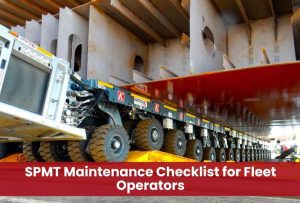
Purchase price is only one part of the full cost picture. Ongoing costs include maintenance, storage between projects, transport of the equipment itself between job sites, insurance, and operator training. Our post on SPMT maintenance for fleet operators outlines what ongoing upkeep typically involves and how it factors into long-term ownership cost.
Manufacturer Choice Affects Long-Term Value
Whether renting or buying, the manufacturer behind the equipment affects resale value, spare parts availability, and reliability over time. A well-built platform from a manufacturer with strong after-sales support tends to hold its value better and cost less to maintain over its working life. We cover what to look for in our post on how to choose an SPMT manufacturer in China.
A Simple Way to Decide
A rough rule many operators use is to compare the total rental cost projected across a year of expected use against the estimated cost of ownership over the same period, including maintenance and storage. If the break-even point falls within roughly two to three years of regular use, purchasing tends to make financial sense. For companies with only occasional heavy transport needs, renting almost always remains the more economical choice regardless of project size.
Hybrid Approaches
Some companies choose a hybrid model, owning a base level of axle lines and PPU capacity for routine work while renting additional capacity for unusually large or infrequent projects. This approach can reduce capital exposure while still keeping core capability in-house, and it is increasingly common among mid-sized contractors who want flexibility without committing to a full fleet purchase.
Financing and Depreciation Considerations
For companies leaning toward purchase, financing terms and depreciation schedules should be factored into the overall cost comparison, since these can significantly change the effective annual cost of ownership compared to a simple purchase price calculation. Consulting with a financial advisor familiar with heavy equipment financing is worthwhile before committing to a large fleet purchase.
Insurance and Liability Considerations
Insurance costs differ meaningfully between rental and ownership. Rental agreements typically include coverage arranged by the equipment owner, often built into the rental rate, while purchased equipment requires the buyer to arrange its own coverage, which should account for both the value of the equipment and the liability exposure involved in operating it on active project sites. This is a cost that is sometimes overlooked in early-stage rental versus purchase comparisons but can meaningfully affect the total cost of ownership over time.
Evaluating Your Own Project Pipeline
Before deciding, it helps to look honestly at your own project pipeline over the next two to three years rather than basing the decision purely on the current project. Companies expecting a steady stream of heavy transport work are usually better served by purchase, while those uncertain about future demand, or working in a market with variable project flow, often find that rental keeps them more flexible without locking capital into equipment that may sit idle during slower periods.
Frequently Asked Questions
Does SPMT rental include an operator?
Often yes, since operating an SPMT safely requires trained personnel. This should be confirmed directly with the rental provider as part of the quote, since practices vary between companies.
Is used SPMT equipment a good option?
It can be, provided axle lines and PPUs are properly inspected and certified before purchase. Buyers should check documented maintenance history and confirm the equipment meets current safety standards before committing to a used purchase.
How long does it typically take to break even on a purchased SPMT fleet?
This varies significantly by usage level, but many operators use a rough benchmark of two to three years of consistent project use as a reasonable point where purchase costs start to outweigh cumulative rental costs.
Can rented SPMT equipment be reconfigured for different project sizes?
Yes, most rental providers offer flexible axle line counts, allowing a company to scale the configuration up or down depending on the specific project requirements each time.
Shiyun Trailer supports both project-based and fleet purchase decisions, helping clients size the right axle configuration whether they are renting a single project or building out owned capacity.