Moving a bulldozer, crane, or excavator down a public road is nothing like moving a standard container. Once a load crosses the legal limit for width, height, length, or weight, it becomes an oversize load in the eyes of road authorities. At that point, a permit is not optional. It is the only thing standing between a legal move and a fined, delayed, or impounded shipment.
I will break down how oversize load permits actually work, what triggers the need for one, and what fleet operators and logistics teams need in place before a heavy machine ever touches the highway.
What Counts as an Oversize or Overweight Load
Every country and region sets its own legal dimensions for vehicles on public roads. A load is classified as oversize the moment it exceeds any single limit, even if every other measurement is within range. Weight is judged separately from size, so a load can be oversize, overweight, or both at once.
Common triggers for a permit include:
- Width beyond the standard road limit, usually around 2.5 to 2.6 meters in most countries
- Height above the legal clearance limit, which varies by bridge and overpass design
- Length that exceeds the standard combination vehicle allowance
- Gross vehicle weight or axle load above the posted limit, even before the width or height limit is reached
Construction machines such as cranes, loaders, excavators, and industrial generators are among the most common oversize cargo types, simply because they cannot be disassembled to fit within standard limits. When a load cannot be broken down further, it is often referred to as an abnormal or indivisible load, and this classification usually comes with its own permit category.
Why Permits Exist
Oversize permits are not just paperwork. Road authorities use them to protect infrastructure and public safety. A permit lets the issuing agency confirm the route can physically support the load, that bridges and overpasses along the way have enough clearance and weight capacity, and that other road users are warned.
The permit typically specifies:
- The exact approved route
- Travel dates and permitted hours, often restricted to daylight or off-peak times
- Required escort vehicles and signage
- Maximum allowable speed for the move
- Insurance and liability requirements for the carrier
Operating outside these terms, even by a small margin, can void the permit entirely and expose the carrier to fines or seizure of the load.
Types of Oversize Load Permits
Permit categories vary by jurisdiction, but most systems offer a version of the following.
Single-trip permits cover one specific move on one specific date and route. These are the most common choice for heavy equipment transport since each machine and route combination is unique.
Annual or blanket permits allow repeated moves within set dimension limits over a longer period, useful for fleets that regularly haul similar loads on familiar routes.
Superload or special hauling permits apply to the largest and heaviest shipments, such as transformers, wind turbine components, or large excavators. These often require a dedicated route survey, bridge analysis, and sometimes a police escort.
Overweight-only permits apply when a load stays within legal size limits but exceeds the weight threshold, which is common for compact but heavy equipment like compactors or drilling rigs.
Multi-state or cross-border moves usually require a separate permit for each jurisdiction the route passes through, since dimension and weight limits are rarely identical between neighboring regions.
The Permit Application Process
Before applying, the exact dimensions and weight of the load must be confirmed, including the height and width once the equipment is secured on the trailer, not just its dimensions in isolation. A measurement taken before loading can differ enough from the final loaded height to void a permit later.
The general process looks like this:
- Measure the load in its final loaded position on the trailer
- Choose the trailer type suited to the equipment’s height, weight, and shape
- Plan the route, checking bridge clearances, weight-restricted roads, and any seasonal restrictions
- Submit the permit application with the load and route details to the relevant authority
- Arrange escort vehicles if required by the load’s width, height, or route
- Confirm signage, lighting, and flagging requirements before departure
Many transport authorities now offer online permitting systems that can approve routine single-trip permits within a day. However, superloads and multi-jurisdiction moves often take longer due to bridge analysis and route review.
Escort and Pilot Car Requirements
Escort vehicles, often called pilot cars, are required once a load passes certain width or height thresholds. Rules differ by region, but general patterns include one escort vehicle for wider loads and two escorts, front and rear, once the load becomes significantly wider or longer. Height that approaches overhead clearance limits may call for a height pole vehicle that drives ahead of the load to confirm clearance at bridges and power lines.
In some regions, police escorts are mandatory for superloads or moves through dense urban areas. Escort drivers are frequently required to hold specific certification, so confirming this before the move avoids last-minute delays.
Trailer Selection Affects Permit Approval
The trailer used to carry the load directly affects whether a permit is approved. A load that sits too high on a standard flatbed may exceed height limits that could otherwise be avoided with a lower deck.
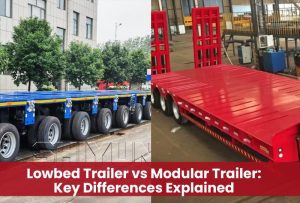
Step deck trailers reduce overall height for tall equipment, while removable gooseneck (RGN) or lowbed trailers lower the load closer to the ground, which is often the only practical solution for cranes, excavators, and other tall machinery. Choosing the wrong trailer type does not just create a safety risk; it can also mean the load misses a height threshold that would have kept it out of the superload permit category entirely.
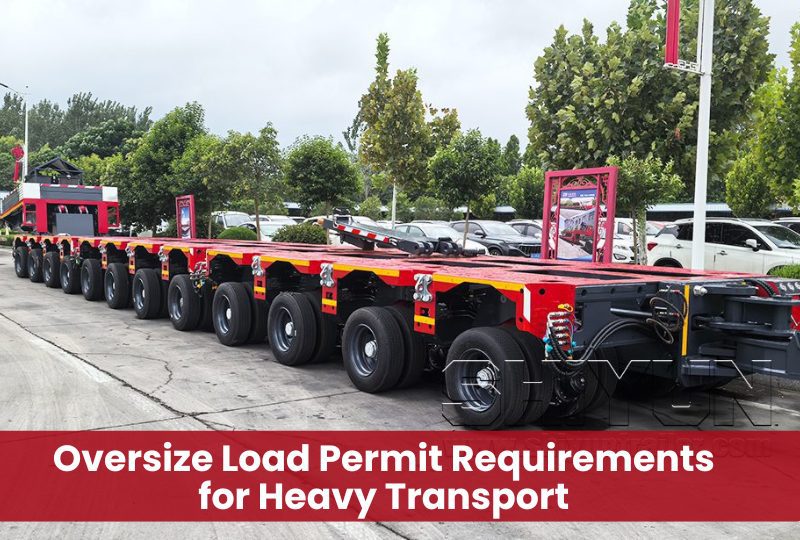
This is where trailer specification matters as much as the permit paperwork itself. At Shiyun Trailer, we work with heavy haul operators to match axle configuration and deck height to the actual equipment being moved, since the right lowbed or extendable trailer can often keep a load within a more manageable permit class.
GB 1589-2016 Standards
In China, vehicle and trailer dimensions, axle loads, and gross mass limits fall under the national standard GB 1589-2016, which governs motor vehicles, trailers, and combination vehicles on public roads. Loads or vehicles exceeding these limits require separate approval from local transport authorities, and provincial enforcement can vary, so route-specific verification is recommended for cross-provincial moves.
Common Mistakes That Delay Oversize Moves
Most permit delays come down to a handful of repeat issues:
- Measuring the load before it is secured on the girder trailer instead of after
- Assuming a permit from one state or province is valid in a neighboring one
- Underestimating axle weight distribution, which can trigger an overweight violation even when total gross weight is within range
- Booking escort vehicles too late, especially for superloads that need certified pilot cars
- Overlooking seasonal or weather-related road restrictions, which some regions impose during spring thaw or extreme heat
Building in extra lead time for permit approval, particularly for multi-jurisdiction routes, remains the simplest way to avoid costly delays.
To Conclude:
Oversize load permits exist to keep roads, bridges, and drivers safe while heavy machinery gets where it needs to go. The process depends heavily on accurate measurements, the right trailer for the job, and a clear understanding of the rules in every jurisdiction the load will pass through. Getting these details right before the truck ever leaves the yard is what separates a smooth heavy haul from an expensive one.