Semi trailers come in a variety of lengths depending on their purpose, cargo type, and regional transportation regulations. While the standard semi trailer in North America is typically 53 feet long, specialized trailers can be significantly longer to accommodate oversized freight and high-volume transportation needs.
Understanding the longest semi trailer types helps trucking companies, logistics professionals, and transportation planners choose the right equipment for their operations.
Standard Semi Trailer Length
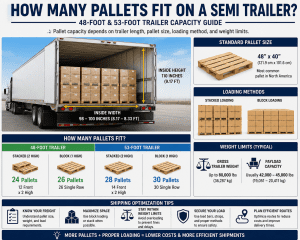
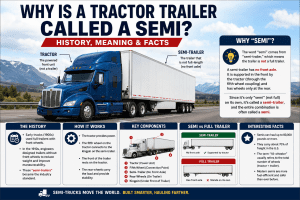
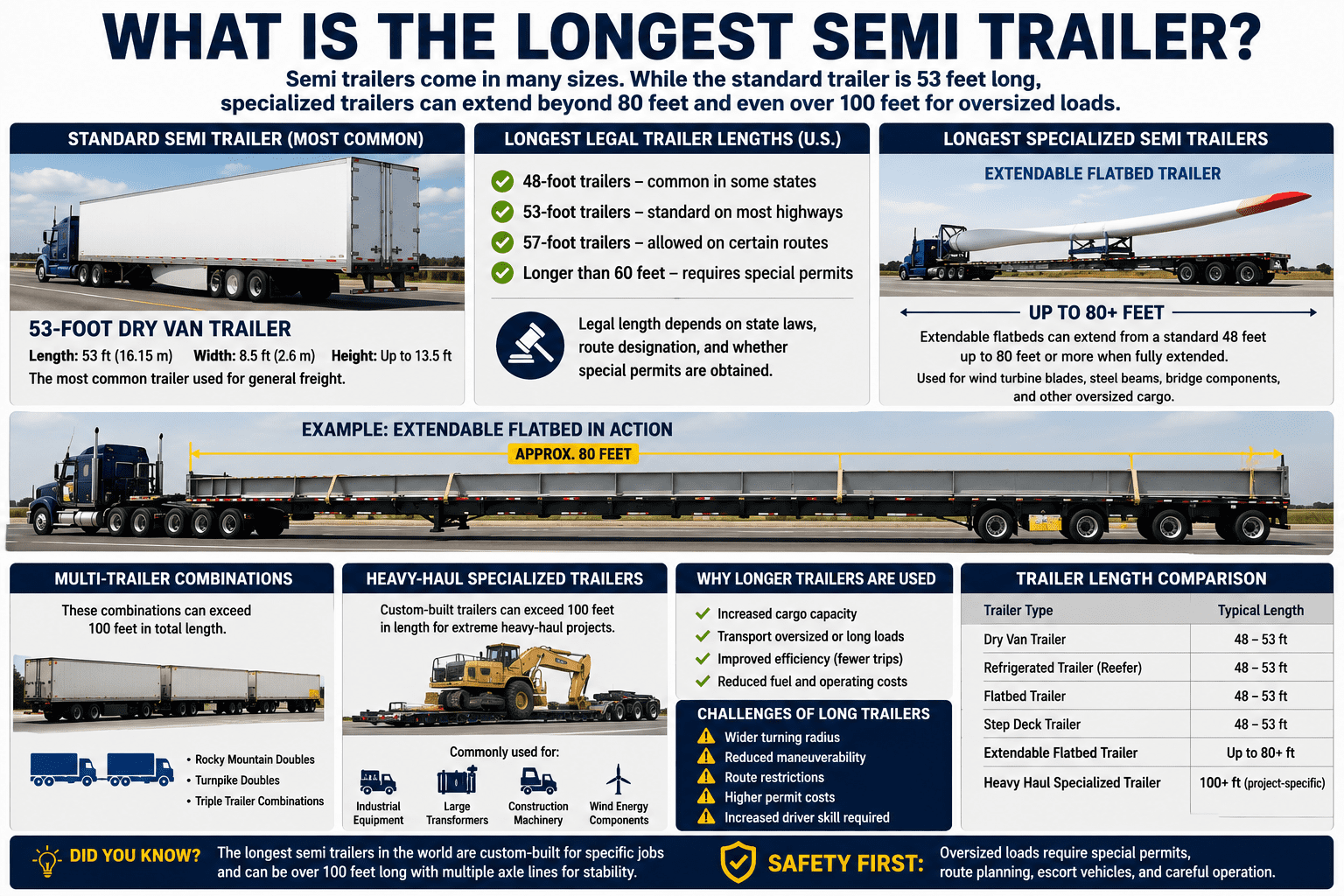
The most common semi trailer on U.S. highways is the 53-foot dry van trailer.
Typical dimensions include:
- Length: 53 feet (16.15 meters)
- Width: 8.5 feet (2.6 meters)
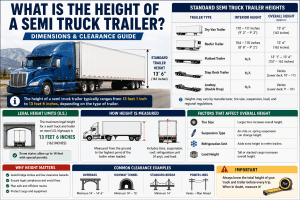
- Height: Up to 13.5 feet overall with tractor
This size offers an excellent balance between cargo capacity and maneuverability.
What Is the Longest Legal Semi Trailer?
In many parts of North America, trailer length regulations vary by state and route designation.
Common legal trailer lengths include:
- 48-foot trailers
- 53-foot trailers
- 57-foot trailers (in some jurisdictions)
- Specialized trailers exceeding 60 feet with permits
The maximum legal length often depends on whether the trailer operates on designated highway networks and whether special permits have been obtained.
Longest Specialized Semi Trailers
Extendable Flatbed Trailers
Extendable flatbeds are among the longest semi trailers used in commercial transportation.
These trailers can often extend from:
- 48 feet standard length
- Up to 80 feet or more when fully extended
They are commonly used to transport:
- Wind turbine blades
- Steel beams
- Bridge components
- Large industrial equipment
Double Drop and Lowboy Trailers
Heavy-haul trailers may exceed standard lengths to accommodate oversized machinery and construction equipment.
These specialized trailers often operate under oversize permits and route restrictions.
Multi-Trailer Combinations
Some of the longest freight configurations include multiple trailers connected to a single tractor.
Examples include:
- Rocky Mountain Doubles
- Turnpike Doubles
- Triple Trailer Combinations
These combinations can exceed 100 feet in total length, depending on local regulations.
Longest Semi Trailer Ever Used
For specialized heavy-haul projects, custom-built trailers can exceed 100 feet in length and may use multiple axle lines to distribute extreme loads.
Examples include transportation systems used for:
- Wind energy components
- Large transformers
- Industrial reactors
- Massive construction equipment
These trailers typically require:
- Special permits
- Escort vehicles
- Route planning
- Engineering approval
Why Longer Semi Trailers Are Used
Longer trailers offer several advantages:
Increased Cargo Capacity
More trailer space allows carriers to move larger quantities of freight in fewer trips.
Transport Oversized Loads
Industries such as construction, energy, and manufacturing often require trailers capable of carrying exceptionally long cargo.
Improved Efficiency
Fewer trips can reduce fuel consumption, labor costs, and overall transportation expenses.
Challenges of Long Semi Trailers
While longer trailers provide benefits, they also create operational challenges:
- Wider turning radius
- Reduced maneuverability
- Route restrictions
- Higher permit costs
- Increased driver skill requirements
Proper planning is essential when transporting oversized loads.
Comparing Common Semi Trailer Lengths
| Trailer Type | Typical Length |
|---|---|
| Dry Van Trailer | 48–53 ft |
| Refrigerated Trailer | 48–53 ft |
| Flatbed Trailer | 48–53 ft |
| Step Deck Trailer | 48–53 ft |
| Extendable Flatbed | Up to 80+ ft |
| Heavy Haul Specialized Trailer | 100+ ft (project-specific) |
Conclusion
The standard semi trailer is typically 53 feet long, but the longest semi trailers can extend beyond 80 feet and, in specialized heavy-haul applications, exceed 100 feet. These extra-long trailers play a vital role in transporting oversized cargo such as wind turbine blades, industrial equipment, and large structural components that cannot fit on conventional trailers.