Introduction
Knowing how to adjust semi trailer brakes is essential for maintaining safe braking performance, reducing stopping distances, and ensuring compliance with commercial vehicle safety regulations. Properly adjusted brakes help prevent uneven brake wear, improve vehicle control, and reduce the risk of accidents caused by ineffective braking systems.
Semi trailers typically use air brake systems equipped with brake chambers, slack adjusters, brake shoes, and brake drums. While many modern trailers feature automatic slack adjusters, some trailers still require manual brake adjustments as part of routine maintenance.
Why Semi Trailer Brake Adjustment Is Important
Proper brake adjustment provides several benefits:
- Improved stopping power
- Enhanced road safety
- Reduced brake wear
- Better load control
- Compliance with DOT inspections
- Lower maintenance costs
- Increased brake system lifespan
Poorly adjusted brakes can lead to brake imbalance, overheating, and reduced braking efficiency.
Understanding Semi Trailer Brake Components
Before learning how to adjust semi trailer brakes, it’s important to understand the key components.
Brake Chamber
Converts air pressure into mechanical braking force.
Slack Adjuster
Transfers force from the brake chamber to the brake camshaft.
S-Cam
Rotates to push brake shoes against the brake drum.
Brake Shoes
Create friction to slow or stop the trailer.
Brake Drum
Rotating component that receives braking force from the shoes.
Signs Your Semi Trailer Brakes Need Adjustment
Watch for these common warning signs:
Increased Stopping Distance
The trailer takes longer than usual to stop.
Uneven Braking
The trailer pulls to one side during braking.
Excessive Brake Chamber Stroke
Pushrod travel exceeds recommended limits.
Failed DOT Inspection
Brake adjustment violations are common during roadside inspections.
Brake Noise
Grinding or squealing sounds may indicate excessive wear or adjustment issues.
Safety Precautions Before Adjusting Brakes
Before beginning any brake adjustment:
Park on Level Ground
Ensure the vehicle is parked securely.
Chock the Wheels
Prevent trailer movement during maintenance.
Release Air Pressure Carefully
Follow manufacturer safety procedures.
Wear Protective Equipment
Use gloves, safety glasses, and appropriate workwear.
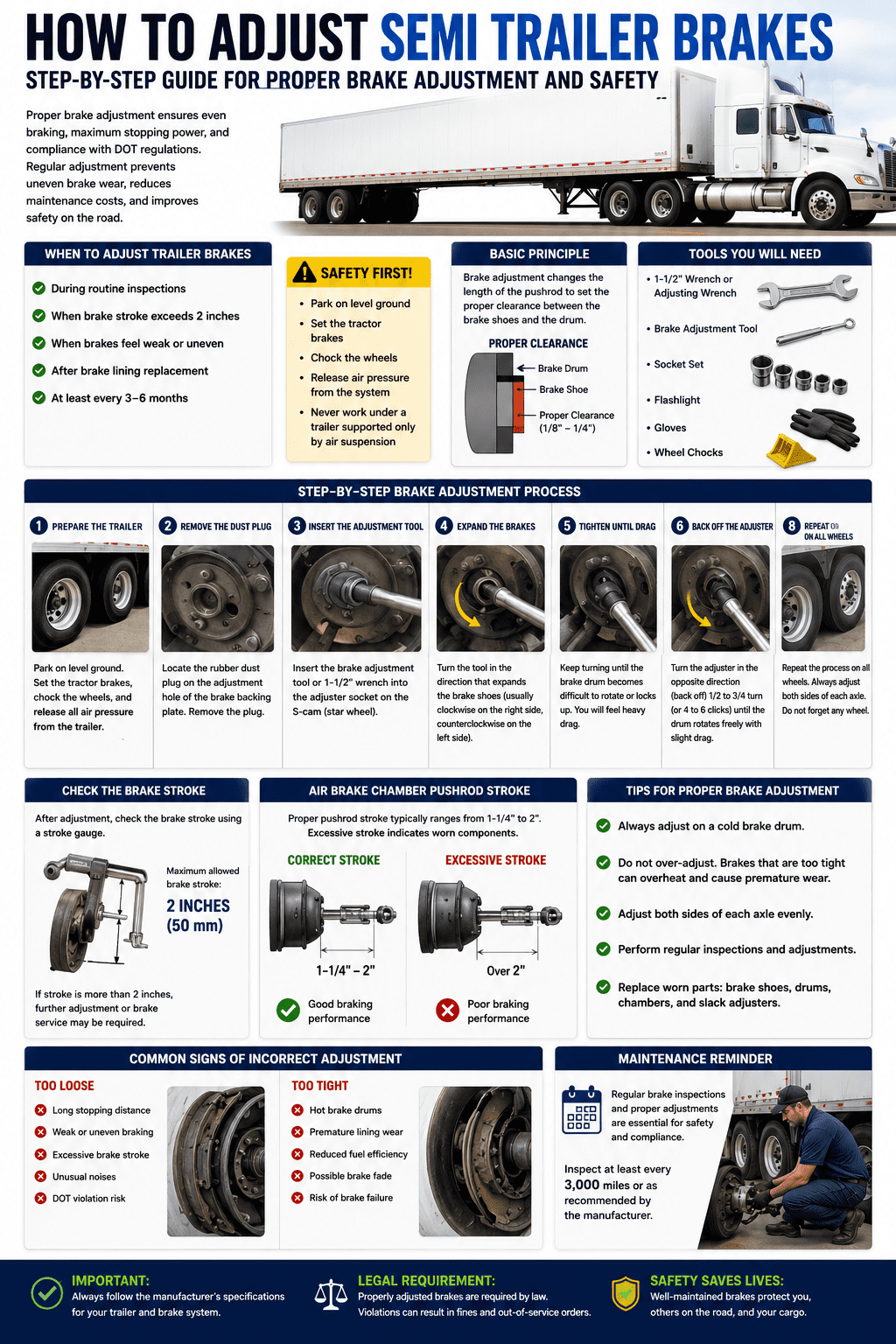
How to Adjust Semi Trailer Brakes Manually
Step 1: Secure the Trailer
- Park on a level surface
- Apply parking brakes
- Chock wheels
- Ensure adequate lighting
Step 2: Locate the Slack Adjuster
The slack adjuster is connected between the brake chamber and S-cam assembly.
Step 3: Find the Adjustment Bolt
Most manual slack adjusters feature a square or hex-head adjustment bolt.
Step 4: Turn the Adjustment Bolt
Using the proper wrench:
- Rotate the adjustment bolt until the brake shoes firmly contact the drum.
- Continue tightening until resistance is felt.
Step 5: Back Off the Adjustment
After the shoes contact the drum:
- Reverse the adjustment approximately 1/4 to 1/2 turn according to manufacturer recommendations.
This creates proper running clearance between the shoes and drum.
Step 6: Check Pushrod Stroke
Measure pushrod travel to ensure it remains within legal limits.
Step 7: Repeat for All Brake Assemblies
Adjust every wheel position to maintain balanced braking performance.
Adjusting Automatic Slack Adjusters
Many modern semi trailers use automatic slack adjusters (ASAs).
Important Note
Automatic slack adjusters are generally designed to self-adjust during normal operation.
If an automatic slack adjuster requires frequent manual adjustment, it may indicate:
- Worn brake components
- Damaged adjuster
- Improper installation
- Air system issues
In these cases, inspection and repair are recommended rather than repeated adjustment.
Brake Stroke Limits
Commercial vehicle regulations specify maximum pushrod stroke limits.
Typical Limits
| Brake Chamber Size | Maximum Stroke |
|---|---|
| Type 20 | 1.75 inches |
| Type 24 | 1.75 inches |
| Type 30 | 2.0 inches |
Always verify specifications according to the brake manufacturer and local regulations.
Common Brake Adjustment Mistakes
Over-Tightening Brakes
Can cause:
- Brake drag
- Excessive heat
- Premature wear
- Reduced fuel efficiency
Uneven Adjustments
Leads to:
- Brake imbalance
- Trailer pulling
- Uneven wear patterns
Ignoring Worn Components
Brake adjustment cannot compensate for severely worn:
- Brake shoes
- Drums
- Camshafts
- Slack adjusters
Skipping Stroke Measurement
Pushrod stroke should always be checked after adjustment.
Semi Trailer Brake Maintenance Tips
Perform Regular Inspections
Inspect brake systems during routine maintenance intervals.
Monitor Brake Shoe Wear
Replace worn shoes before adjustment becomes ineffective.
Lubricate Moving Components
Maintain slack adjusters and camshaft assemblies according to manufacturer recommendations.
Check Air System Performance
Verify proper air pressure and system operation.
Follow DOT Requirements
Regular inspections help maintain compliance and avoid penalties.
Frequently Asked Questions
How often should semi trailer brakes be adjusted?
Brake systems should be inspected regularly during preventive maintenance schedules. Adjustment frequency depends on mileage, load conditions, and brake type.
Can automatic slack adjusters be adjusted manually?
Yes, but frequent manual adjustment usually indicates an underlying mechanical issue that should be repaired.
What happens if trailer brakes are out of adjustment?
Poor brake performance, increased stopping distances, DOT violations, and accelerated wear can occur.
How do I know if my brakes are properly adjusted?
Pushrod stroke should fall within manufacturer and regulatory limits, and braking performance should be balanced across all wheel positions.
Do all semi trailers have automatic slack adjusters?
Most modern trailers use automatic slack adjusters, but some older equipment may still use manual systems.
Conclusion
Understanding how to adjust semi trailer brakes is critical for maintaining safe and reliable commercial vehicle operation. Proper brake adjustment improves stopping performance, reduces wear, and helps ensure regulatory compliance. Whether working with manual slack adjusters or inspecting automatic systems, regular brake maintenance remains one of the most important aspects of trailer safety and fleet management.