When shipping freight, transporting heavy equipment, or planning logistics operations, understanding trailer dimensions is essential. One of the most frequently asked questions among shippers, warehouse managers, and transportation professionals is: How wide is the inside of a semi trailer?
The interior width of a semi trailer directly affects cargo capacity, pallet placement, loading efficiency, and transportation costs. Whether you’re shipping palletized goods, oversized machinery, or industrial equipment, knowing the available space inside a trailer helps optimize every shipment.
In this comprehensive guide, we’ll explain standard semi trailer interior widths, factors affecting usable space, trailer types, and how to maximize cargo capacity.
Understanding Semi Trailer Dimensions
A semi trailer has both exterior and interior dimensions.
Exterior Dimensions
Exterior dimensions determine:
- Road legality
- Highway clearance
- Regulatory compliance
- Transport permits
Interior Dimensions
Interior dimensions determine:
- Cargo capacity
- Pallet placement
- Loading efficiency
- Freight planning
While many people focus on trailer length, interior width is equally important for maximizing transportation efficiency.
Standard Interior Width of a Semi Trailer
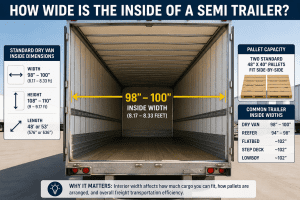
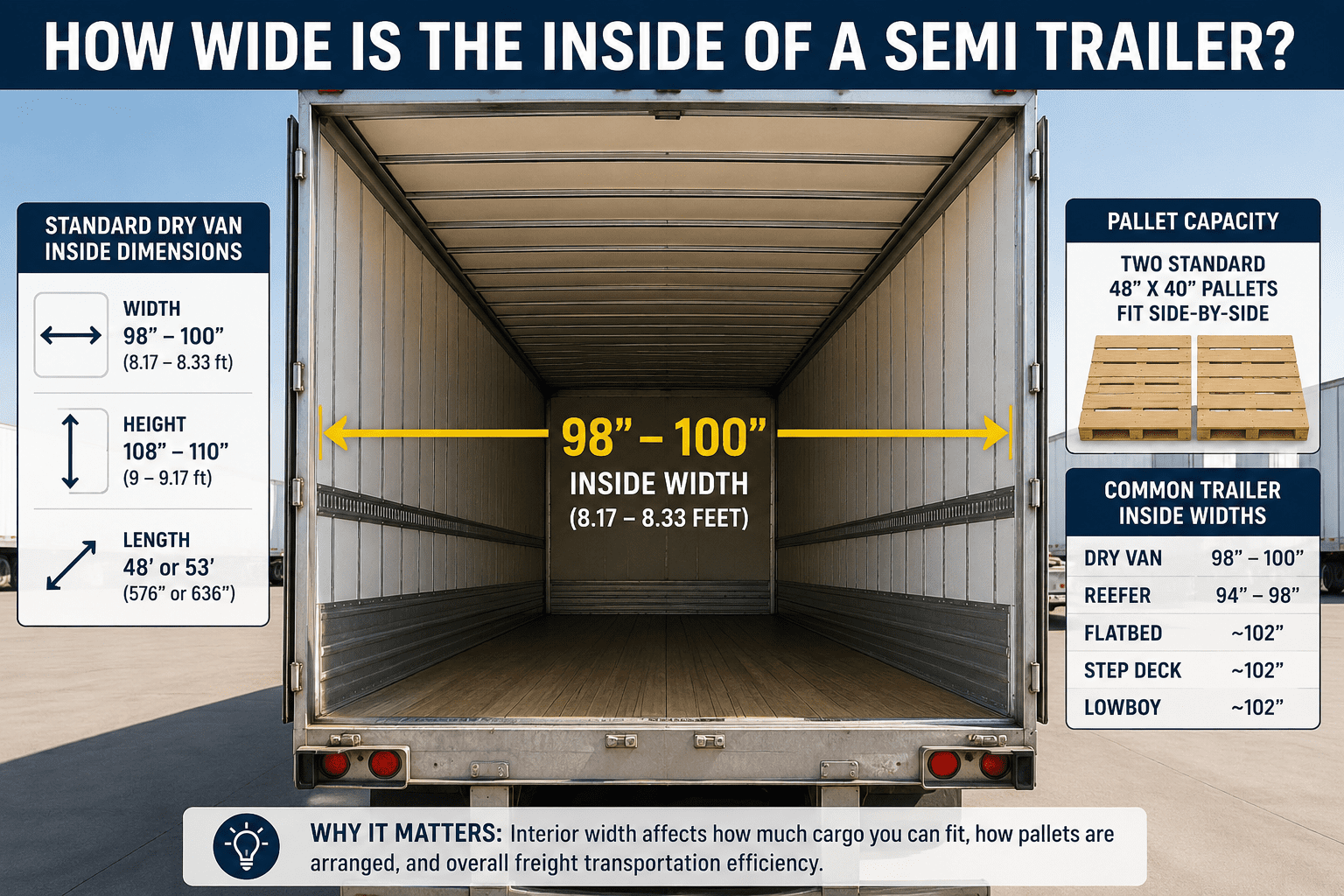
Most standard dry van semi trailers have an interior width of approximately:
98 to 100 Inches
This equals:
- 8.17 to 8.33 feet
- Approximately 2.49 to 2.54 meters
The exact width varies depending on:
- Trailer manufacturer
- Trailer type
- Wall thickness
- Insulation requirements
- Structural design
Most modern trailers are designed to maximize interior cargo space while remaining compliant with highway regulations.
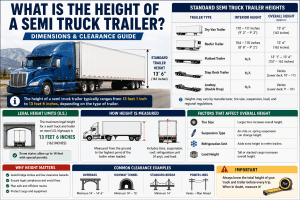
Standard Exterior Width of a Semi Trailer
In North America, federal regulations generally allow trailers up to:
102 Inches Wide
Equivalent to:
- 8.5 feet
- 2.59 meters
However, wall thickness and insulation reduce the available interior space.
This is why a trailer with a 102-inch exterior width often has an interior width of around 100 inches.
Why Interior Width Matters
The inside width of a trailer affects many transportation decisions.
Pallet Capacity
Standard pallets must fit efficiently within the available space.
Loading Efficiency
Proper width allows forklifts and loading equipment to operate safely.
Freight Consolidation
More usable width means more cargo can be transported in a single trip.
Shipping Costs
Optimized trailer utilization reduces transportation expenses.
Interior Width of Common Trailer Types
Different trailer designs offer varying interior widths.
Dry Van Trailer
Typical interior width:
- 98–100 inches
Common uses:
- Consumer goods
- Retail products
- Manufacturing materials
- General freight
Dry vans are among the most widely used trailers in freight transportation.
Refrigerated Trailer (Reefer)
Typical interior width:
- 94–98 inches
Why narrower?
Reefers contain insulated walls and refrigeration equipment that reduce available cargo space.
Common cargo:
- Food products
- Pharmaceuticals
- Temperature-sensitive freight
Flatbed Trailer
Flatbeds do not have enclosed walls.
Typical deck width:
- Approximately 102 inches
Advantages:
- Easy side loading
- Oversized cargo transportation
- Construction equipment hauling
Step Deck Trailer
Typical deck width:
- Approximately 102 inches
Common cargo:
- Tall equipment
- Industrial machinery
- Construction materials
Lowboy Trailer
Typical width:
- 102 inches standard
- Wider with outriggers
Used for:
- Heavy equipment
- Oversized loads
- Construction vehicles
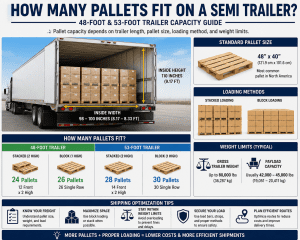
How Many Pallets Fit Across a Semi Trailer?
One major reason people ask about trailer width is pallet planning.
Standard GMA Pallet
Dimensions:
- 48 inches × 40 inches
Because most trailers have approximately 100 inches of interior width:
Two Standard Pallets Fit Side-by-Side
Calculation:
- 48 inches + 48 inches = 96 inches
This leaves a small amount of space for loading clearance.
This efficient arrangement helps maximize trailer utilization.
Interior Width by Trailer Manufacturer
Different manufacturers produce trailers with slightly different dimensions.
Popular manufacturers include:
- Utility Trailer
- Great Dane
- Wabash
- Hyundai Translead
- Vanguard
Typical interior widths range between:
- 98 inches
- 99 inches
- 100 inches
Always verify exact specifications before loading specialized cargo.
Factors That Affect Usable Width
While the official interior width may be 100 inches, usable space can be affected by several factors.
Wall Construction
Structural reinforcements reduce available cargo space.
Logistics Track Systems
E-track and load securement systems may occupy sidewall space.
Insulation
Refrigerated trailers require thick insulated walls.
Interior Liners
Protective liners slightly reduce usable dimensions.
Wheel Wells
Some trailers have wheel well intrusions that affect cargo placement.
Interior Width and Freight Planning
Proper freight planning helps maximize trailer utilization.
Benefits
- Reduced shipping costs
- Improved weight distribution
- Better cargo protection
- Increased profitability
Transportation companies often use load-planning software to optimize cargo placement.
Measuring the Interior Width of a Semi Trailer
To accurately determine usable width:
Step 1
Measure wall-to-wall distance at the widest point.
Step 2
Identify any obstructions.
Step 3
Measure between load securement tracks if applicable.
Step 4
Account for pallet overhang and packaging dimensions.
Accurate measurements help prevent loading issues.
Width Requirements for Oversized Freight
Some cargo exceeds standard trailer width.
Examples include:
- Industrial equipment
- Construction machinery
- Agricultural equipment
- Large generators
These shipments may require:
- Flatbed trailers
- Step deck trailers
- Lowboy trailers
- Specialized permits
Oversized freight transportation often involves route planning and escort vehicles.
How Trailer Width Impacts Loading Operations
The width of a trailer affects warehouse operations significantly.
Forklift Access
Adequate width improves maneuverability.
Cargo Arrangement
Wider interiors allow more flexible loading patterns.
Reduced Loading Time
Efficient pallet placement speeds operations.
Improved Safety
Proper spacing reduces cargo damage risk.
Legal Width Regulations
Transportation authorities regulate maximum trailer widths.
United States
Maximum width:
- 102 inches (8.5 feet)
Canada
Generally similar regulations apply.
Europe
Width regulations vary by country but are often narrower than North American standards.
Always verify local regulations before transporting oversized cargo.
Common Freight That Utilizes Full Trailer Width
Many industries maximize trailer width utilization.
Retail Distribution
Palletized consumer goods.
Manufacturing
Raw materials and finished products.
Food and Beverage
Temperature-controlled palletized freight.
E-Commerce
Warehouse fulfillment shipments.
Automotive
Vehicle components and assemblies.
Maximizing Available Trailer Width
Businesses can improve transportation efficiency through:
Standardized Packaging
Consistent package sizes improve space utilization.
Pallet Optimization
Correct pallet selection maximizes capacity.
Freight Consolidation
Combining shipments reduces empty space.
Load Planning Software
Modern systems optimize trailer dimensions automatically.
Future Trends in Trailer Design
Manufacturers continue improving trailer efficiency through:
Lightweight Materials
Increase payload capacity.
Advanced Structural Design
Maximize interior space.
Smart Cargo Monitoring
Improve load management.
Aerodynamic Construction
Reduce fuel consumption.
These innovations help transportation companies move more freight efficiently.
Conclusion
The interior width of a standard semi trailer is typically between 98 and 100 inches, allowing two standard pallets to fit side-by-side. While the exact dimensions vary depending on trailer type and manufacturer, understanding interior width is essential for freight planning, cargo loading, and transportation efficiency.
Whether you’re shipping palletized products, industrial equipment, or consumer goods, knowing the available trailer width helps maximize space utilization, reduce costs, and improve logistics performance.
Frequently Asked Questions
How wide is the inside of a standard semi trailer?
Most standard dry van trailers have an interior width of approximately 98 to 100 inches.
What is the outside width of a semi trailer?
The standard exterior width is generally 102 inches (8.5 feet).
Why is the interior narrower than the exterior?
Wall thickness, structural supports, and insulation reduce usable interior space.
Can two standard pallets fit side-by-side in a semi trailer?
Yes. Two standard 48-inch pallets fit comfortably within a 100-inch interior width.
Are refrigerated trailers narrower inside?
Yes. Insulation and refrigeration systems typically reduce interior width.
How wide is a flatbed trailer?
Most flatbed trailers are approximately 102 inches wide.
Does trailer width affect shipping costs?
Yes. Better space utilization can reduce transportation costs by increasing cargo efficiency.
What trailer type offers the most usable width?
Flatbed trailers often provide the most usable width because they lack enclosed walls.
How do I measure trailer interior width?
Measure the wall-to-wall distance inside the trailer and account for any obstructions.
Is trailer width the same worldwide?
No. Width regulations vary by country and region.