When planning freight transportation, one of the most common questions asked by shippers, warehouse managers, and logistics professionals is: How many pallets fit on a semi trailer?
Understanding trailer pallet capacity is essential for calculating shipping costs, maximizing trailer utilization, improving supply chain efficiency, and avoiding transportation delays. The number of pallets that can fit on a semi trailer depends on several factors, including trailer size, pallet dimensions, loading configuration, cargo weight, and freight type.
In this guide, we’ll explain everything you need to know about semi trailer pallet capacity and provide practical tips to maximize every shipment.
Understanding Standard Pallet Dimensions
Before determining trailer capacity, it is important to understand standard pallet sizes.
The most common pallet used in North America is the standard GMA pallet.
Standard Pallet Size
- Length: 48 inches
- Width: 40 inches
- Height: Varies by load
- Typical Weight Capacity: Up to 4,600 lbs
Other pallet sizes include:
| Pallet Type | Dimensions |
|---|---|
| Standard GMA | 48″ x 40″ |
| Euro Pallet | 47.24″ x 31.5″ |
| Industrial Pallet | 48″ x 48″ |
| Half Pallet | 48″ x 24″ |
Because the 48″ x 40″ pallet is most common in trucking operations, trailer capacities are usually calculated using this size.
Standard Semi Trailer Dimensions
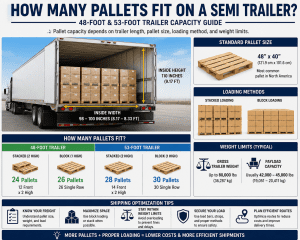
Most freight shipments utilize either a 48-foot or 53-foot dry van trailer.
48-Foot Trailer Dimensions
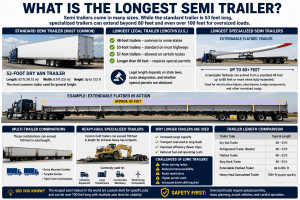
- Length: 48 feet
- Width: 8.5 feet
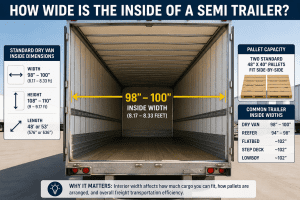
- Interior Width: Approximately 100 inches
- Interior Height: Approximately 110 inches
53-Foot Trailer Dimensions
- Length: 53 feet
- Width: 8.5 feet
- Interior Width: Approximately 100 inches
- Interior Height: Approximately 110 inches
The 53-foot trailer is the industry standard for long-haul freight transportation.
How Many Pallets Fit on a 53-Foot Semi Trailer?
A standard 53-foot dry van trailer can typically accommodate:
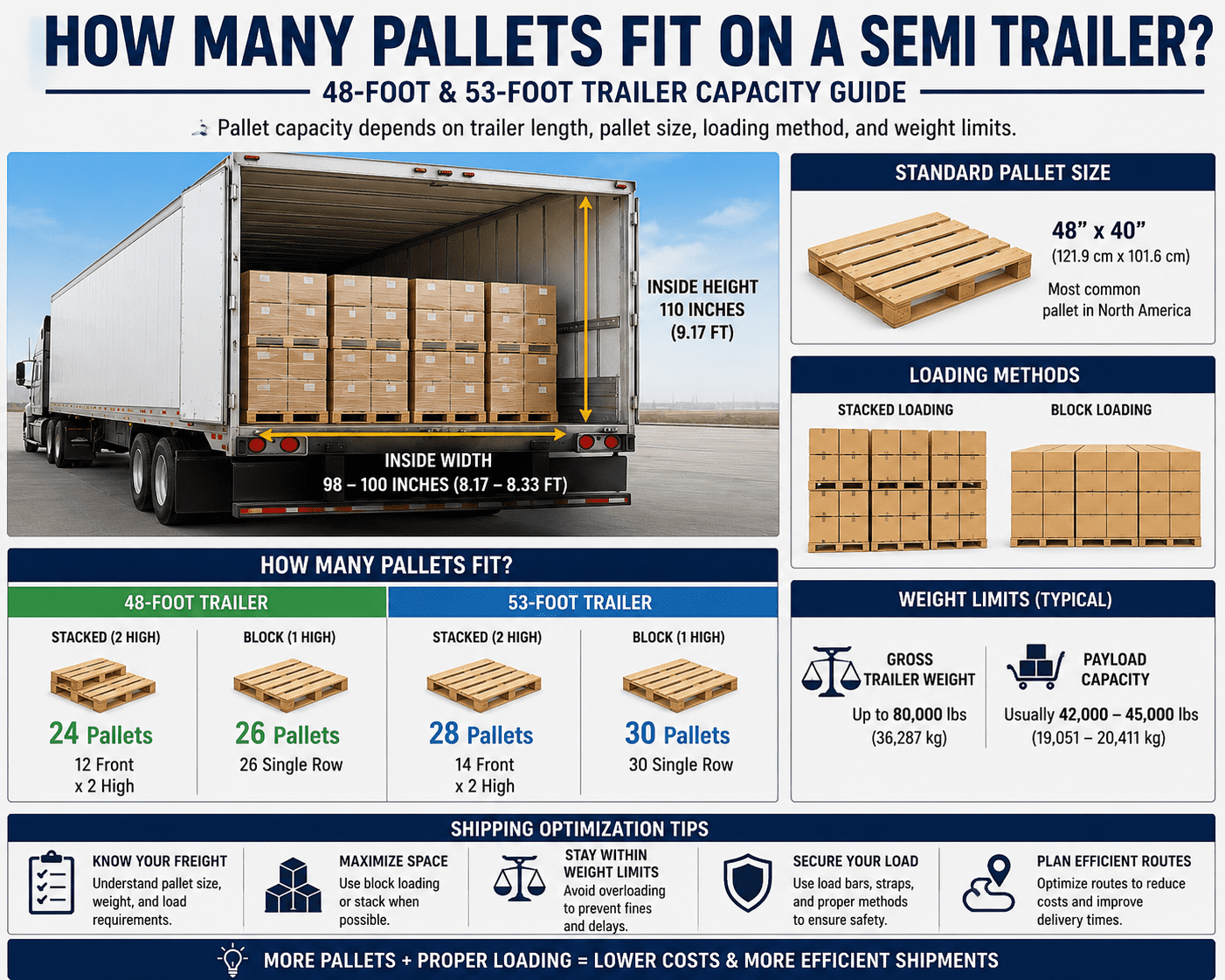
26 Standard Pallets
When loaded in a single-row configuration:
- 26 pallets
- 48″ x 40″ pallet size
- Non-stackable freight
This arrangement allows safe loading and unloading while maintaining weight distribution.
30 Pallets with Turned Configuration
By rotating pallets and optimizing spacing:
- Up to 30 standard pallets
- Depends on freight dimensions
- Requires careful planning
Many logistics companies use advanced loading software to maximize trailer space.
How Many Pallets Fit on a 48-Foot Semi Trailer?
A standard 48-foot trailer typically holds:
24 Standard Pallets
Single-row loading configuration:
- 24 pallets
- Easy loading access
- Common for less-than-truckload shipments
Up to 28 Pallets
Optimized loading layouts can increase capacity depending on freight dimensions.
Pallet Capacity by Trailer Type
Dry Van Trailer
- 26–30 pallets
- Weather protection
- General freight
Refrigerated Trailer (Reefer)
- 24–26 pallets
- Temperature-controlled freight
- Food and pharmaceuticals
Flatbed Trailer
- Capacity varies
- Suitable for oversized loads
- Flexible loading options
Step Deck Trailer
- Capacity depends on freight dimensions
- Ideal for taller cargo
Factors Affecting Pallet Capacity
1. Pallet Size
Larger pallets reduce overall trailer capacity.
2. Freight Weight
Weight limits may be reached before available space is fully utilized.
3. Cargo Height
Stackable freight can dramatically increase total cargo volume.
4. Trailer Type
Different trailer designs offer varying interior dimensions.
5. Loading Pattern
Strategic pallet placement can significantly improve utilization.
Weight Limits Matter
Even if additional pallets physically fit, legal weight restrictions must be considered.
Typical limits include:
- Gross Vehicle Weight: 80,000 lbs
- Trailer Weight: Approximately 15,000 lbs
- Tractor Weight: Approximately 18,000 lbs
Remaining payload capacity is usually:
- 45,000–47,000 lbs
Exceeding legal weight limits can result in fines and transportation delays.
Single Stack vs Double Stack Loading
Single Stack Loading
Advantages:
- Easier unloading
- Reduced cargo damage
- Suitable for fragile products
Disadvantages:
- Lower cargo density
Double Stack Loading
Advantages:
- Maximizes trailer utilization
- Reduces transportation costs
Disadvantages:
- Requires strong packaging
- Height restrictions apply
How Logistics Companies Maximize Trailer Space
Modern logistics operations use several methods to increase efficiency.
Load Planning Software
Advanced software calculates:
- Weight distribution
- Pallet positioning
- Trailer utilization
Proper Freight Consolidation
Combining compatible shipments reduces empty space.
Customized Pallets
Special pallet dimensions may improve trailer utilization for certain industries.
Strategic Freight Arrangement
Experienced loading teams optimize placement based on shipment characteristics.
Industries That Depend on Palletized Freight
Manufacturing
Raw materials and finished products.
Retail
Store inventory and distribution center shipments.
Food and Beverage
Temperature-controlled palletized transportation.
Pharmaceuticals
Secure palletized freight movement.
E-Commerce
High-volume warehouse distribution.
Cost Benefits of Maximizing Pallet Capacity
Improved trailer utilization offers several advantages:
Lower Shipping Costs
More products transported per trip.
Reduced Fuel Consumption
Fewer trips required.
Increased Profitability
Better logistics efficiency improves margins.
Improved Sustainability
Reduced emissions through optimized transportation.
Common Loading Mistakes
Avoid these common errors:
Uneven Weight Distribution
Can create safety hazards.
Exceeding Weight Limits
May result in fines and delays.
Improper Pallet Placement
Reduces available trailer space.
Ignoring Freight Dimensions
Can lead to loading issues and cargo damage.
Tips for Better Trailer Utilization
- Use standardized pallets.
- Measure cargo accurately.
- Train warehouse personnel.
- Utilize load planning software.
- Inspect trailers before loading.
- Follow weight regulations.
- Consider stackable packaging.
Future Trends in Freight Optimization
The transportation industry continues evolving through:
- AI-powered load planning
- Automated warehouses
- Smart trailer technology
- Digital freight management systems
- Real-time cargo monitoring
These innovations help maximize trailer utilization and reduce transportation costs.
Conclusion
A standard 53-foot semi trailer typically holds 26 to 30 standard pallets, while a 48-foot trailer generally accommodates 24 to 28 pallets. However, the exact number depends on pallet size, freight dimensions, loading configuration, and legal weight limits.
By understanding trailer capacity and implementing efficient loading strategies, shippers can reduce costs, improve logistics performance, and maximize transportation efficiency.
Frequently Asked Questions
How many standard pallets fit on a 53-foot trailer?
A 53-foot trailer typically holds 26 standard pallets in a straight configuration and up to 30 pallets with optimized loading.
How many pallets fit on a 48-foot trailer?
Most 48-foot trailers can accommodate approximately 24 standard pallets.
What is the standard pallet size?
The most common pallet size in North America is 48 inches by 40 inches.
Can pallets be double stacked in a semi trailer?
Yes, if the freight and packaging are strong enough and trailer height permits.
What is the maximum weight a semi trailer can carry?
Most semi trailers can carry approximately 45,000 to 47,000 pounds of payload, depending on tractor and trailer weight.
Does trailer type affect pallet capacity?
Yes. Dry vans, reefers, flatbeds, and step deck trailers all have different dimensions and capacities.
How can I fit more pallets on a trailer?
Using optimized loading patterns, stackable freight, and load planning software can increase pallet capacity.
Why is pallet capacity important?
Knowing pallet capacity helps reduce shipping costs, improve efficiency, and ensure compliance with transportation regulations.