What Is the Standard Width of a Semi Trailer?
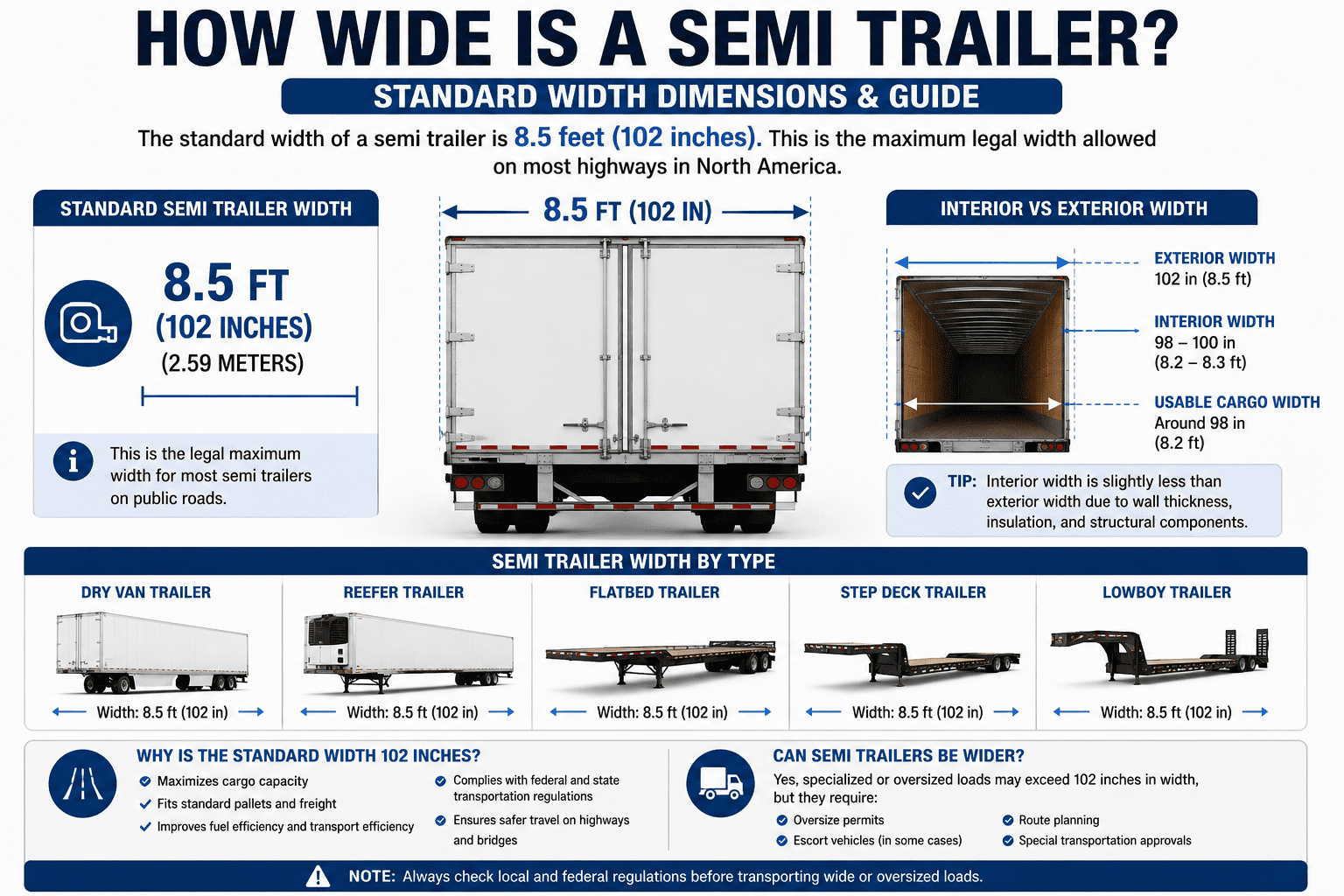
Most semi trailers used for commercial freight transportation are built to a maximum legal width of:
- 8.5 feet
- 102 inches
- 2.59 meters
This standard width applies to most trailer types, including dry vans, refrigerated trailers, flatbeds, and step deck trailers.
Semi Trailer Width by Trailer Type
Dry Van Trailer
Dry van trailers are the most common freight trailers used for transporting palletized goods and consumer products.
Standard Width: 8.5 ft (102 inches)
Refrigerated Trailer (Reefer)
Reefer trailers transport temperature-sensitive cargo such as food, pharmaceuticals, and frozen products.
Standard Width: 8.5 ft (102 inches)
Flatbed Trailer
Flatbed trailers are designed for transporting construction materials, machinery, and oversized cargo.
Standard Width: 8.5 ft (102 inches)
Step Deck Trailer
Step deck trailers feature a lower deck height for taller cargo loads.
Standard Width: 8.5 ft (102 inches)
Lowboy Trailer
Lowboy trailers are commonly used for transporting heavy equipment and oversized machinery.
Standard Width: Typically 8.5 ft, although oversized permits may allow wider loads.
Interior Width vs Exterior Width
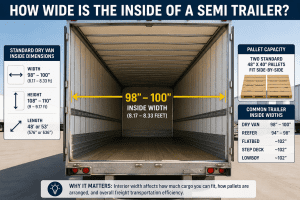
Many people confuse trailer width measurements. There is a difference between exterior and interior width.
| Dimension | Measurement |
|---|---|
| Exterior Width | 102 inches (8.5 ft) |
| Interior Width | Approximately 98–100 inches |
| Usable Cargo Width | Around 98 inches |
The interior width is slightly smaller due to trailer walls and insulation.
Why Are Semi Trailers 102 Inches Wide?
The 102-inch width standard offers several advantages:
Maximum Cargo Capacity
Allows shippers to maximize freight volume while remaining road legal.
Efficient Pallet Loading
Accommodates standard pallet configurations used throughout the logistics industry.
Regulatory Compliance
Meets transportation regulations across most states and provinces.
Improved Transport Efficiency
Provides sufficient cargo space without compromising road safety.
Can Semi Trailers Be Wider Than 102 Inches?
Yes. Specialized heavy-haul and oversized transport trailers can carry loads wider than 102 inches. However, these loads typically require:
- Oversize permits
- Route planning
- Escort vehicles
- Special transportation approvals
The trailer itself usually remains within legal width limits while the cargo extends beyond the trailer deck.
Semi Trailer Width Comparison
| Trailer Type | Width |
|---|---|
| Dry Van Trailer | 102 in (8.5 ft) |
| Reefer Trailer | 102 in (8.5 ft) |
| Flatbed Trailer | 102 in (8.5 ft) |
| Step Deck Trailer | 102 in (8.5 ft) |
| Lowboy Trailer | 102 in (8.5 ft) |
| Extendable Trailer | 102 in (8.5 ft) |
Factors That Affect Semi Trailer Width
Several factors influence usable trailer width:
Cargo Requirements
Different industries require varying cargo dimensions and loading configurations.
Trailer Construction
Wall thickness, insulation, and structural reinforcements affect interior width.
Transportation Regulations
Federal and state regulations determine maximum legal trailer width.
Freight Type
Palletized cargo, machinery, and oversized loads may require specialized trailer configurations.
Frequently Asked Questions
How wide is a standard semi trailer?
A standard semi trailer is 8.5 feet (102 inches) wide.
What is the interior width of a semi trailer?
Most semi trailers have an interior width of approximately 98 to 100 inches.
Are all semi trailers 102 inches wide?
Most modern commercial trailers are built to the legal maximum width of 102 inches.
How wide is a flatbed trailer?
A standard flatbed trailer is typically 102 inches (8.5 feet) wide.
Can oversized loads exceed trailer width?
Yes. Oversized cargo can exceed the trailer’s width but usually requires special permits and transportation arrangements.
Conclusion
So, how wide is a semi trailer? The standard width of most semi trailers is 8.5 feet (102 inches), making it the ideal size for maximizing freight capacity while complying with transportation regulations. Whether you’re transporting general freight, refrigerated goods, heavy equipment, or industrial cargo, understanding semi trailer dimensions helps ensure efficient and compliant transportation operations.