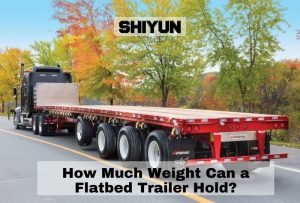
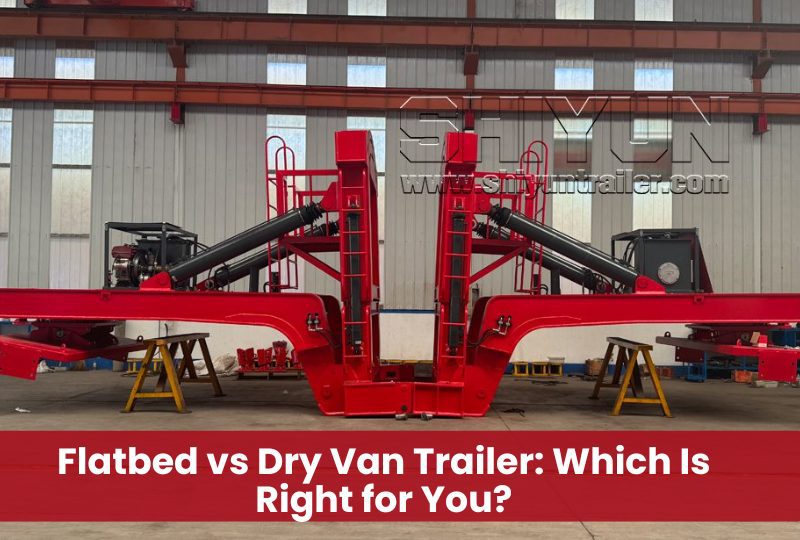
Choosing between a flatbed and a dry van trailer is one of the first decisions any fleet owner, logistics operator, or shipper has to make. Both trailer types move freight efficiently, but they are built for different jobs. Picking the wrong one can mean wasted payload space, damaged cargo, or unnecessary handling costs.
Let’s break down how flatbed and dry van trailers differ, what kind of freight each one handles best, and how to match the right trailer to your operation.
What Is a Flatbed Trailer
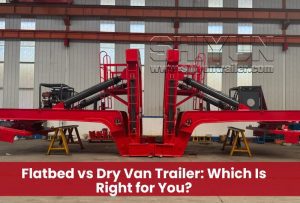
A flatbed trailer is an open truck/trailer with no roof or side walls. Cargo sits directly on the deck and is secured with straps, chains, or tarps. Because there are no enclosing panels, freight can be loaded from the top, sides, or rear using a crane or forklift.
This open design makes flatbeds the standard choice for oversized, heavy, or irregularly shaped loads. Construction equipment, steel coils, pipes, machinery, and building materials all move well on a flatbed because their shape or weight would not fit inside a boxed trailer.
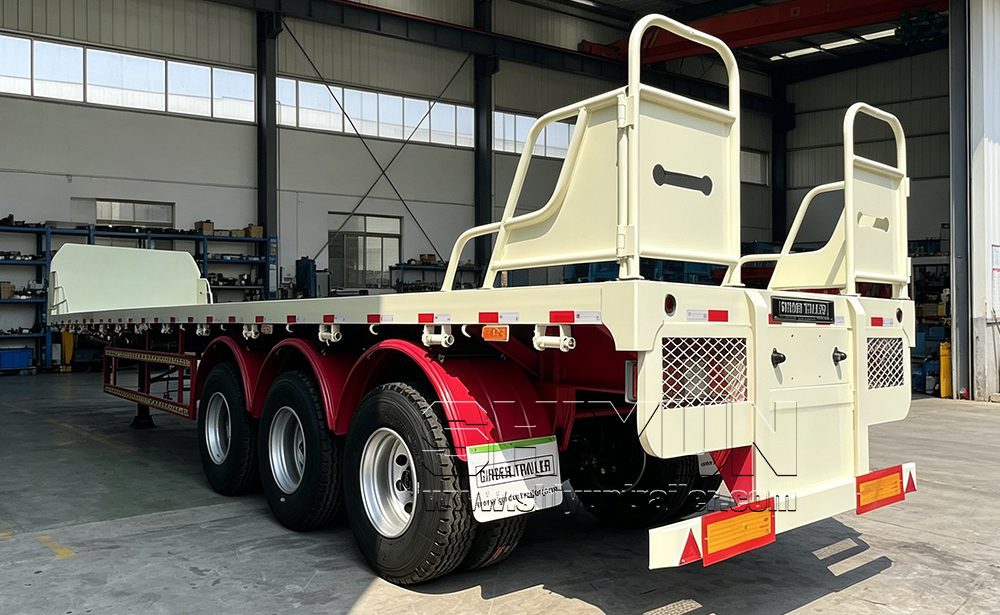
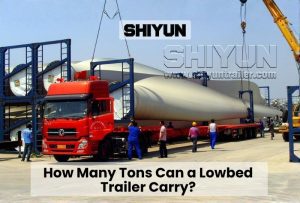
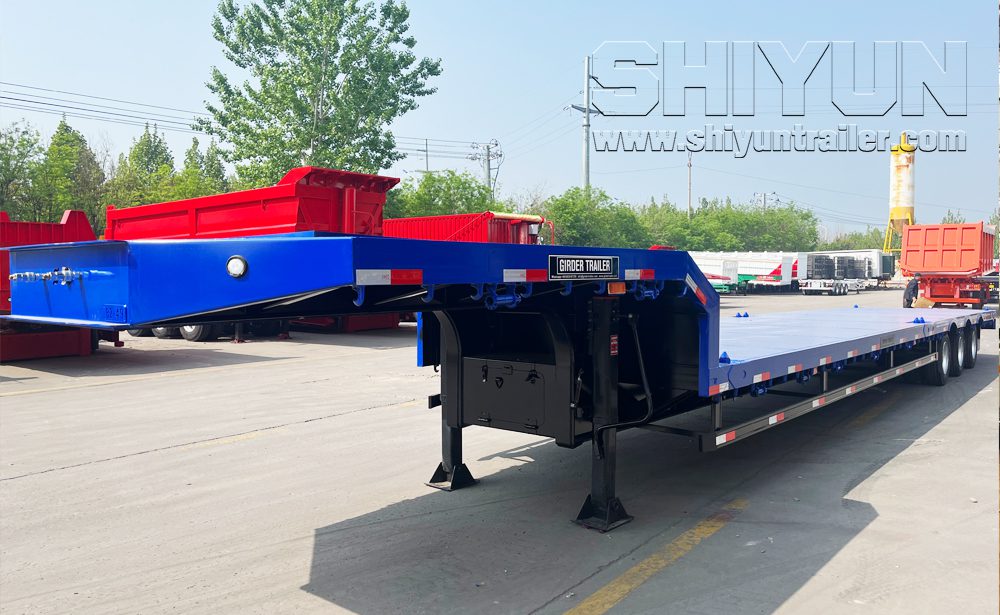
Flatbed trailers also come in several configurations to match different cargo profiles. Step deck and double drop trailers lower the loading surface for taller freight, while extendable flatbeds handle unusually long items such as wind turbine blades or girders.
What Is a Dry Van Trailer
A dry van trailer is a fully enclosed box trailer with solid walls, a roof, and rear doors. It protects cargo from rain, dust, and road debris throughout the trip. Because the space is sealed, dry vans are the default option for palletized, boxed, or general commercial freight that needs to stay dry and secure.
Retail goods, packaged food, electronics, furniture, and consumer products typically move in dry vans and semi truck trailers. The enclosed structure also reduces the risk of theft during transit and at overnight stops, since cargo is not visible or easily accessible from outside.
Dry vans load and unload through rear doors, which works well with standard loading docks and forklifts. This makes them efficient for high-volume freight that moves through distribution centers.
Key Differences Between Flatbed and Dry Van Trailers
Loading flexibility
Flatbeds allow loading from any side using cranes or forklifts, which suits oversized or unusually shaped freight. Dry vans generally load through rear doors, which is efficient for palletized goods but limits how cargo can be positioned and how wide the flatbed trailer.
Cargo protection
A dry van shields freight from weather and reduces exposure to theft. A flatbed offers no covering, so cargo needs tarps or protective wrapping if it cannot get wet or dusty.
Securement method
Flatbed cargo needs to be strapped, chained, or tarped correctly to remain compliant and safe during transit. Dry van cargo is contained by the trailer walls, so securement is generally simpler, often limited to load bars or basic strapping.
Weight and dimension limits
Flatbeds usually offer higher weight capacity because there are no side walls or roof restricting load height or width. Dry van capacity is limited by the fixed interior dimensions of the box. In China, both trailer types must meet the weight and dimension limits set out in GB 1589-2016, which governs axle loads, gross vehicle weight, and overall trailer dimensions for road transport.
Common freight types
Flatbeds suit construction materials, industrial equipment, steel products, and oversized cargo. Dry vans suit consumer goods, packaged products, and freight that must stay clean and dry.
Cost and Operating Considerations
Some Flatbed trailers have slightly higher operating costs because loading takes longer and may require tarping, strapping, or crane assistance. Drivers and handlers also need training in proper load securement to stay compliant with China Transport Regulations.
Dry vans tend to have more predictable operating costs since loading is standardized and freight rarely requires special handling. For fleets running consistent, high-volume routes with palletized goods, this predictability adds up over time.
That said, flatbed freight can command higher rates in many markets because fewer carriers are equipped to handle oversized or specialty loads. Fleet buyers weighing the two should factor in the type of freight they expect to haul most often, not just the upfront trailer cost.
Which Trailer Is Right for Your Business
Ask a few practical questions before deciding:
Does your cargo need protection from weather or theft?
If yes, a dry van is the safer choice.
Does your freight exceed standard trailer height, width, or length?
If yes, a flatbed gives you the flexibility to haul it legally and safely.
Is your freight palletized, boxed, or suited to standard loading docks?
A dry van will move it more efficiently.
Many fleets end up running both trailer types to cover different freight categories rather than committing to just one. This is common among operators who serve mixed industries, such as general logistics combined with construction or industrial project cargo.
For companies that regularly move heavy equipment, steel, or oversized loads, working with a manufacturer experienced in flatbed and specialty trailer construction, like Shiyun Trailer, a reputed Custom Trailer Manufacturer in China, makes it easier to spec a deck length, axle configuration, and load rating that matches the freight rather than adapting the freight to a generic trailer.
The Author’s Review
Flatbed and dry van trailers are not competing options as much as they are tools built for different freight profiles. A flatbed offers loading flexibility and greater capacity for oversized or industrial cargo. A dry van gives you protection, security, and efficiency for boxed or palletized goods.
The right choice comes down to what you are hauling, how often you haul it, and whether protection or flexibility matters more for your operation. Many established fleets keep both in their lineup so they are never turning away freight that does not fit one trailer type.