Introduction
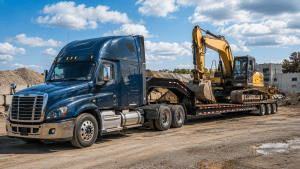
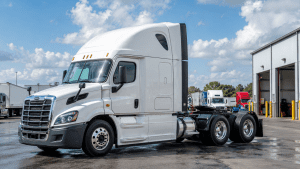
Many people wonder how fast can a semi truck go without a trailer. A semi truck operating without an attached trailer is commonly called a bobtail truck. Because it is significantly lighter than a fully loaded tractor-trailer combination, a bobtail semi truck can often accelerate faster and potentially reach higher speeds than when pulling a trailer.
However, the maximum speed of a semi truck without a trailer depends on several factors, including engine power, electronic speed limiters, road conditions, vehicle weight, and state or regional regulations.
How Fast Can a Semi Truck Go Without a Trailer?
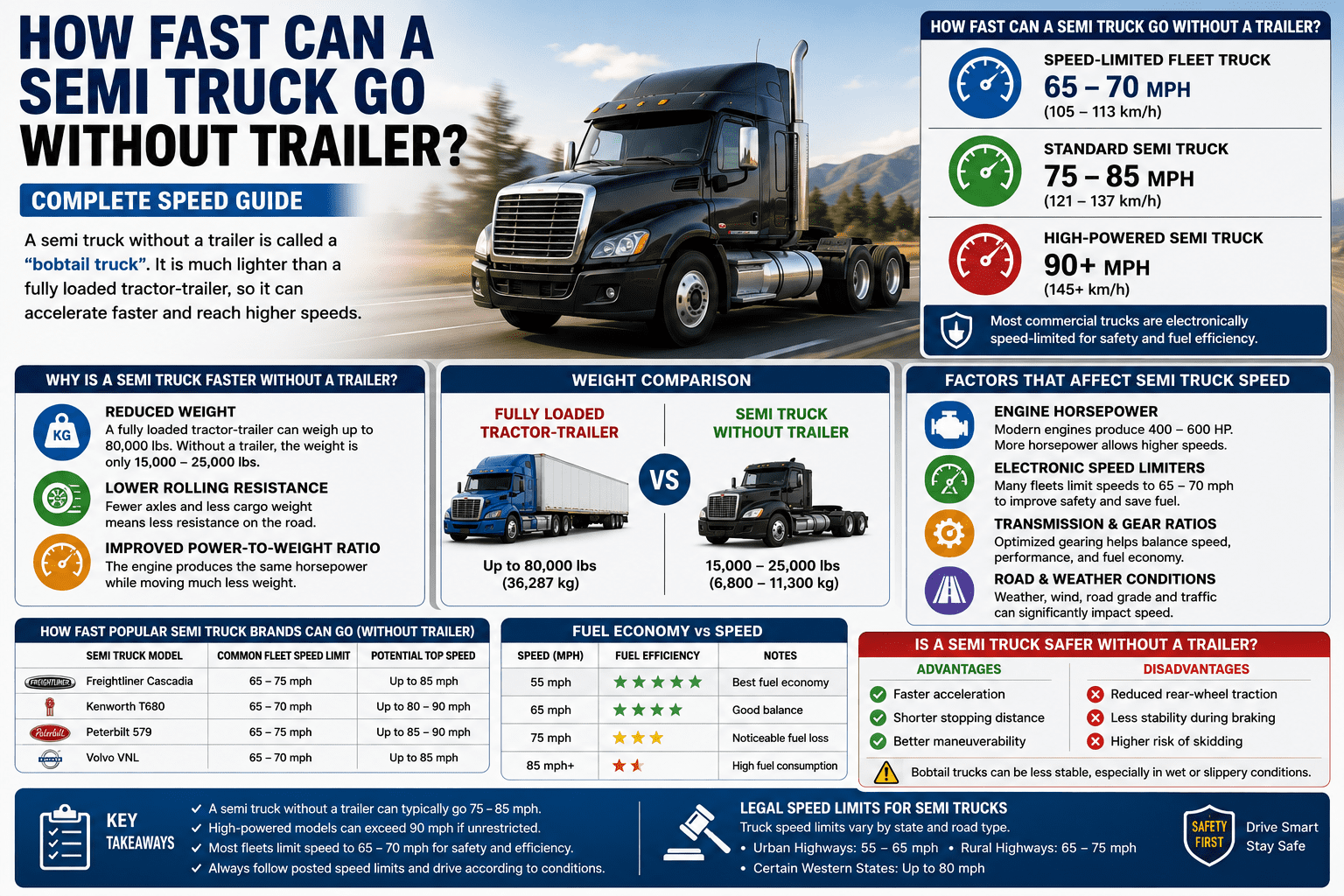
Most modern semi trucks without a trailer can reach:
| Type of Semi Truck | Typical Top Speed |
|---|---|
| Speed-Limited Fleet Truck | 65–70 mph (105–113 km/h) |
| Standard Semi Truck | 75–85 mph (121–137 km/h) |
| High-Powered Semi Truck | 90+ mph (145+ km/h) |
In real-world conditions, most commercial trucking companies electronically limit their trucks to improve safety and fuel efficiency.
Why Is a Semi Truck Faster Without a Trailer?
When a trailer is removed, the truck becomes much lighter.
Reduced Weight
A fully loaded tractor-trailer can weigh up to:
- 80,000 lbs (36,287 kg)
A semi truck without a trailer typically weighs:
- 15,000–25,000 lbs (6,800–11,300 kg)
The reduced weight improves acceleration and responsiveness.
Lower Rolling Resistance
Without trailer axles and cargo weight, less energy is required to move the vehicle.
Improved Power-to-Weight Ratio
The truck’s engine produces the same horsepower while moving significantly less weight.
What Is a Bobtail Semi Truck?
A bobtail truck refers to a semi tractor operating without a trailer attached.
Common Reasons for Bobtailing
- Traveling to pick up a trailer
- Returning after a delivery
- Maintenance transportation
- Fleet repositioning
While bobtail trucks are lighter, they can actually be more difficult to control in certain situations.
Is a Semi Truck Safer Without a Trailer?
Not necessarily.
Advantages
- Faster acceleration
- Shorter stopping distances
- Better maneuverability
Disadvantages
- Reduced rear-wheel traction
- Increased risk of wheel spin
- Less stability during emergency braking
- Greater chance of skidding on wet roads
Many drivers report that bobtail trucks can feel less stable than trucks pulling loaded trailers.
Factors That Affect Semi Truck Speed
Several variables determine how fast a semi truck can travel.
Engine Horsepower
Modern semi trucks typically produce:
- 400–600 horsepower
- Some performance models exceed 700 horsepower
More horsepower generally allows higher speeds and better acceleration.
Electronic Speed Limiters
Many trucking companies install speed governors that limit maximum speed.
Common settings include:
- 65 mph
- 68 mph
- 70 mph
These limiters help reduce fuel consumption and improve safety.
Transmission and Gear Ratios
Transmission design affects acceleration and top speed.
Modern Features
- Automated manual transmissions
- Fuel-efficient gearing
- Highway cruising optimization
Road and Weather Conditions
Speed is influenced by:
- Road grade
- Wind resistance
- Rain
- Snow
- Traffic conditions
How Fast Can Popular Semi Truck Brands Go Without a Trailer?
Freightliner Cascadia
- Typically limited to 65–75 mph
- Potential top speed around 85 mph without restrictions
Kenworth T680
- Common fleet limit: 65–70 mph
- Potential speed: 80–90 mph
Peterbilt 579
- Fleet speed: 65–75 mph
- Potential speed: 85–90 mph
Volvo VNL
- Usually governed at 65–70 mph
- Potential speed around 85 mph
Fuel Economy at Higher Speeds
Although a semi truck can travel faster without a trailer, fuel efficiency drops significantly at high speeds.
Typical Fuel Economy
| Speed | Estimated Fuel Efficiency |
|---|---|
| 55 mph | Best fuel economy |
| 65 mph | Good balance |
| 75 mph | Noticeable fuel loss |
| 85 mph+ | Significant fuel consumption |
Most fleet operators limit speed to reduce operating costs.
Legal Speed Limits for Semi Trucks
Truck speed limits vary by jurisdiction.
Common Truck Speed Limits
- Urban highways: 55–65 mph
- Rural highways: 65–75 mph
- Certain western states: up to 80 mph
Drivers must always follow posted speed limits regardless of vehicle capability.
Frequently Asked Questions
How fast can a semi truck go without a trailer?
Most semi trucks without a trailer can travel between 75 and 85 mph, although many are electronically limited to lower speeds.
Is a semi truck faster without a trailer?
Yes. Removing the trailer reduces weight and improves acceleration.
What is a bobtail truck?
A bobtail truck is a semi tractor operating without a trailer attached.
Can a semi truck reach 100 mph?
Some high-powered trucks can technically approach 100 mph, but most are electronically limited well below that speed.
Is driving a bobtail truck dangerous?
Bobtail trucks can be less stable because there is less weight over the rear drive axles, increasing the risk of skidding in certain conditions.
Conclusion
So, how fast can a semi truck go without a trailer? Most semi trucks operating as bobtails can reach speeds between 75 and 85 mph under normal conditions, while some high-powered models can exceed 90 mph when unrestricted. However, most commercial fleets use electronic speed limiters to keep trucks operating safely and efficiently. While a semi truck without a trailer accelerates faster and weighs significantly less, drivers must still exercise caution because bobtail trucks can be less stable than fully loaded tractor-trailer combinations.