Introduction
If you’re wondering, can you rent a semi truck and trailer, the answer is yes. Renting a semi truck and trailer is a common solution for businesses, owner-operators, logistics companies, construction contractors, and individuals who need temporary transportation equipment without the financial commitment of purchasing a vehicle.
Whether you need a semi truck for a one-time freight delivery, seasonal demand, long-haul transportation, or a specialized hauling project, truck rental companies offer flexible rental options for tractors, dry van trailers, refrigerated trailers, flatbeds, lowboys, and other commercial transportation equipment.
Understanding how semi truck rentals work, rental requirements, costs, and available trailer options can help you choose the right equipment for your transportation needs.
Can You Rent a Semi Truck and Trailer?
Yes, you can rent both a semi truck tractor and trailer from commercial truck rental providers. Many companies offer daily, weekly, monthly, and long-term rental programs designed for businesses and independent drivers.
Rental Options Available
- Short-term semi truck rentals
- Long-term semi truck leasing
- One-way truck rentals
- Commercial fleet rentals
- Dry van trailer rentals
- Refrigerated trailer rentals
- Flatbed trailer rentals
- Lowboy and specialized trailer rentals
These flexible rental options allow businesses to increase transportation capacity without investing in expensive equipment purchases.
Why Rent a Semi Truck and Trailer?
Renting a semi truck and trailer offers several advantages compared to ownership.
Lower Upfront Investment
Purchasing a new semi truck can cost between $120,000 and $250,000 or more. Renting eliminates this significant capital expense.
Fleet Flexibility
Businesses can quickly expand their transportation capacity during peak seasons without permanently increasing fleet size.
Reduced Maintenance Costs
Most rental agreements include maintenance support, reducing unexpected repair expenses.
Access to Modern Equipment
Rental providers regularly update their fleets with newer vehicles that feature improved fuel efficiency and safety technology.
No Long-Term Commitment
Renting allows companies to use equipment only when needed.
Types of Semi Trucks Available for Rent
Rental companies offer various tractor configurations based on hauling requirements.
Day Cab Semi Trucks
Day cab trucks are designed for local and regional transportation.
Features
- No sleeper compartment
- Lower operating costs
- Better maneuverability
- Suitable for short-distance hauling
Common Uses
- Local deliveries
- Port transportation
- Regional freight operations
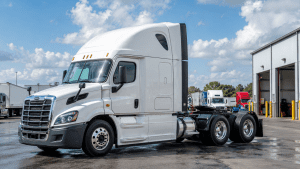
Sleeper Cab Semi Trucks
Sleeper trucks include a sleeping compartment for long-haul drivers.
Features
- Integrated sleeping area
- Additional storage
- Long-distance capability
- Enhanced driver comfort
Common Uses
- Interstate transportation
- Long-haul freight
- Cross-country deliveries
Types of Semi Trailers You Can Rent
Different cargo types require different trailer configurations.
Dry Van Trailer Rentals
Dry Van Trailers are the most commonly rented trailers in the transportation industry.
Standard Dimensions
- Length: 48–53 feet
- Width: 8.5 feet
- Height: 13.5 feet
Best For
- Retail products
- Consumer goods
- Electronics
- Packaged freight
Refrigerated Trailer Rentals
Refrigerated trailers maintain temperature-controlled environments.
Features
- Cooling systems
- Temperature monitoring
- Insulated walls
- Frozen and refrigerated storage
Best For
- Food transportation
- Pharmaceuticals
- Perishable goods
Flatbed Trailer Rentals
Flatbed Trailers feature open decks for oversized cargo.
Features
- Easy side loading
- Large cargo capacity
- Flexible loading options
Best For
- Construction materials
- Steel products
- Machinery
- Industrial equipment
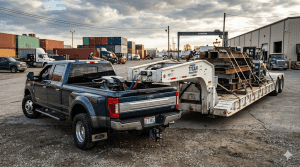
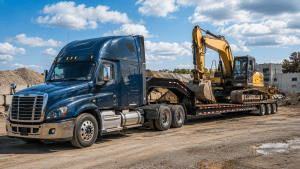
Lowboy Trailer Rentals
Lowboy trailers are designed for heavy hauling applications.
Features
- Lower deck height
- Oversized load capability
- High weight capacity
Best For
- Excavators
- Bulldozers
- Heavy construction equipment
Requirements to Rent a Semi Truck and Trailer
Before renting a commercial truck, most providers require several qualifications.
Commercial Driver’s License (CDL)
Most semi truck rentals require a valid Commercial Driver’s License.
Common CDL Requirements
- Valid CDL Class A
- Clean driving record
- Current medical certification
- Required endorsements when applicable
Insurance Requirements
Commercial truck rental companies typically require proof of insurance.
Coverage May Include
- Liability insurance
- Physical damage coverage
- Cargo insurance
- Supplemental protection plans
Age Requirements
Many rental providers require drivers to be:
- At least 21 years old
- Some companies require 25 years of age
- Valid driving experience
Security Deposit
Depending on equipment value and rental terms, a refundable security deposit may be required.
How Much Does It Cost to Rent a Semi Truck and Trailer?
Semi truck rental costs vary depending on location, equipment type, and rental duration.
Average Semi Truck Rental Costs
| Equipment | Daily Cost |
|---|---|
| Day Cab Semi Truck | $150–$350 |
| Sleeper Semi Truck | $250–$500+ |
| Dry Van Trailer | $50–$150 |
| Refrigerated Trailer | $100–$300 |
| Flatbed Trailer | $75–$250 |
| Lowboy Trailer | $150–$500+ |
Additional Rental Costs
Besides the base rental rate, you may encounter additional charges.
Fuel Costs
Renters are usually responsible for fuel expenses.
Mileage Charges
Some rental agreements include mileage limitations.
Insurance Fees
Additional insurance protection may increase rental costs.
Toll Charges
Drivers are responsible for toll roads and highway fees.
Permit Costs
Special permits may be required for oversized loads.
When Should You Rent Instead of Buy?
Renting may be the better option under specific circumstances.
Seasonal Transportation Demand
Businesses experiencing temporary demand spikes often benefit from rentals.
New Business Operations
Startups can reduce financial risk by renting equipment before purchasing.
Short-Term Projects
Construction and logistics projects frequently require temporary transportation solutions.
Equipment Testing
Renting allows businesses to evaluate truck models before investing in ownership.
Advantages of Renting a Semi Truck and Trailer
Cost Efficiency
Avoid large down payments and financing obligations.
Immediate Availability
Most rental providers maintain fleets ready for immediate use.
Maintenance Support
Rental companies often handle routine maintenance and repairs.
Flexible Rental Terms
Choose daily, weekly, monthly, or annual rental agreements.
Modern Fleet Access
Gain access to newer vehicles equipped with advanced technology and safety systems.
Factors to Consider Before Renting
Choosing the right truck and trailer requires evaluating several factors.
Cargo Type
Determine the trailer type needed for your freight.
Route Distance
Long-haul operations may require sleeper cab trucks.
Weight Requirements
Ensure the truck and trailer can safely handle your load.
Rental Duration
Compare short-term and long-term pricing options.
Insurance Coverage
Review coverage requirements before signing a rental agreement.
Frequently Asked Questions
Can you rent a semi truck and trailer without a CDL?
In most cases, no. Operating a commercial semi truck generally requires a valid CDL Class A license.
How much does it cost to rent a semi truck and trailer?
Rental costs typically range from $200 to $800 or more per day depending on the truck, trailer, and location.
Can I rent only a semi trailer?
Yes. Many rental providers offer trailer-only rentals for dry vans, flatbeds, reefers, and specialized equipment.
Can I rent a semi truck for one day?
Yes. Daily rental options are available through many commercial truck rental companies.
Is renting cheaper than buying a semi truck?
For short-term use and seasonal operations, renting is often more cost-effective than ownership.
What documents are required to rent a semi truck?
Most companies require a CDL, proof of insurance, identification, and a security deposit.
Conclusion
So, can you rent a semi truck and trailer? Absolutely. Renting provides businesses and independent operators with a flexible, cost-effective way to access commercial transportation equipment without the financial burden of ownership. Whether you need a dry van, refrigerated trailer, flatbed, or heavy-haul equipment, rental solutions can help meet transportation demands while minimizing costs and operational risks.