Introduction
Can you pull a semi trailer with a pickup is a common question among truck owners, fleet operators, and transportation beginners who want to understand the limits of pickup trucks in heavy-duty hauling. Understanding this topic is essential because semi trailers are designed for commercial trucks, not standard consumer pickups, and incorrect towing can lead to severe safety risks and equipment failure.
In modern freight transportation, semi trailers rely on advanced systems like air brakes, fifth-wheel hitches, and reinforced chassis connections. A pickup truck, even a heavy-duty one, is generally not engineered to safely control or support a full semi trailer under normal conditions. However, with specialized modifications, adapters, and proper understanding of braking systems, certain limited towing scenarios can exist.
This guide explains everything in detail—from hitch mechanisms to air brake systems—so you understand exactly how semi trailers operate and whether a pickup can realistically handle them.
Can you pull a semi trailer with a pickup – Is it possible?
In standard conditions, Can you pull a semi trailer with a pickup is answered with a clear no for full commercial trailers.
Pickup trucks are designed for:
- Light-duty trailers
- Boat trailers
- Utility trailers
- Camper trailers
Semi trailers, on the other hand, are designed for:
- Class 8 semi trucks (tractor units)
- Fifth-wheel coupling systems
- Air brake systems requiring compressed air supply
Key limitations include:
- Lack of air brake system in pickups
- Insufficient frame strength
- No factory fifth-wheel coupling design
- Weight distribution mismatch
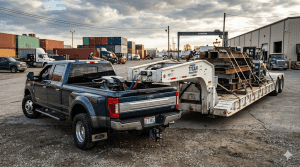
However, in controlled environments (like farms or private yards), modified setups may allow limited movement.
How does a semi trailer hitch work?
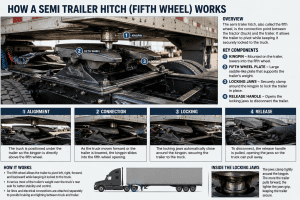
The semi trailer hitch system is called a fifth-wheel coupling. It is very different from standard pickup tow hitches.
Components of a fifth-wheel hitch:
- Kingpin (on trailer)
- Fifth-wheel plate (on tractor)
- Locking jaws
- Sliding mount system
Working process:
- The truck reverses under the trailer.
- Kingpin locks into the fifth-wheel jaws.
- The connection allows pivot movement.
- Weight is distributed over the drive axle of the truck.
This system is designed for stability under heavy loads exceeding 30,000–80,000 lbs.
A pickup truck usually uses a receiver hitch, which is not structurally compatible with this system.
How do semi trailer brakes work?
Understanding braking is critical when answering Can you pull a semi trailer with a pickup.
Semi trailers use air brake systems, not hydraulic brakes like pickups.
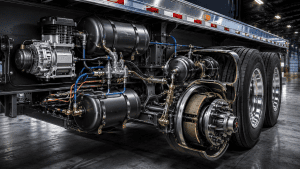
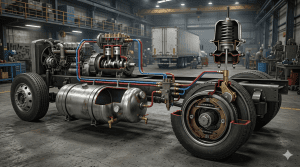
Air brake components:
- Air compressor (on tractor)
- Air tanks
- Brake chambers
- Brake shoes
- Control valves
How it works:
- Compressor builds air pressure
- Air is stored in tanks
- Driver presses brake pedal
- Air pressure is released to brake chambers
- Brake shoes press against drums
Unlike hydraulic brakes, air brakes are fail-safe. If air pressure drops, brakes automatically engage.
How do air brakes work on a semi trailer?
Air brakes are the backbone of commercial trucking safety.
System types:
- Service brakes (used during driving)
- Parking brakes (spring-loaded system)
- Emergency brakes (automatic activation)
Advantages:
- Handles heavy loads safely
- Reliable under extreme conditions
- Self-activating safety feature
Why pickups cannot use them:
- No onboard air compressor
- No brake air lines compatibility
- No trailer air supply system
This is one of the main reasons Can you pull a semi trailer with a pickup is mostly not practical.
Key differences between pickup trucks and semi trucks
| Feature | Pickup Truck | Semi Truck |
|---|---|---|
| Braking System | Hydraulic | Air brakes |
| Hitch Type | Receiver hitch | Fifth-wheel |
| Load Capacity | 5,000–30,000 lbs | 80,000+ lbs |
| Frame Strength | Light/medium duty | Heavy-duty reinforced |
| Air Supply | Not available | Built-in compressor |
Key Features of semi trailer systems
Semi trailers are engineered for industrial logistics:
- High load-bearing chassis
- Multi-axle weight distribution
- Advanced braking systems
- Interchangeable trailer design
- Long-distance durability
These features make them incompatible with standard pickup trucks without modifications.
Benefits of semi trailer systems
Even though Can you pull a semi trailer with a pickup is limited, semi trailers offer major advantages:
- Efficient cargo transport
- Reduced shipping cost per ton
- Modular logistics system
- High durability under stress
- Standardized freight handling
Common uses of semi trailers
Semi trailers are used in:
- Freight transportation
- Logistics and supply chains
- Construction material hauling
- Industrial equipment transport
- Agricultural distribution
Factors to consider before towing heavy trailers
If you are thinking about towing heavy loads:
- Vehicle towing capacity
- Brake compatibility
- Hitch strength rating
- Weight distribution
- Legal regulations
Ignoring these factors can lead to accidents or equipment failure.
Common mistakes in trailer towing
- Overloading a pickup truck
- Using incorrect hitch adapters
- Ignoring brake system compatibility
- Poor weight distribution
- Lack of trailer safety chains
Expert tips for safe towing
- Always check manufacturer towing limits
- Use weight-distributing hitches
- Inspect brake systems before travel
- Ensure proper tire ratings
- Never exceed axle load limits
Industry applications of semi trailers
Semi trailers dominate global logistics:
- Retail supply chains
- Export/import freight
- E-commerce delivery networks
- Construction logistics
- Manufacturing distribution systems
Future trends in semi trailer technology
The trucking industry is evolving:
- Electric semi trucks
- Smart braking systems
- Autonomous freight transport
- Lightweight composite trailers
- AI-based logistics tracking
These advancements will further increase efficiency and safety.
Conclusion
In conclusion, Can you pull a semi trailer with a pickup depends on technical limitations, safety systems, and structural compatibility. While pickup trucks are versatile and powerful, they are not designed for full-scale semi trailer operations. Semi trailers require specialized braking systems, fifth-wheel hitches, and heavy-duty truck tractors.
Understanding how air brakes, hitch systems, and trailer mechanics work helps clarify why semi trucks dominate commercial logistics and why pickups are limited to lighter towing tasks.
FAQ Section
1. Can you pull a semi trailer with a pickup truck legally?
Generally no, because semi trailers require commercial-grade equipment and licensing. Most regions restrict such towing for safety reasons and equipment incompatibility.
2. How do semi trailer brakes work compared to pickup brakes?
Semi trailers use air brakes, while pickups use hydraulic systems. Air brakes rely on compressed air pressure instead of fluid-based systems.
3. What is a semi trailer hitch called?
It is called a fifth-wheel hitch, which locks the trailer kingpin into a rotating plate mounted on a tractor unit.
4. Can a pickup be modified to tow a semi trailer?
Only in very limited controlled environments with major modifications, but it is not practical or recommended for road use.
5. How do air brakes on semi trailers work?
Air compressors build pressure, which is released when braking to activate brake chambers and stop the wheels.
6. Why are semi trailers heavier than pickup trailers?
They are built for industrial freight, using reinforced steel frames and multiple axles for heavy load distribution.
7. What happens if air pressure fails in semi brakes?
The emergency spring brakes automatically engage to stop the vehicle safely.
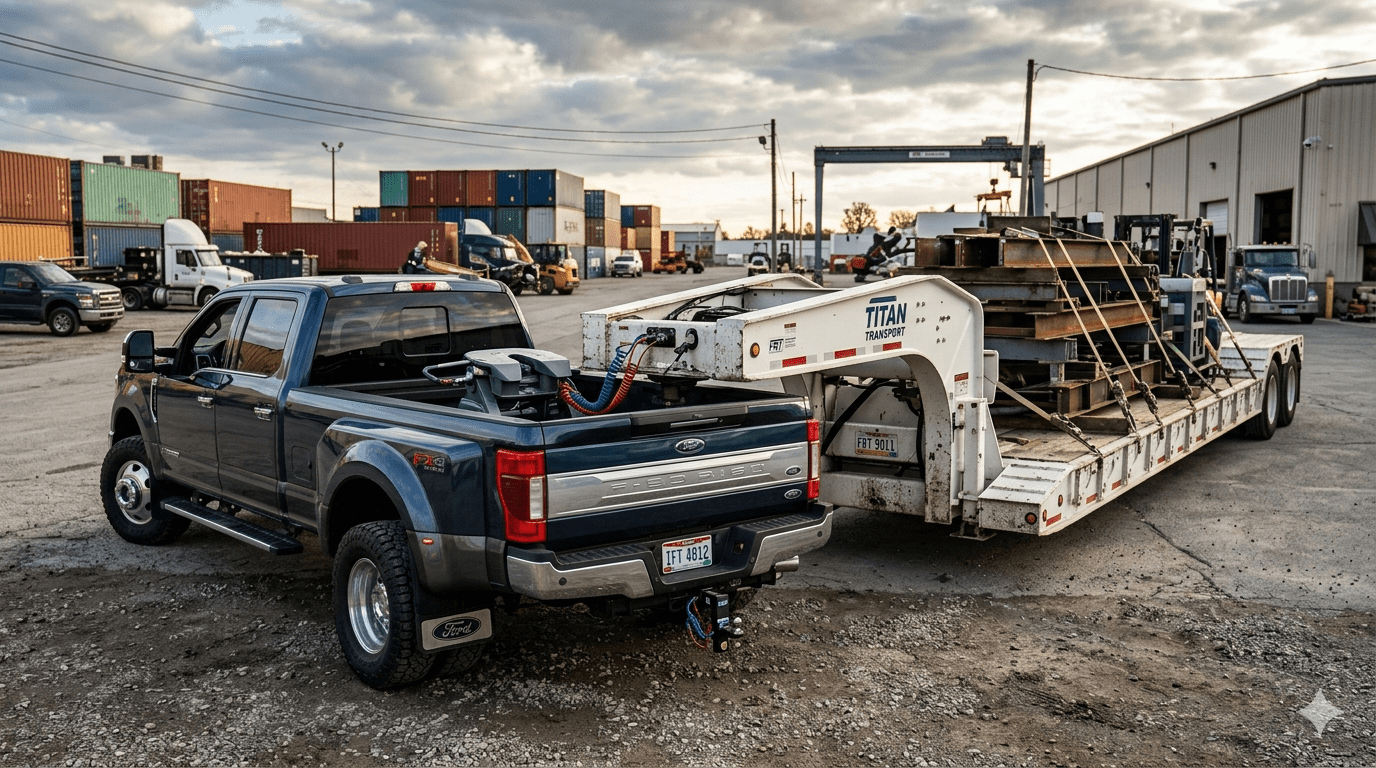
8. Can a heavy-duty pickup like F-350 pull a semi trailer?
Not safely. Even heavy-duty pickups lack air brake systems and fifth-wheel integration required for semi trailers.
9. What is the main difference between trailer types?
Semi trailers require tractors and fifth-wheel hitches, while regular trailers use standard ball or receiver hitches.
10. Are semi trailers safe without air brakes?
No, air brakes are essential for controlling heavy loads safely and preventing runaway trailer situations.