A semi trailer is a large, non-motorized freight trailer designed to be pulled by a semi truck, also known as a tractor. It is one of the most recognizable vehicles on highways and is used to transport goods over long distances across cities, states, and countries.
Unlike a full trailer, a semi trailer does not have a front axle. Instead, the front portion rests on and is supported by the tractor’s fifth wheel coupling, while the rear is supported by its own axle system.
Basic Appearance of a Semi Trailer
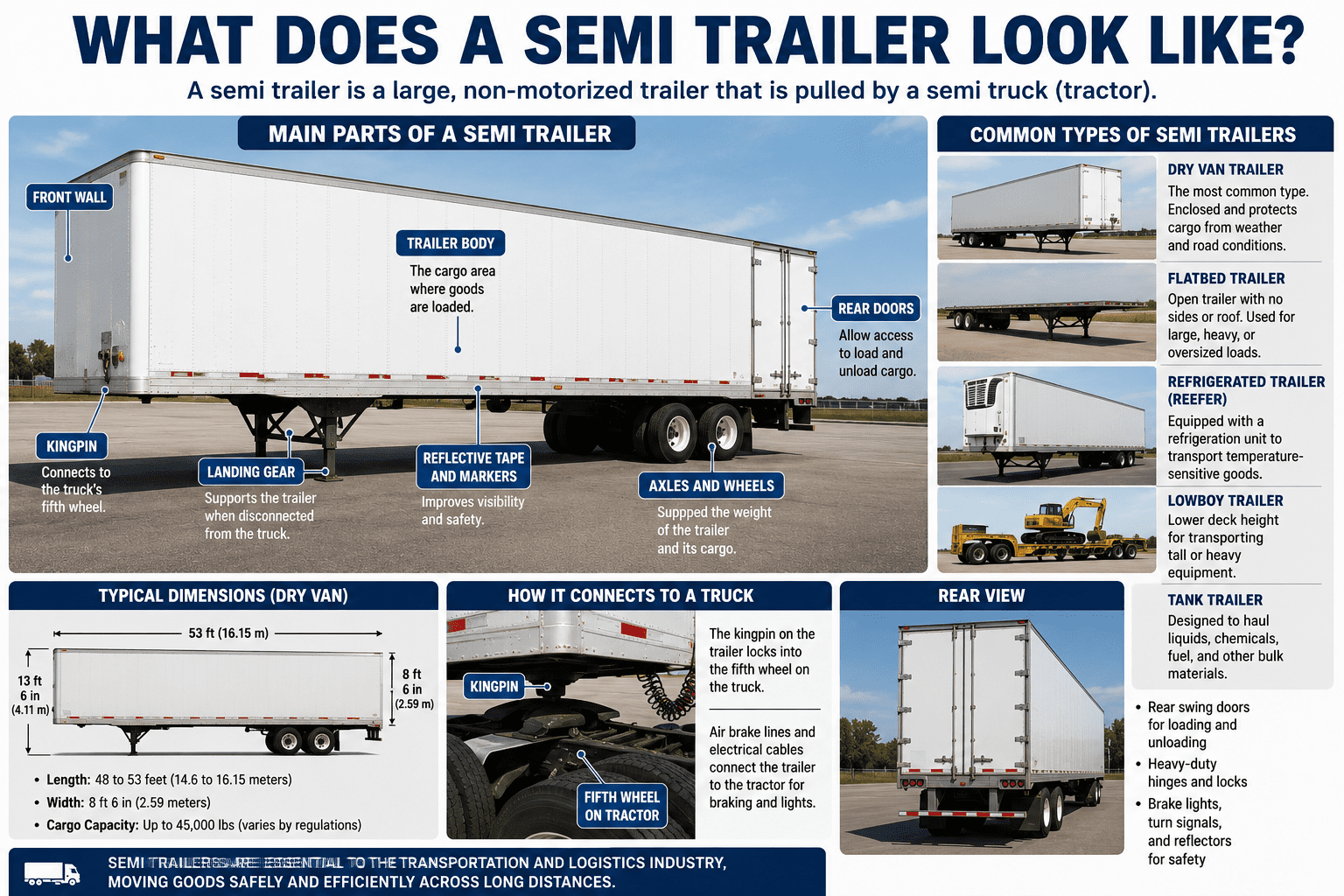
A typical semi trailer consists of:
- A long rectangular cargo body
- Rear wheels and axle assembly
- Landing gear legs near the front
- Rear swing doors or specialized loading equipment
- Reflective safety markings
- Air brake and electrical connection systems
Most semi trailers range from 48 to 53 feet in length and approximately 8.5 feet wide, making them among the largest vehicles on public roads.
Main Parts of a Semi Trailer
1. Trailer Body
The trailer body is the cargo-carrying section. Depending on the type of trailer, it may be enclosed, open, refrigerated, or specially designed for oversized loads.
2. Landing Gear
Landing gear consists of two support legs located at the front of the trailer. These legs allow the trailer to stand independently when disconnected from the tractor.
3. Kingpin
The kingpin is a steel pin underneath the front of the trailer that connects to the truck’s fifth wheel. It forms the primary connection point between the tractor and trailer.
4. Axles and Wheels
Most semi trailers have tandem axles near the rear. These axles support cargo weight and help distribute loads efficiently.
5. Rear Doors
Dry van and refrigerated trailers typically feature large rear swing doors for loading and unloading freight.
Common Types of Semi Trailers
Dry Van Trailer
The most common type of semi trailer.
Features:
- Fully enclosed cargo area
- Weather protection
- Suitable for general freight
Flatbed Trailer
An open platform trailer without sides or a roof.
Used for:
- Construction materials
- Machinery
- Steel products
- Oversized cargo
Refrigerated Trailer (Reefer)
Equipped with a refrigeration unit that maintains controlled temperatures.
Commonly transports:
- Food products
- Pharmaceuticals
- Temperature-sensitive goods
Lowboy Trailer
Designed with a lower deck height for transporting heavy equipment and oversized machinery.
Tank Trailer
A cylindrical trailer used for liquids, chemicals, fuel, and other bulk materials.
Typical Dimensions of a Semi Trailer
Standard 53-foot dry van dimensions:
- Length: 53 feet (16.15 meters)
- Width: 8.5 feet (2.6 meters)
- Height: 13.5 feet overall with tractor
- Cargo capacity: Up to 45,000 pounds depending on regulations
Dimensions vary depending on trailer type and regional regulations.
How a Semi Trailer Connects to a Truck
The front section of the trailer rests on the tractor’s fifth wheel.
The connection includes:
- Kingpin
- Fifth wheel coupling
- Air brake lines
- Electrical cables
This system allows the trailer to pivot smoothly during turns while remaining securely attached.
Where You Commonly See Semi Trailers
Semi trailers are widely used in:
- Freight transportation
- Retail distribution
- Construction logistics
- Agricultural transport
- Manufacturing supply chains
- International shipping operations
They are a critical component of modern transportation and logistics networks.
Conclusion
A semi trailer is a large cargo-carrying trailer attached to a tractor unit through a fifth-wheel connection. With its long body, rear axle assembly, landing gear, and specialized cargo features, it serves as the backbone of freight transportation worldwide. Understanding what a semi trailer looks like can help drivers, logistics professionals, and businesses better understand commercial transportation equipment.