Introduction
Knowing how to unhook a semi trailer is an essential skill for truck drivers, owner-operators, fleet managers, and logistics professionals. Properly disconnecting a semi trailer ensures safety, prevents equipment damage, and reduces the risk of accidents during trailer drop-and-hook operations.
Whether you are disconnecting a dry van trailer, flatbed trailer, refrigerated trailer, or specialized freight trailer, following the correct procedure helps protect both the tractor and trailer. This guide explains how to safely unhook a semi trailer step by step while following industry best practices.
What Does It Mean to Unhook a Semi Trailer?
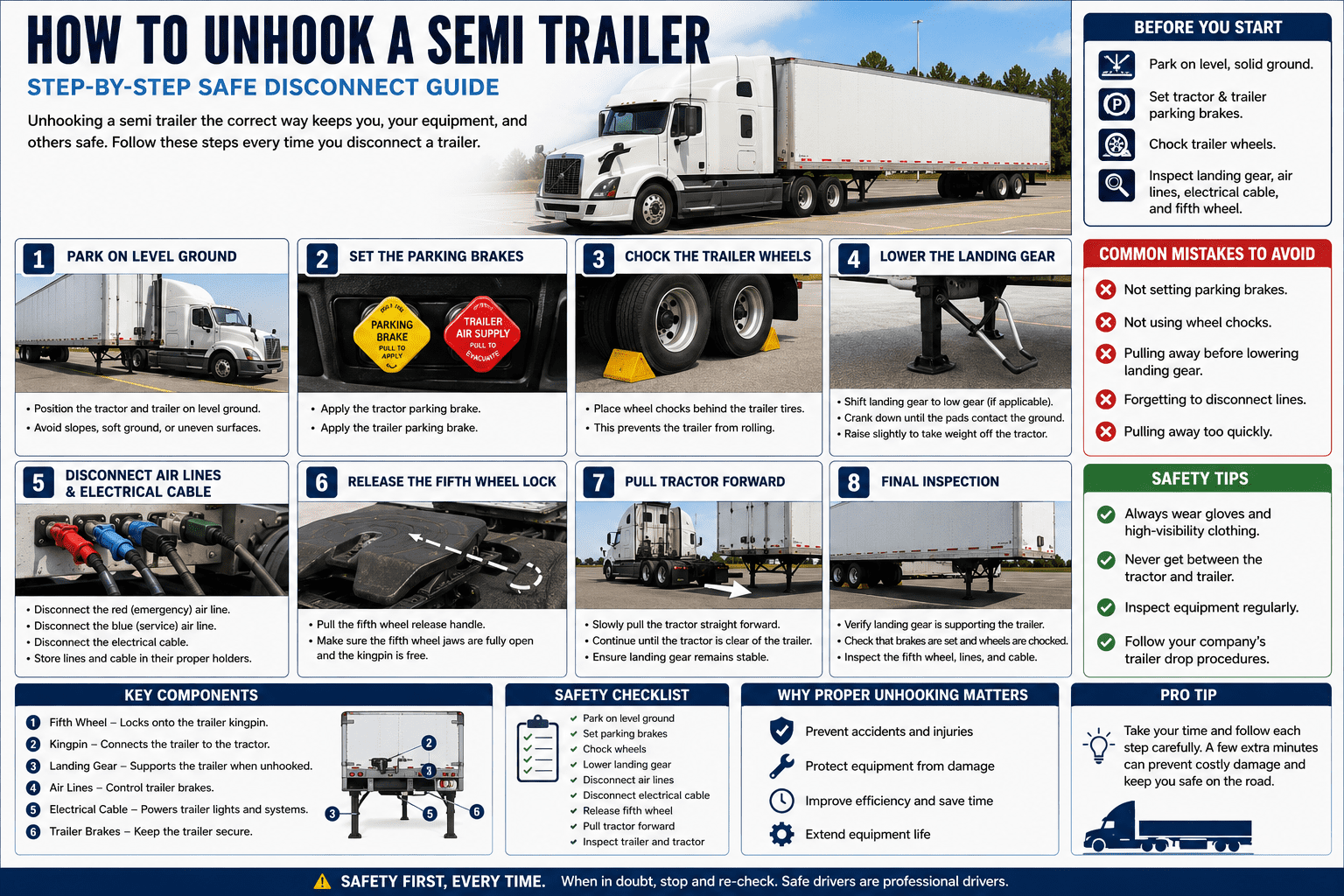
Unhooking a semi trailer refers to disconnecting the trailer from the tractor unit by releasing the fifth wheel locking mechanism and disconnecting all air and electrical connections.
Main Components Involved
- Fifth wheel
- Kingpin
- Landing gear
- Air lines
- Electrical cable
- Trailer brakes
Understanding these components is critical before attempting to disconnect a trailer.
Why Proper Trailer Unhooking Is Important
Improper trailer disconnection can lead to serious problems.
Safety Benefits
- Prevents trailer rollaway accidents
- Protects drivers from injury
- Reduces equipment damage
- Prevents landing gear failure
Operational Benefits
- Faster trailer exchanges
- Reduced maintenance costs
- Improved fleet efficiency
- Longer equipment lifespan
Equipment Check Before Unhooking a Semi Trailer
Before disconnecting a trailer, perform a quick inspection.
Verify the Parking Surface
The trailer should be parked on:
- Level ground
- Firm pavement
- Stable loading areas
Avoid:
- Soft soil
- Gravel slopes
- Uneven terrain
Inspect Landing Gear
Check for:
- Bent supports
- Cracked feet
- Damaged crank handles
- Excessive wear
Check Trailer Brakes
Ensure trailer brakes are functioning properly before disconnecting.
How to Unhook a Semi Trailer Step by Step
Follow these steps carefully when disconnecting a semi trailer.
Step 1: Park on Level Ground
Position the tractor and trailer on a flat, stable surface.
Why This Matters
A level surface helps prevent trailer movement and reduces stress on landing gear.
Step 2: Set the Parking Brakes
Apply:
- Tractor parking brake
- Trailer parking brake
This prevents accidental movement during disconnection.
Step 3: Chock the Trailer Wheels
Place wheel chocks behind the trailer tires.
Benefits of Wheel Chocks
- Additional safety protection
- Prevents trailer rolling
- Reduces accident risk
Many fleets require wheel chocks as part of their safety procedures.
Step 4: Lower the Landing Gear
Extend the trailer landing gear until it contacts the ground.
Proper Landing Gear Procedure
- Shift landing gear to low gear if necessary.
- Crank landing gear down slowly.
- Continue until the landing pads firmly contact the ground.
- Apply slight pressure to support trailer weight.
Avoid lifting the trailer excessively, as this may complicate re-coupling later.
Step 5: Disconnect Air Lines and Electrical Cable
Carefully disconnect all tractor-to-trailer connections.
Components to Disconnect
- Red emergency air line
- Blue service air line
- Electrical cable
Important Tip
Store all lines properly on the tractor to prevent damage and contamination.
Step 6: Release the Fifth Wheel Lock
The fifth wheel secures the trailer kingpin to the tractor.
How to Release It
- Pull the fifth wheel release handle.
- Ensure the locking jaws fully open.
- Verify the kingpin is free to disengage.
Never force the release handle if it is under excessive tension.
Step 7: Slowly Move the Tractor Forward
Carefully pull the tractor forward.
Watch for Clearance
Ensure:
- Landing gear remains stable
- Air lines are disconnected
- Trailer remains stationary
Move slowly until the tractor clears the kingpin.
Step 8: Perform a Final Inspection
Once separated, inspect both units.
Check the Trailer
Verify:
- Landing gear is supporting the trailer
- Trailer remains level
- Brakes are engaged
- Wheels are secure
Check the Tractor
Inspect:
- Fifth wheel condition
- Air line storage
- Electrical cable storage
Common Mistakes When Unhooking a Semi Trailer
Avoid these frequent driver errors.
Forgetting to Set Trailer Brakes
This can cause the trailer to roll unexpectedly after separation.
Failing to Lower Landing Gear Properly
Improper landing gear adjustment may cause trailer collapse.
Disconnecting Lines Incorrectly
Damaged air lines and electrical cables can result in expensive repairs.
Pulling Away Too Quickly
Moving the tractor too fast may damage landing gear or trailer components.
Not Using Wheel Chocks
Wheel chocks provide an extra layer of protection against trailer movement.
Safety Tips for Unhooking a Semi Trailer
Following industry safety practices can help prevent accidents.
Always Wear Safety Gear
Recommended equipment includes:
- Safety boots
- High-visibility vest
- Work gloves
Inspect Equipment Regularly
Check:
- Fifth wheel locking mechanism
- Kingpin condition
- Landing gear components
- Air lines and electrical systems
Follow Company Procedures
Every fleet may have specific trailer drop protocols.
Signs of Landing Gear Problems
Watch for warning signs before disconnecting.
Common Symptoms
- Difficulty cranking
- Bent support legs
- Excessive rust
- Uneven trailer support
- Gearbox damage
Address these issues before dropping the trailer.
Benefits of Proper Trailer Unhooking Procedures
Improved Safety
Reduces injury risks and equipment accidents.
Lower Maintenance Costs
Prevents unnecessary wear and damage.
Faster Operations
Drivers can complete trailer exchanges efficiently.
Extended Equipment Life
Proper handling protects landing gear and fifth wheel components.
Frequently Asked Questions
How do you unhook a semi trailer safely?
Park on level ground, set parking brakes, chock wheels, lower landing gear, disconnect air and electrical lines, release the fifth wheel, and slowly pull the tractor away.
Should you lower the landing gear before releasing the fifth wheel?
Yes. The landing gear must support the trailer before the fifth wheel is released.
What happens if you forget to lower the landing gear?
The trailer may collapse when the tractor pulls away, causing significant equipment damage.
Why should wheel chocks be used?
Wheel chocks help prevent trailer movement during the disconnection process.
Can you unhook a loaded semi trailer?
Yes. Loaded trailers can be disconnected safely when proper procedures are followed.
What is the fifth wheel on a semi truck?
The fifth wheel is the coupling device that locks onto the trailer kingpin and connects the tractor to the trailer.
Conclusion
Understanding how to unhook a semi trailer is essential for safe and efficient trucking operations. By following proper procedures—including setting brakes, lowering landing gear, disconnecting air and electrical connections, releasing the fifth wheel, and conducting final inspections—drivers can safely disconnect trailers while minimizing the risk of accidents and equipment damage. Consistent adherence to these best practices improves safety, operational efficiency, and equipment longevity.