Introduction
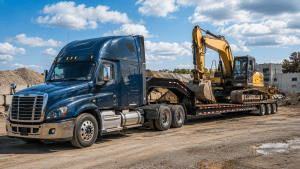
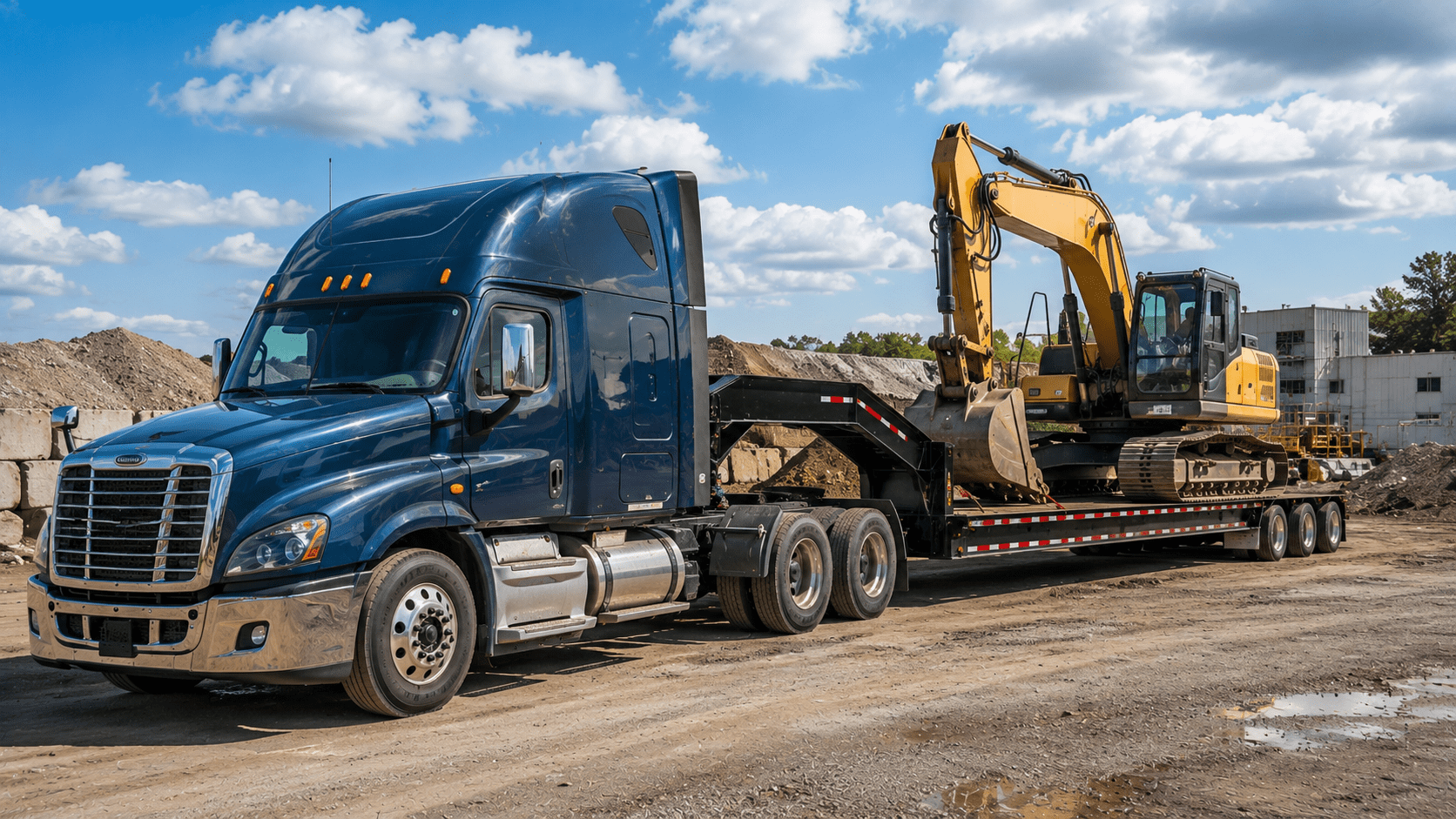
Can you pull a gooseneck trailer with a semi truck is a question commonly asked by truck owners, farmers, contractors, equipment haulers, and transportation professionals. Semi trucks are designed to tow heavy loads using a fifth-wheel coupling system, while gooseneck trailers are typically connected to a hitch mounted in the bed of a pickup truck. Because both systems use a kingpin-style connection, many people wonder whether a semi truck can safely tow a gooseneck trailer.
The answer is yes in many situations, but several factors determine whether the setup is practical, safe, and legal. Hitch compatibility, trailer design, towing capacity, turning clearance, braking systems, and local regulations all play important roles. While some gooseneck trailers can be connected directly to a semi truck’s fifth wheel, others may require adapters or modifications.
Understanding how these towing systems work can help operators choose the right equipment, avoid costly mistakes, and maintain compliance with transportation regulations. This guide explains everything you need to know about pulling a gooseneck trailer with a semi truck.
What Is a Gooseneck Trailer?
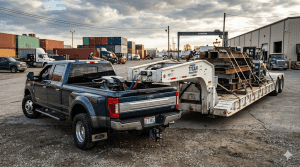
A gooseneck trailer is a trailer that connects to a hitch mounted in the bed of a pickup truck rather than to a traditional rear receiver hitch.
The trailer features a long neck extending over the towing vehicle’s rear axle where it connects to a ball hitch.
Common types include:
- Equipment trailers
- Livestock trailers
- Flatbed goosenecks
- Utility trailers
- Car haulers
- Agricultural trailers
Gooseneck trailers are popular because they provide greater stability and higher towing capacities than bumper-pull trailers.
What Is a Semi Truck?
A semi truck, also known as a tractor, is a heavy-duty commercial vehicle designed to pull trailers using a fifth-wheel coupling.
Major components include:
- Tractor frame
- Fifth wheel hitch
- Drive axles
- Air brake system
- Engine and transmission
- Suspension system
Semi trucks are engineered for hauling extremely heavy loads over long distances.
How Does a Gooseneck Trailer Work?
A gooseneck trailer uses a hitch ball mounted over the rear axle of a towing vehicle.
Main Components
- Gooseneck coupler
- Safety chains
- Trailer frame
- Axles
- Braking system
The forward neck design distributes weight more effectively than conventional bumper-pull trailers.
Benefits of Gooseneck Design
- Improved stability
- Tighter turning radius
- Higher towing capacity
- Better weight distribution
- Reduced trailer sway
Can You Pull a Gooseneck Trailer With a Semi Truck?
The short answer is:
Yes, a semi truck can pull many gooseneck trailers, but compatibility depends on the trailer coupler and the tractor’s fifth-wheel configuration.
Direct Compatibility
Many gooseneck trailers use a kingpin-style coupler similar to those found on semi trailers.
In these cases:
- The trailer may connect directly to the fifth wheel.
- No adapter may be necessary.
- Towing can be relatively straightforward.
Ball-Type Gooseneck Couplers
Traditional gooseneck trailers often use a hitch ball connection.
For these trailers:
- An adapter may be required.
- Specialized conversion equipment may be necessary.
- Additional safety inspections are recommended.
How a Semi Truck Connects to a Gooseneck Trailer
Fifth-Wheel Connection
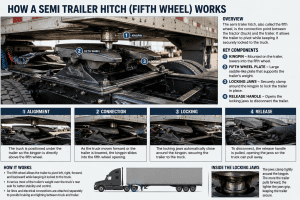
Most semi tractors use a commercial fifth wheel designed to lock onto a kingpin.
Advantages include:
- Extremely strong connection
- Heavy load capacity
- Proven commercial reliability
Adapter Systems
Some operators install:
- Gooseneck-to-fifth-wheel adapters
- Fifth-wheel-to-ball adapters
- Custom conversion systems
Adapters should always be rated for the intended load.
Key Features That Affect Compatibility
Trailer Coupler Type
Compatibility begins with the coupler design.
Common styles:
| Coupler Type | Semi Compatibility |
|---|---|
| Kingpin | Excellent |
| Ball Gooseneck | Requires Adapter |
| Pintle | Requires Conversion |
Trailer Weight
Weight ratings must remain within the tractor’s capabilities.
Fifth-Wheel Height
Height differences may affect:
- Trailer levelness
- Suspension performance
- Tire wear
Turning Clearance
Adequate clearance prevents contact between:
- Tractor cab
- Trailer neck
- Trailer body
Benefits of Pulling a Gooseneck Trailer With a Semi Truck
Massive Towing Capacity
Semi trucks can tow significantly heavier loads than pickup trucks.
Enhanced Durability
Commercial tractors are built for demanding hauling operations.
Superior Braking Systems
Most semi trucks feature:
- Air brakes
- Engine brakes
- Heavy-duty stopping capability
Improved Stability
The weight and wheelbase of a semi truck often improve towing stability.
Long-Distance Capability
Semi tractors excel at highway transportation.
Common Uses for Gooseneck Trailers Pulled by Semi Trucks
Heavy Equipment Transport
Moving:
- Excavators
- Bulldozers
- Loaders
Agriculture
Transporting:
- Tractors
- Implements
- Livestock equipment
Construction
Hauling:
- Building materials
- Equipment
- Machinery
Vehicle Transportation
Moving:
- Cars
- Trucks
- Specialty vehicles
Industrial Applications
Relocating large commercial equipment.
Factors to Consider Before Towing
Gross Trailer Weight
Always verify:
- Trailer GVWR
- Actual loaded weight
- Hitch ratings
Brake Compatibility
Many semi tractors use air brakes.
Some gooseneck trailers use:
- Electric brakes
- Hydraulic brakes
Proper integration is critical.
Hitch Ratings
Never exceed:
- Fifth-wheel rating
- Adapter rating
- Trailer rating
Legal Requirements
Requirements may include:
- CDL licensing
- Commercial registration
- Weight permits
Load Distribution
Proper balance improves:
- Handling
- Tire life
- Stability
Common Mistakes Operators Make
Using Incorrect Adapters
Improper adapters create serious safety risks.
Ignoring Weight Ratings
Overloading increases:
- Brake wear
- Tire failures
- Structural damage
Improper Trailer Height
Uneven trailer positioning causes:
- Suspension issues
- Poor handling
- Excessive tire wear
Neglecting Brake Integration
Brake incompatibility can lead to unsafe stopping distances.
Skipping Inspections
Always inspect:
- Couplers
- Safety chains
- Tires
- Brakes
Before transport.
Expert Tips for Safe Towing
Confirm Hitch Compatibility
Verify all components are designed to work together.
Use Commercial-Grade Equipment
Avoid light-duty adapters or components.
Check Turning Radius
Test maneuverability before road operation.
Inspect Coupling Mechanisms
Ensure proper locking and engagement.
Follow Manufacturer Guidelines
Consult equipment specifications before towing.
Industry Applications
Heavy Haul Transportation
Semi trucks frequently tow specialized trailers carrying oversized loads.
Agriculture
Farm operators move large equipment between properties.
Construction
Contractors transport machinery and materials.
Energy Sector
Industrial trailers carry equipment to remote job sites.
Fleet Operations
Companies utilize semi tractors for versatile hauling solutions.
Future Trends in Gooseneck and Semi Truck Towing
Improved Adapter Technology
Manufacturers continue developing stronger conversion systems.
Smart Trailer Monitoring
Modern trailers offer:
- Tire pressure monitoring
- Brake diagnostics
- Load sensing
Advanced Safety Systems
Future towing setups may include:
- Collision avoidance
- Trailer tracking
- Stability monitoring
Lightweight Materials
New trailer designs improve payload capacity.
Enhanced Telematics
Fleet managers can monitor trailer performance in real time.
Semi Truck vs Pickup Truck for Gooseneck Towing
| Feature | Semi Truck | Pickup Truck |
|---|---|---|
| Towing Capacity | Extremely High | Moderate to High |
| Commercial Use | Excellent | Limited |
| Air Brakes | Standard | Rare |
| Long-Distance Hauling | Excellent | Good |
| Operating Costs | Higher | Lower |
Pros and Cons
Pros
- Exceptional towing capacity
- Superior braking performance
- Greater durability
- Enhanced stability
- Ideal for heavy loads
Cons
- Higher operating costs
- Potential adapter requirements
- Licensing considerations
- Larger turning radius
- More complex regulations
Conclusion
Can you pull a gooseneck trailer with a semi truck? In many cases, yes. Semi trucks possess the power, durability, braking capability, and towing capacity needed to haul gooseneck trailers effectively. However, success depends on proper hitch compatibility, brake integration, weight management, and regulatory compliance.
Whether hauling agricultural equipment, construction machinery, industrial assets, or specialty cargo, operators should verify all ratings and connections before towing. By using the correct equipment and following industry best practices, a semi truck can be an excellent solution for pulling many types of gooseneck trailers safely and efficiently.
FAQ Section
1. Can you pull a gooseneck trailer with a semi truck legally?
Yes, in many situations it is legal, provided all equipment, licensing, weight ratings, and regulations are followed.
2. Will a gooseneck trailer connect directly to a semi truck?
Some kingpin-style gooseneck trailers can connect directly, while others require adapters.
3. Do I need an adapter to pull a gooseneck trailer with a semi truck?
It depends on the trailer coupler design. Ball-type gooseneck trailers often require specialized adapters.
4. Can a semi truck tow more weight than a pickup truck?
Yes. Semi trucks are designed for significantly higher towing capacities and commercial hauling.
5. Are air brakes compatible with gooseneck trailers?
Some modifications or additional equipment may be required when connecting different brake systems.
6. What is the advantage of towing with a semi truck?
Semi trucks offer superior towing power, braking performance, stability, and durability.
7. Can a semi truck haul agricultural gooseneck trailers?
Yes. Many agricultural and equipment trailers can be hauled using properly configured semi tractors.
8. Does trailer height matter when connecting to a semi truck?
Yes. Proper trailer height ensures safe operation and even weight distribution.
9. What should be inspected before towing?
Inspect couplers, adapters, safety chains, tires, brakes, lights, and load securement systems.
10. Is a CDL required to pull a gooseneck trailer with a semi truck?
In many commercial situations, a CDL may be required depending on vehicle weight and applicable regulations.