Properly adjusted brakes are essential for the safety and performance of any semi trailer. Slack adjusters play a critical role in maintaining the correct distance between brake shoes and brake drums. When they become misadjusted, braking efficiency decreases, stopping distances increase, and components may wear prematurely.
This guide explains how to adjust slack adjusters on a semi trailer, when adjustment is necessary, and important safety considerations.
What Is a Slack Adjuster?
A slack adjuster is a mechanical linkage that connects the brake chamber pushrod to the S-cam on air brake systems. Its purpose is to convert the linear movement of the pushrod into rotational force that applies the brakes.
There are two main types:
- Manual slack adjusters
- Automatic slack adjusters (ASAs)
Most modern semi trailers use automatic slack adjusters, but understanding how they work and how to inspect them remains important.
Why Slack Adjusters Need Adjustment
Over time, brake shoes wear down, increasing the distance they must travel before contacting the brake drum. Excessive travel can reduce braking effectiveness and lead to brake violations during inspections.
Common signs of improper adjustment include:
- Increased stopping distance
- Uneven braking performance
- Excessive pushrod travel
- Failed DOT inspections
- Brake warning signs during routine maintenance
Tools Required
Before adjusting slack adjusters, gather the following tools:
- Wheel chocks
- Safety gloves
- Safety glasses
- Wrench set
- Brake stroke measuring tool
- Flashlight
Always park on a level surface and secure the vehicle before beginning any brake work.
How to Adjust Manual Slack Adjusters
Step 1: Secure the Trailer
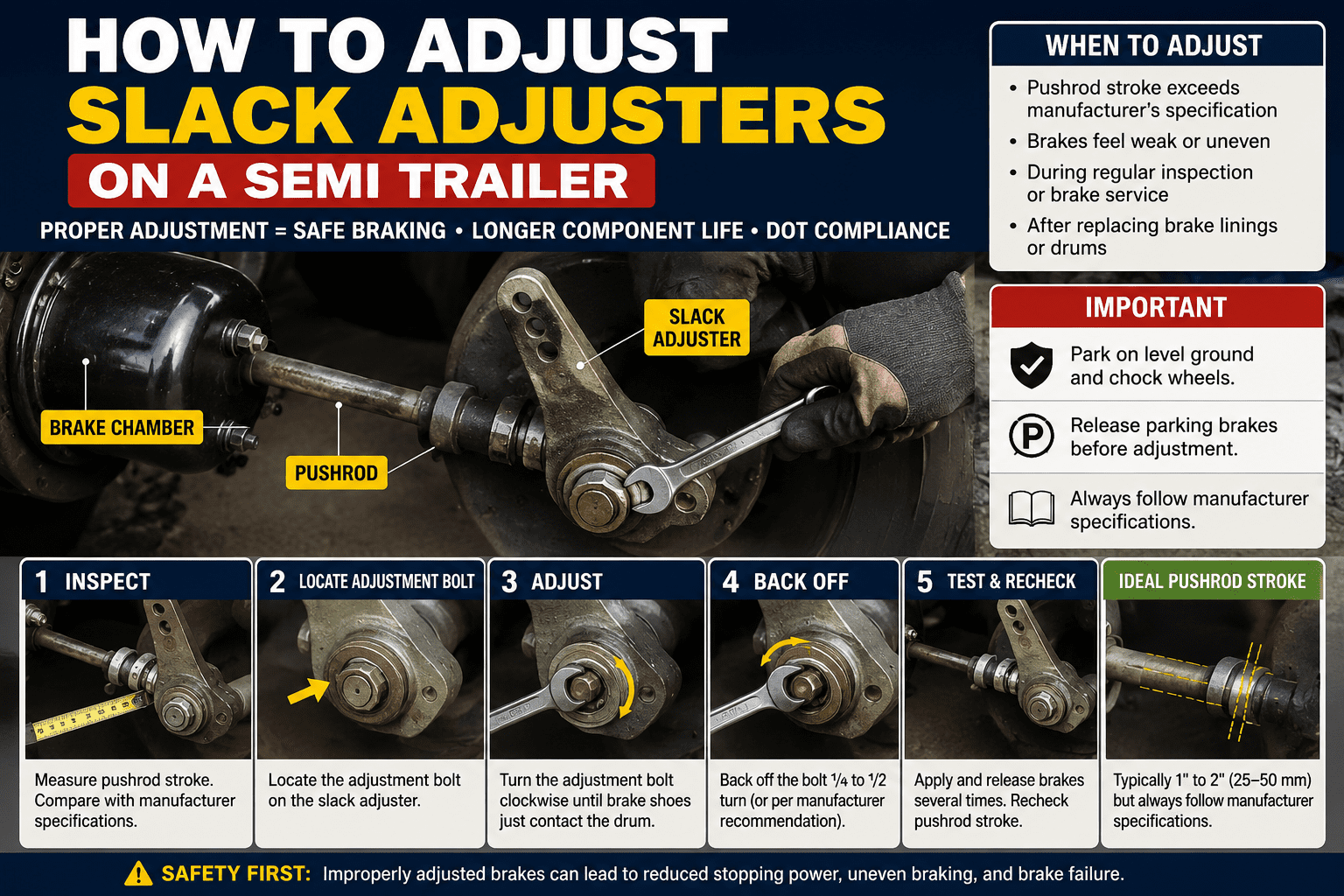
Park the semi trailer on level ground and apply wheel chocks. Release the parking brakes according to manufacturer recommendations before adjustment.
Step 2: Locate the Slack Adjuster
Find the slack adjuster attached to the brake chamber pushrod near each wheel assembly.
Step 3: Inspect Pushrod Travel
Measure the pushrod stroke and compare it with manufacturer specifications. Excessive travel indicates adjustment may be needed.
Step 4: Turn the Adjustment Bolt
Using the correct wrench:
- Locate the adjustment bolt on the slack adjuster.
- Turn the bolt clockwise until the brake shoes contact the drum.
- Back off the adjustment approximately one-quarter to one-half turn according to manufacturer guidelines.
Step 5: Verify Brake Operation
Apply and release the brakes several times to ensure proper operation. Recheck pushrod travel to confirm it falls within acceptable limits.
Automatic Slack Adjusters
Automatic slack adjusters are designed to self-adjust during normal braking operation. Manual adjustment should generally not be used as a routine maintenance practice.
If an automatic slack adjuster repeatedly requires adjustment, it may indicate:
- Worn brake components
- Improper installation
- Damaged adjuster mechanism
- Air system issues
In these cases, inspection and repair are recommended instead of continual adjustment.
Safety Tips
When working on trailer brakes:
- Never crawl under an unsupported vehicle.
- Always use wheel chocks.
- Follow manufacturer service procedures.
- Inspect brake chambers, drums, and linings during maintenance.
- Replace damaged components immediately.
Proper brake maintenance helps prevent accidents and costly downtime.
Common Mistakes to Avoid
Many operators make these errors:
- Over-tightening the adjustment bolt
- Ignoring pushrod stroke measurements
- Adjusting automatic slack adjusters unnecessarily
- Failing to inspect related brake components
- Skipping post-adjustment testing
Avoiding these mistakes improves brake performance and extends component life.
Conclusion
Knowing how to adjust slack adjusters on a semi trailer is an important maintenance skill for fleets and owner-operators. Proper adjustment helps maintain safe braking performance, reduces component wear, and supports compliance with transportation safety regulations. Regular inspections and timely maintenance ensure your trailer’s braking system remains reliable and efficient.