Introduction
How much weight can a semi trailer hold is one of the most common questions asked by truck operators, freight brokers, logistics managers, and businesses shipping heavy cargo. Understanding trailer weight capacity is essential for complying with transportation regulations, maximizing efficiency, preventing equipment damage, and ensuring roadway safety.
Semi trailers are designed to transport substantial loads across long distances, but their actual carrying capacity depends on several factors including trailer type, axle configuration, gross vehicle weight rating (GVWR), federal regulations, and cargo distribution. Exceeding legal weight limits can result in expensive fines, increased wear and tear, reduced fuel efficiency, and serious safety risks.
Whether you operate a trucking company, manage freight logistics, or simply want to understand the capabilities of commercial trailers, knowing the weight limits of various trailer types is critical. This comprehensive guide explains how much weight a semi trailer can hold, how weight limits are calculated, factors affecting capacity, and industry best practices for maximizing payload while staying compliant.
What Is a Semi Trailer?
A semi trailer is a freight trailer designed to be towed by a semi truck or tractor. Unlike a full trailer, a semi trailer has no front axle and relies on the tractor for support and movement.
Semi trailers are widely used in freight transportation because they can carry large volumes of cargo efficiently across regional, national, and international routes.
Common semi trailer types include:
- Dry van trailers
- Flatbed trailers
- Refrigerated trailers (reefers)
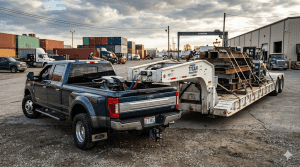
- Lowboy trailers
- Step deck trailers
- Tank trailers
- Dump trailers
Each trailer type has different weight capacities and intended applications.
How Does a Semi Trailer Work?
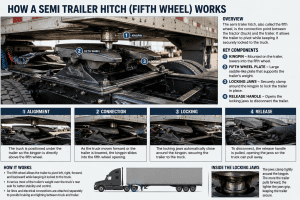
A semi trailer connects to a tractor through a fifth-wheel coupling system.
Basic Components
- Tractor unit
- Fifth wheel hitch
- Trailer frame
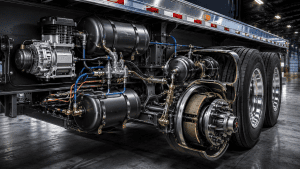
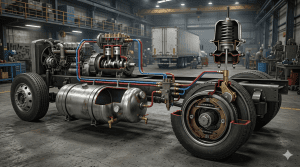
- Axles
- Suspension system
- Landing gear
- Braking system
The tractor supports part of the trailer’s weight while the trailer axles support the remaining load. This distribution allows heavy freight to be transported safely and efficiently.
How Much Weight Can a Semi Trailer Hold?
The answer depends on trailer specifications and legal regulations.
Standard U.S. Federal Weight Limits
| Component | Maximum Weight |
|---|---|
| Steer Axle | 12,000 lbs |
| Drive Axles | 34,000 lbs |
| Trailer Tandem Axles | 34,000 lbs |
| Gross Vehicle Weight (GVW) | 80,000 lbs |
A typical tractor-trailer combination weighs approximately:
| Vehicle Component | Average Weight |
|---|---|
| Tractor | 17,000–20,000 lbs |
| Empty Trailer | 10,000–15,000 lbs |
| Total Empty Weight | 27,000–35,000 lbs |
Typical Payload Capacity
Most standard semi trailers can legally carry:
42,000 to 48,000 pounds of cargo
This range varies depending on:
- Trailer design
- Number of axles
- Cargo type
- State regulations
- Equipment weight
Therefore, when asking how much weight can a semi trailer hold, the practical answer for most freight operations is approximately 45,000 pounds of payload.
Weight Capacity by Trailer Type
Dry Van Trailer
Dry vans are among the most common freight trailers.
| Specification | Capacity |
|---|---|
| Trailer Length | 53 ft |
| Empty Weight | 13,000–15,000 lbs |
| Payload Capacity | 43,000–45,000 lbs |
Common Cargo:
- Consumer goods
- Electronics
- Packaged products
- Retail inventory
Refrigerated Trailer (Reefer)
Refrigeration equipment increases trailer weight.
| Specification | Capacity |
|---|---|
| Empty Weight | 15,000–18,000 lbs |
| Payload Capacity | 42,000–44,000 lbs |
Common Cargo:
- Food products
- Pharmaceuticals
- Temperature-sensitive goods
Flatbed Trailer
Flatbeds are used for oversized and heavy freight.
| Specification | Capacity |
|---|---|
| Empty Weight | 12,000–15,000 lbs |
| Payload Capacity | 46,000–48,000 lbs |
Common Cargo:
- Steel
- Lumber
- Machinery
- Construction materials
Step Deck Trailer
Step deck trailers accommodate taller cargo.
| Specification | Capacity |
|---|---|
| Empty Weight | 10,000–12,000 lbs |
| Payload Capacity | 46,000–48,000 lbs |
Lowboy Trailer
Lowboys transport extremely heavy equipment.
| Specification | Capacity |
|---|---|
| Payload Capacity | 40,000–80,000+ lbs |
With permits and specialized axle configurations, lowboys may haul:
- Bulldozers
- Excavators
- Industrial machinery
Key Features Affecting Weight Capacity
1. Axle Configuration
More axles allow weight to be distributed across additional contact points.
Examples:
- Tandem axle
- Tridem axle
- Quad axle
Additional axles often increase legal payload capacity.
2. Trailer Construction
Trailer materials affect overall weight.
Common materials:
- Steel
- Aluminum
- Composite materials
Aluminum trailers weigh less, allowing higher payloads.
3. Suspension System
Heavy-duty suspension systems support larger loads and improve stability.
4. Tire Ratings
Tires must be rated to handle the total load safely.
Overloaded tires increase risks of:
- Blowouts
- Reduced handling
- Accidents
Benefits of Understanding Trailer Weight Limits
Improved Compliance
Knowing legal limits helps avoid:
- DOT violations
- Fines
- Out-of-service orders
Better Fuel Efficiency
Properly loaded trailers consume less fuel than overloaded units.
Reduced Maintenance Costs
Overloading accelerates wear on:
- Brakes
- Tires
- Suspension systems
- Axles
Enhanced Safety
Proper weight management reduces:
- Rollover risks
- Brake failures
- Cargo shifts
Common Uses of High-Capacity Semi Trailers
Semi trailers transport countless products across industries.
Manufacturing
Used for:
- Raw materials
- Industrial components
- Machinery
Agriculture
Hauling:
- Grain
- Feed
- Fertilizer
Construction
Transporting:
- Steel beams
- Concrete products
- Heavy equipment
Retail Distribution
Moving products between:
- Distribution centers
- Warehouses
- Retail stores
Factors to Consider Before Loading a Semi Trailer
Cargo Weight
Always verify cargo weight before dispatch.
Weight Distribution
Uneven loading may cause:
- Poor handling
- Tire damage
- DOT violations
Axle Limits
Even if total weight is legal, axle weights must also comply with regulations.
State Regulations
Some states have unique:
- Bridge formulas
- Axle restrictions
- Permit requirements
Trailer Condition
Inspect:
- Tires
- Brakes
- Suspension
- Coupling systems
Before hauling heavy loads.
Common Mistakes When Calculating Trailer Capacity
Assuming All Trailers Carry the Same Weight
Different trailer types have significantly different payload capacities.
Ignoring Trailer Tare Weight
The heavier the trailer, the lower the available payload.
Overlooking Axle Limits
Legal axle limits often become the limiting factor before total gross weight.
Poor Cargo Distribution
Improper loading may create unsafe driving conditions even if total weight appears legal.
Skipping Scale Verification
Certified scales provide accurate weight measurements before transport.
Expert Tips for Maximizing Payload Capacity
Choose Lightweight Equipment
Aluminum wheels and lightweight trailers increase available payload.
Use Certified Truck Scales
Verify:
- Gross weight
- Steer axle weight
- Drive axle weight
- Trailer axle weight
Load Cargo Strategically
Distribute freight evenly throughout the trailer.
Monitor Tire Pressure
Proper inflation improves safety and load handling.
Stay Updated on Regulations
Federal and state transportation laws can change over time.
Industry Applications
Freight Transportation
The trucking industry depends on maximizing legal payloads to improve profitability.
Mining Operations
Heavy-duty trailers transport equipment and raw materials.
Oil and Gas
Specialized trailers move drilling components and industrial machinery.
Agricultural Logistics
Large-capacity trailers move crops from farms to processing facilities.
Heavy Haul Operations
Specialized trailers exceed standard capacities through permitted transport programs.
Future Trends in Semi Trailer Weight Capacity
Lightweight Materials
Manufacturers are increasingly using:
- Aluminum alloys
- Composite panels
- Advanced steels
Smart Weight Monitoring
Real-time onboard systems help drivers monitor:
- Axle weights
- Cargo shifts
- Overload conditions
Improved Suspension Technology
Modern air ride systems improve load management and ride quality.
Electrification
Electric trucks require careful weight management due to battery weight considerations.
Advanced Fleet Analytics
Telematics systems now provide:
- Load optimization
- Fuel efficiency analysis
- Weight compliance reporting
Comparison of Popular Trailer Types
| Trailer Type | Typical Payload |
|---|---|
| Dry Van | 43,000–45,000 lbs |
| Reefer | 42,000–44,000 lbs |
| Flatbed | 46,000–48,000 lbs |
| Step Deck | 46,000–48,000 lbs |
| Lowboy | 40,000–80,000+ lbs |
Conclusion
Understanding how much weight can a semi trailer hold is essential for safe, efficient, and compliant freight transportation. While the standard legal gross vehicle weight limit in the United States is generally 80,000 pounds, most semi trailers can carry between 42,000 and 48,000 pounds of cargo depending on trailer type, axle configuration, and equipment weight.
Factors such as trailer construction, axle setup, cargo distribution, and regulatory requirements all influence payload capacity. By following best practices, monitoring weights carefully, and choosing the right trailer for the job, trucking professionals can maximize efficiency while maintaining safety and legal compliance.
FAQ Section
1. How much weight can a semi trailer hold legally?
Most standard semi trailers legally carry between 42,000 and 48,000 pounds of cargo while remaining within the 80,000-pound federal gross vehicle weight limit.
2. What is the maximum weight for a fully loaded semi truck?
A fully loaded semi truck typically has a maximum gross vehicle weight of 80,000 pounds under federal regulations.
3. How much weight can a 53-foot dry van trailer hold?
A 53-foot dry van trailer usually carries approximately 43,000 to 45,000 pounds of freight depending on its empty weight.
4. Can a flatbed trailer carry more weight than a dry van?
Yes. Many flatbed trailers have lighter empty weights, allowing payload capacities of up to 48,000 pounds.
5. What affects how much weight a semi trailer can hold?
Trailer type, axle configuration, empty weight, cargo distribution, tire ratings, and legal regulations all influence payload capacity.
6. How do truckers verify trailer weight?
Truckers use certified truck scales to measure gross weight and axle weights before transportation.
7. Can semi trailers exceed 80,000 pounds?
Yes. Oversized and overweight loads can exceed 80,000 pounds with special permits and additional axle configurations.
8. How much does an empty semi trailer weigh?
Most empty semi trailers weigh between 10,000 and 15,000 pounds, depending on design and equipment.
9. Why is weight distribution important?
Proper distribution improves stability, prevents axle overloads, reduces tire wear, and enhances roadway safety.
10. Which trailer type carries the heaviest loads?
Lowboy trailers used in heavy-haul transportation often carry the heaviest loads, sometimes exceeding 80,000 pounds with permits.