
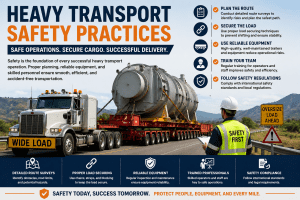
Safety is one of the most critical factors in heavy transport operations. Whether moving oversized cargo, industrial equipment, or specialized machinery, proper planning and execution are essential for preventing accidents, minimizing downtime, and avoiding costly delays. A strong commitment to safety not only protects valuable assets but also ensures the well-being of personnel involved throughout the transportation process.
Before any transport operation begins, a comprehensive route survey should be conducted. This process helps identify potential obstacles such as low bridges, narrow roads, weight restrictions, sharp turns, and traffic challenges. Proper route planning ensures that the load can travel safely and efficiently from origin to destination.
Load securing is a fundamental aspect of transport safety. Cargo must be properly fastened using appropriate chains, straps, blocking systems, and securing devices. Correct load distribution and securing methods prevent shifting during transit, reducing the risk of accidents and equipment damage.
The quality and condition of transport equipment directly impact operational safety. Heavy-duty trailers, hydraulic systems, and support equipment should meet industry standards and undergo regular inspections. Using reliable equipment helps maintain stability, improve performance, and reduce the likelihood of mechanical failures.
Well-trained operators and technical personnel play a crucial role in maintaining safe transport operations. Regular training programs ensure that staff understand proper handling procedures, safety protocols, emergency response measures, and equipment operation requirements. Skilled teams are better equipped to manage complex transportation projects safely and efficiently.
Compliance with local and international transportation regulations is essential for successful heavy haul operations. Adhering to established safety standards helps companies avoid legal issues, maintain operational consistency, and ensure the safe movement of cargo across different regions and jurisdictions.
Reliable and well-maintained trailers significantly reduce transportation risks. Regular maintenance, inspections, and timely repairs help prevent equipment failures that could lead to delays, accidents, or cargo damage. Investing in high-quality transport solutions enhances operational efficiency while improving overall safety performance.
If you are planning a heavy transport project and require safe, reliable, and professional transportation solutions, our team is here to help. We provide expert guidance, high-quality equipment, and comprehensive support to ensure your cargo reaches its destination safely and on schedule.
Implementing proven safety practices is essential for successful heavy transport operations. From route planning and load securing to operator training and equipment maintenance, every step contributes to safer and more efficient transportation. By prioritizing safety, companies can protect their personnel, equipment, and cargo while ensuring smooth and reliable operations.